
Hi Fintech Futurists —
Today’s agenda is below.
AI in FINANCE: Financial institutions are building around machine transactions. Small payment amounts, high volume.
ANALYSIS: Whop Wants Everyone to Start a Bank.
PODCAST: How Stripe’s Tempo is Rebuilding On-Chain Cash Settlement, with Head of Market Development Simon Taylor.
CURATED UPDATES: Machine Models, AI Applications in Finance & Investment Outlook
To support this writing and access our full archive of newsletters, analyses, and guides to building in Fintech & DeFi, subscribe below (if you haven’t yet).
🤖🏦🧭 Our Ecosystem:
Sponsor FB | Generative Ventures | SPAC | Robot DeFi | Linkedin & X
🚀 Lex is actively meeting teams building machine-native financial companies. If that’s you, reach out here.
🦄 Our $200MM SPAC is looking for targets in fintech, digital assets, and AI infrastructure. If you are a late-stage founder or have an idea to discuss, reply directly to this email.
The Money Soul of the Machine
The onchain payments networks
The x402 protocol allows machines to transact, and we have previously covered it in a primer below:

Those payments have become tiny little bits — 75.4MM transactions; $24.2MM transferred; 94,000 buyers; 22,000 sellers — currently displayed on the x402 homepage for the previous 30 days. Divide the value by the transactions, and the average payment comes to roughly $0.32
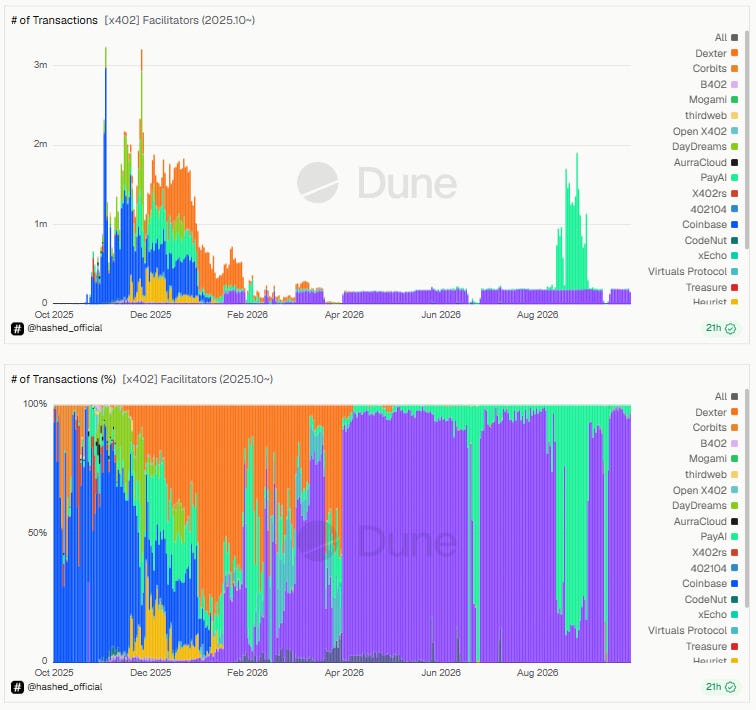
To be fair, the growth here has been disappointing for fans of agentic finance and commerce, as there has not been a flood of AI economies yet. Stripe’s Tempo protocol may be eating some of the pie elsewhere too.
Most of the x402 traction today seems to actually be coming from Polygon, which has grown into a serious payments-focused chain. Polygon Labs had invested $250MM earlier in the year to be able to deliver this volume.
Unlike traditional payment rails, the x402 protocol is optimized for software to purchase from other software. An agent requests a resource, receives a price, authorises payment, and retries the request without visiting the checkout, creating an account or choosing a subscription plan. That allows for a self-sovereign world, where machines do things on their own, under certain anonymity as long as they bring the cash.
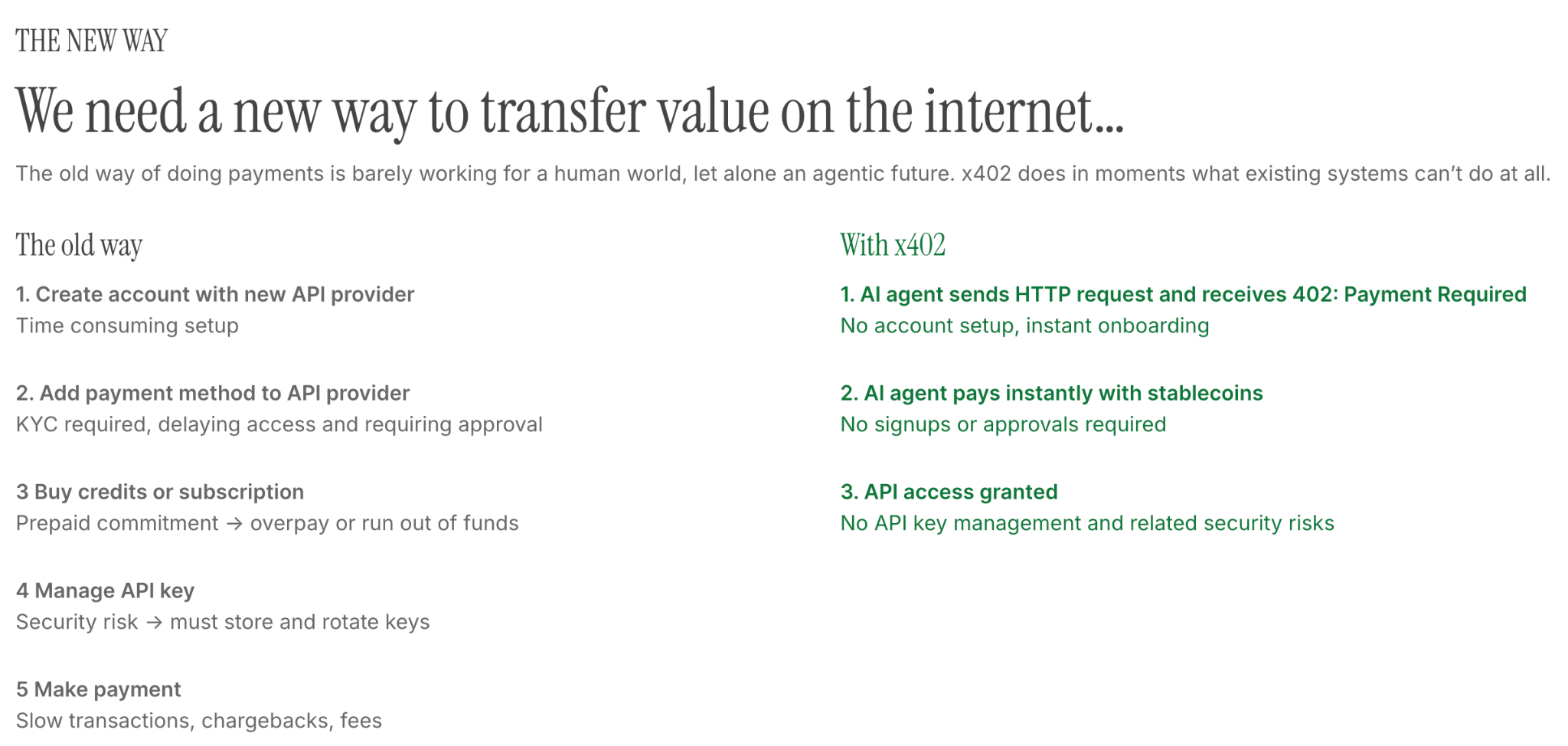
But there is hope on the horizon! Cloudflare just recently launched its Monetization Gateway in closed beta.
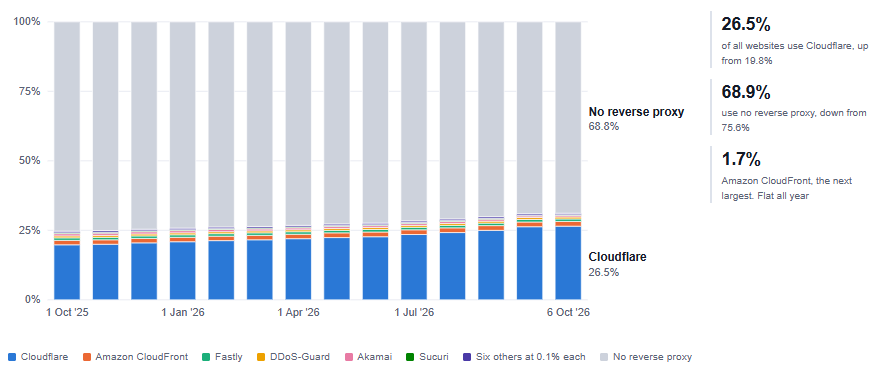
Cloudflare sits literally in front of a quarter of Internet websites, providing a firewall for those sites against attack. They have a massive footprint and around $2-3 billion of revenue — but that seems barely enough revenue for someone gating this much of the web. Imagine instead if all machine payments went through Cloudflare, rather than Stripe, which is a human-mediated checkout either during shopping or development. Such a prize is worth about $200B if won.
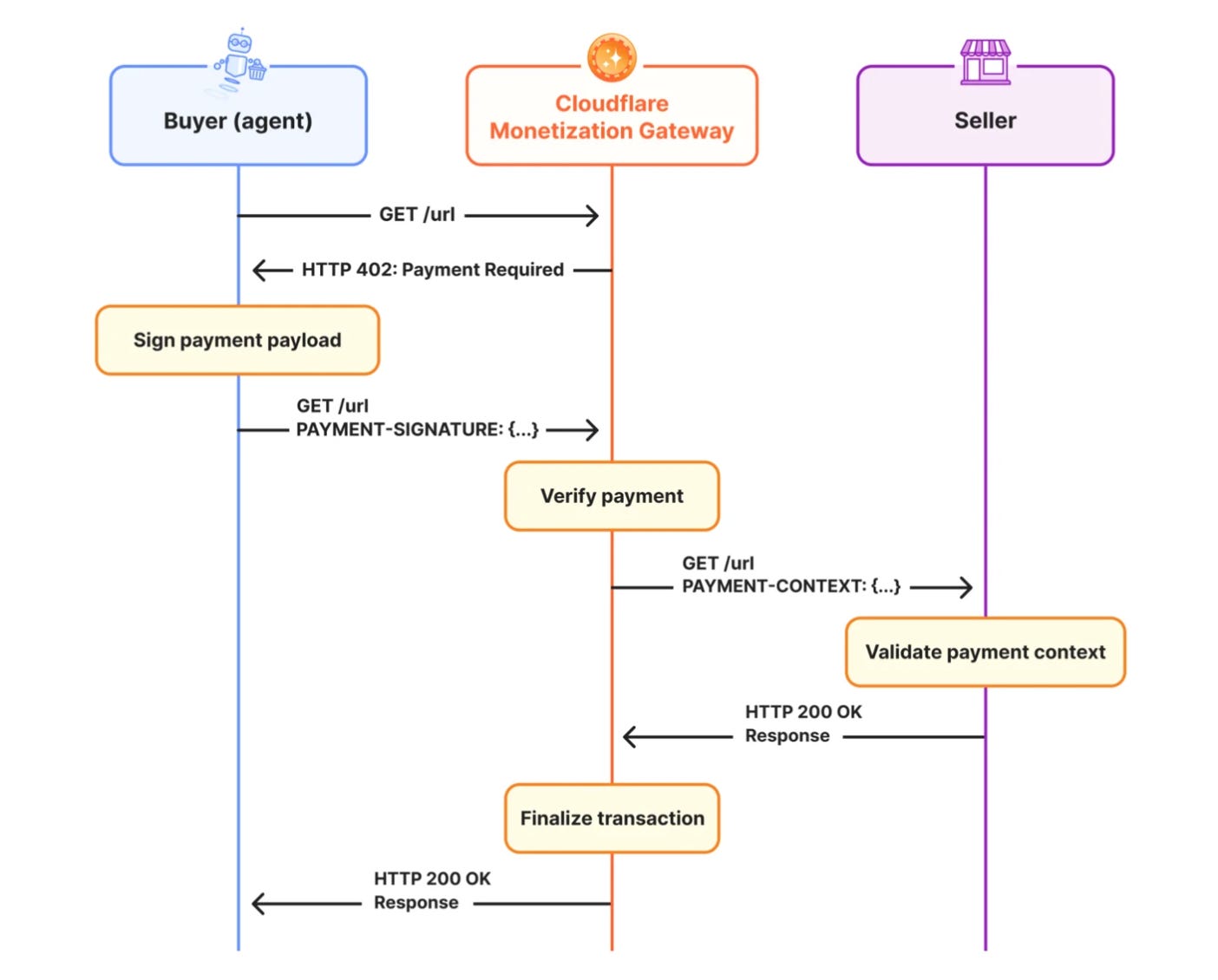
Agents can pay through x402 for access to APIs, datasets, MCP tools, and websites. Cloudflare has also enabled x402 payments for AI inference through its own AI Gateway and announced production integrations for web search from Ceramic.ai, financial-market signals from Stocktwits and document generation from API2PDF.
If there is material adoption downstream from Cloudflare clients, x402 should see a large tick up in volume.
Machines don’t shop like humans
Consider the following framework:
In “macro-commerce”, an agent buys a $500 flight for a human
In “micro-commerce”, software buys a tiny digital resource from other software
A recent academic study analysing 143 million x402 settlements worth $43MM calculated an average payment of just $0.27. Around 28.5% of transactions were worth less than one cent. Transactions of $1 or more represented less than 8% of traffic, despite accounting for 72.5% of value.
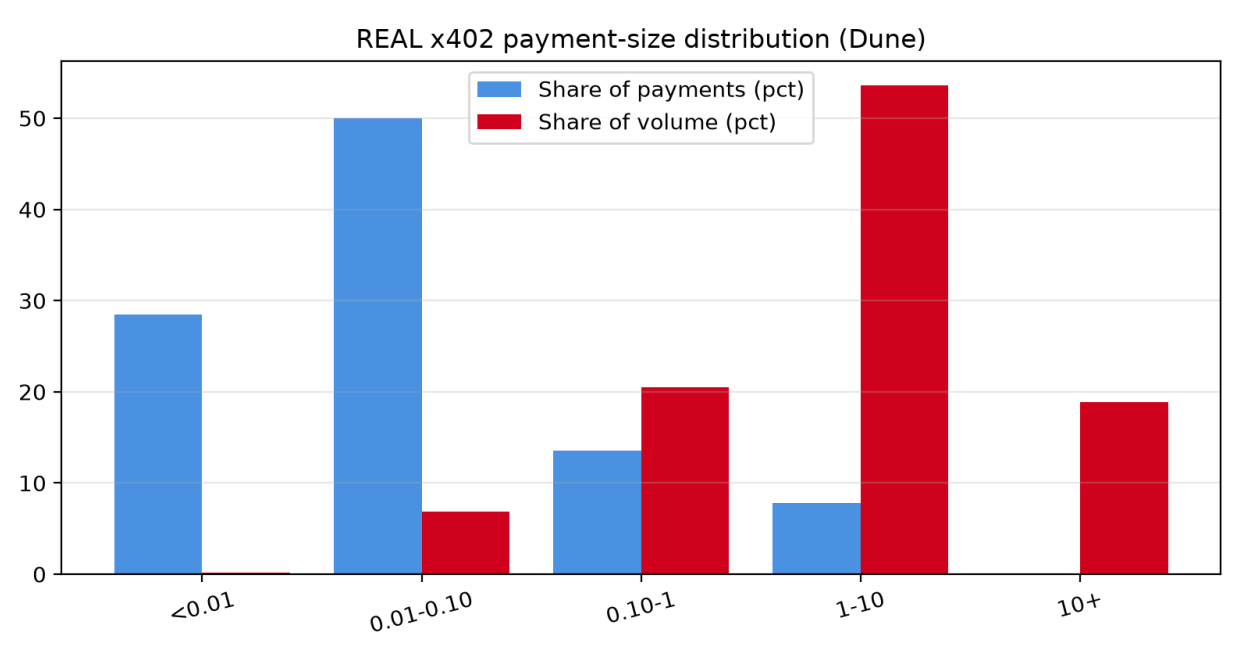
With Cloudflare’s latest launch, agents can now pay at request time rather than requiring subscriptions. The economics of software is changing by becoming the economics of tokens and inference. In the past, we asked whether an API was valuable enough to buy a subscription. Now, the machine-payment robot asks if this particular API call is worth 3 cents right now.
Intelligence acts upon data, and data is still gated all across different parts of the web. In order to be able to answer questions and book trips, robots need to query information and pull together a lot of disconnected context. Little tentacles will extend from our searches into machine brains, ready to purchase whatever mana is needed to fulfill our wish.
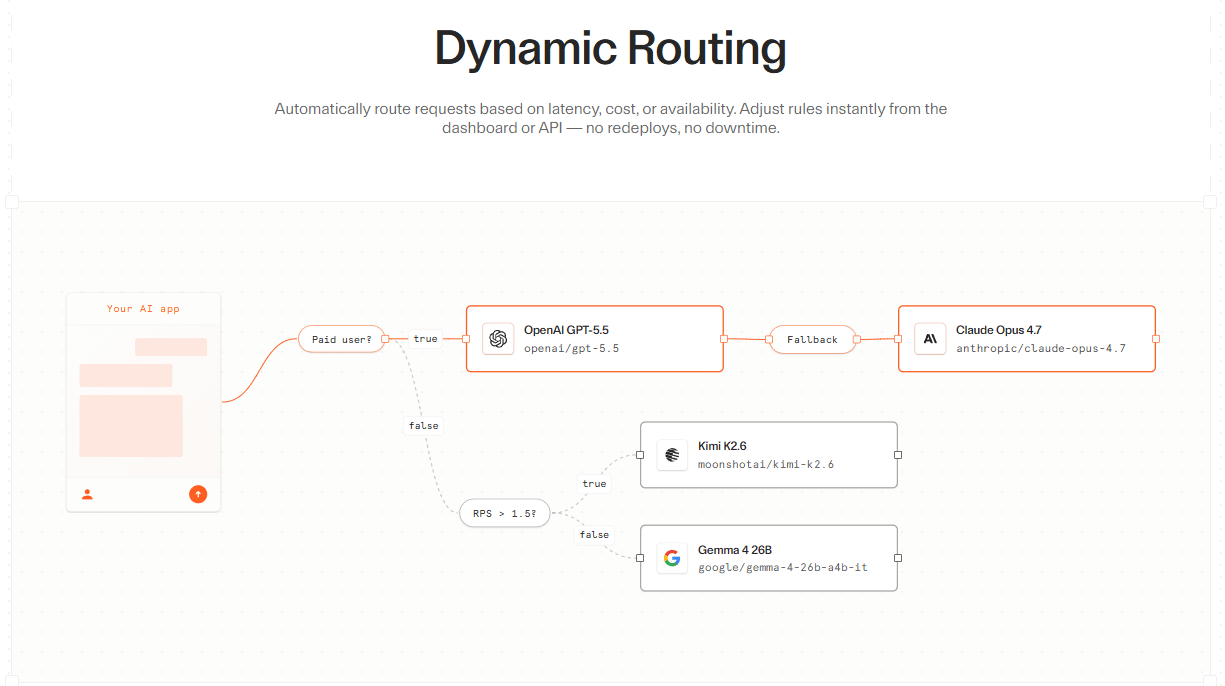
The robot is the customer, and robots have trouble with interchange.
Consider Stripe’s publicly advertised standard card pricing:
2.9% + $0.30 per successful domestic-card transaction
On a $0.32 transaction, the illustrative processing fee is ~$0.31 ($0.30 + (2.9% * $0.32) = $0.30928), or ~97% of the transaction value.
This is retail merchant pricing, not the underlying cost of moving money through Visa or Mastercard, and large companies can negotiate different economics.
Interestingly, Stripe’s pricing for domestic cards carries the $0.31 fixed component, while its stablecoin acceptance product is currently priced at just 0.8%. This stablecoin product is not the same thing as an x402 settlement, but the pricing demonstrates why percentage-only economics are better suited to very small payments.
Banks Will Push Back
Autonomous money robots on the Internet are not everyone’s vision of a perfectly safe financial system. While commerce and payments are first, banking is the next sector to be impacted. Tech companies care about human identity insofar as they are not defrauded about advertising spend or payments, but at the core, many of them are transactional. If you pay for services, they are happy to sell.
As banks and other custodians come into the equation, it gets more complicated because of regulation and liability. If a robot spends all your money by mistake and the bank authorized the payments, who is liable?
Last month, Lead Bank, a Kansas City bank that sponsors fintech programmes, published a plan for how AI agents should move money. US banking law assumes a human approves every payment.
Lead wants a new legal status, the “Authorized Financial Agent,” and four rules to go with it:
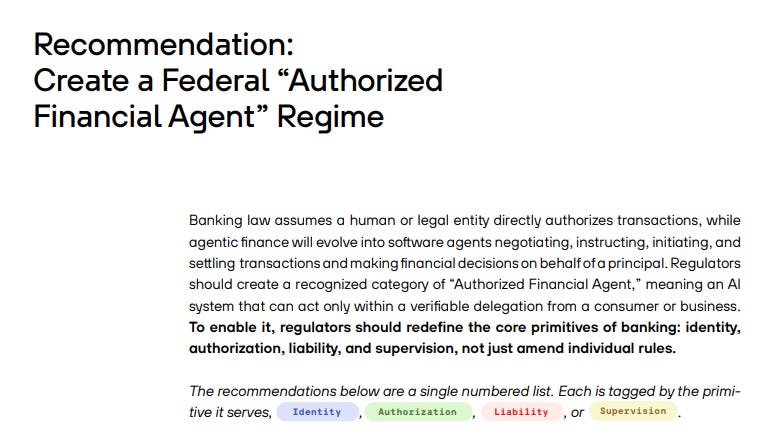
Identity. Every agent carries a credential tied to a verified person or company. An agent without one cannot connect.
Permission. Every payment needs a signed mandate with spending caps, merchant types and an expiry date. The owner can cancel it at any time.
Liability. If an agent goes beyond its mandate, the bank, AI provider or merchant pays, unless the owner approved it.
Oversight. Agents get red-team testing, kill switches, tamper-evident logs and throttles on bursts of payments.
x402 has none of the four, unless wrapped in another protocol. Its buyers are wallets with no names, and bursts of tiny payments are its main use. Lead’s paper lists seven agent-payment protocols and leaves x402 off. Lead also sells agent cards and stablecoin on-ramps, so its rules suit a bank like Lead and shut out wallet-native rivals.
We can also look at Ramp’s and Google’s approaches to these questions.
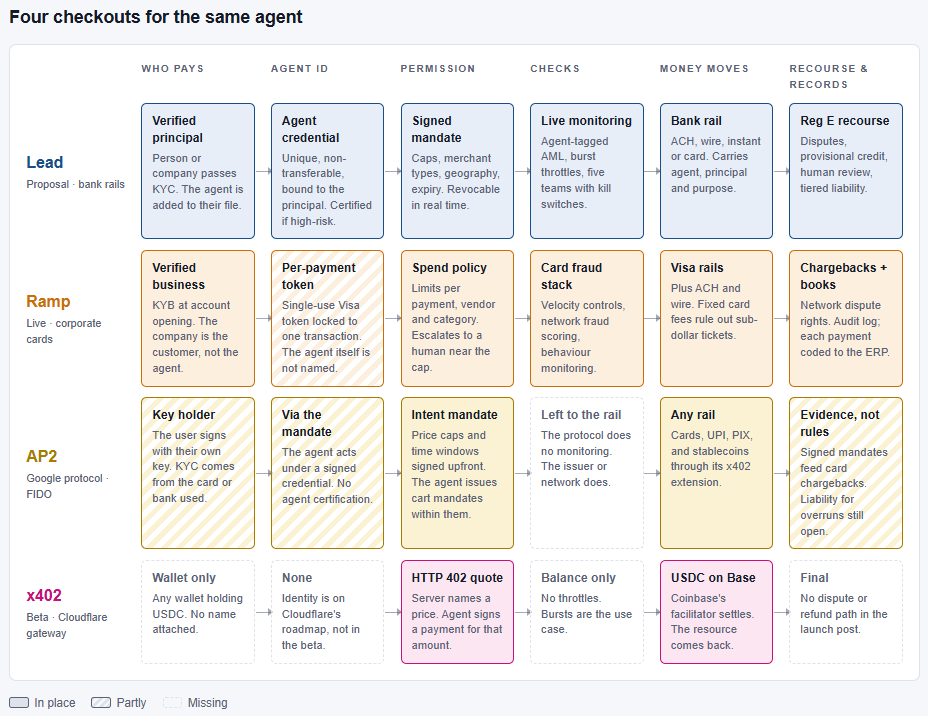
The closer you sit to holding the money, the more you need to find a responsible account holder that has gone through KYC. On the other hand, a protocol will be interested in the broadest set of users possible instead. Both can work, as evidenced by OpenSea’s ability to sell NFTs to plenty of non-KYCed anonymous Internet avatars.
Currently, this is a profoundly American banking question, and how the US regulates agentic finance will set the stage for the rest of the world. TRM found that approximately 99.6% of the x402 transaction volume was settled in USDC. The early machine economy is overwhelmingly a digital-dollar economy. If machines routinely buy pieces of intelligence, market data, search, inference, and compute, they need money that software can hold and transfer programmatically.
The human Internet was built around people making relatively infrequent, relatively large purchasing decisions. We created subscriptions, prepaid credits, accounts, checkout pages, and card forms around that behaviour.
AI introduces a different customer type who transacts thousands of times with extremely small payments. That, or it’s just a robot doing its laundry $0.30 at a time.
👑Related Coverage👑


Analysis: Whop Wants Everyone to Start a Bank (link here)
We revisit the idea of finance as a feature, as Whop launches a blueprint that lets platforms, creators, and entrepreneurs assemble their own branded “neobank” on top of regulated third-party infrastructure. Whop combines balances, cards, stablecoins, crypto yield, payouts, and payments using partners including Rain, Cross River, Privy, Tether, Coinbase, and ClearBank, while letting operators control the customer-facing brand and economics.
We argue this is another step toward dramatically smaller economic units, where AI and embedded financial infrastructure let individuals build businesses with capabilities once reserved for large institutions. Stripe’s acquisition of Parafin points in the same direction, embedding capital, spend, savings, and credit into platforms that can redistribute those products to their own customers.
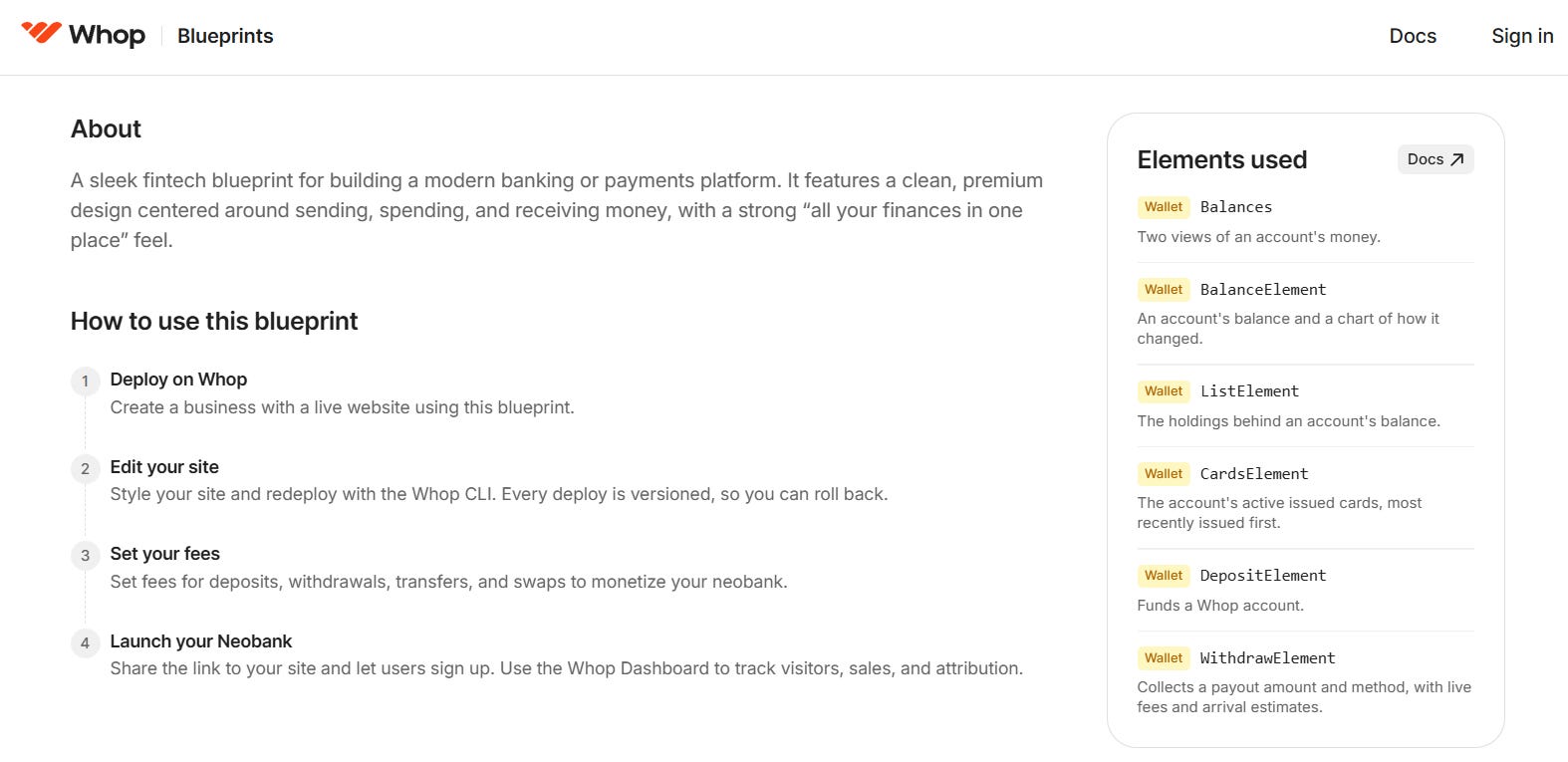
The result is a more literal version of democratized finance: financial products become composable features that increasingly anyone can package, brand, and distribute, even as the regulatory and risk questions remain unresolved.
🎙️ Podcast: How Stripe’s Tempo is Rebuilding On-Chain Cash Settlement, with Head of Market Development Simon Taylor (link here)
In this episode, Lex chats with Simon Taylor, who heads up market development at Tempo, the payments-native blockchain built by Stripe as a high-performance settlement layer for stablecoins and tokenized money. Simon is also the founder of Fintech Brain Food, one of the sector’s most widely read newsletters. They discuss why there is no Fedwire for the internet, and why the next wave of on-chain volume is coming from enterprise money movers like Deel rather than crypto-native builders.
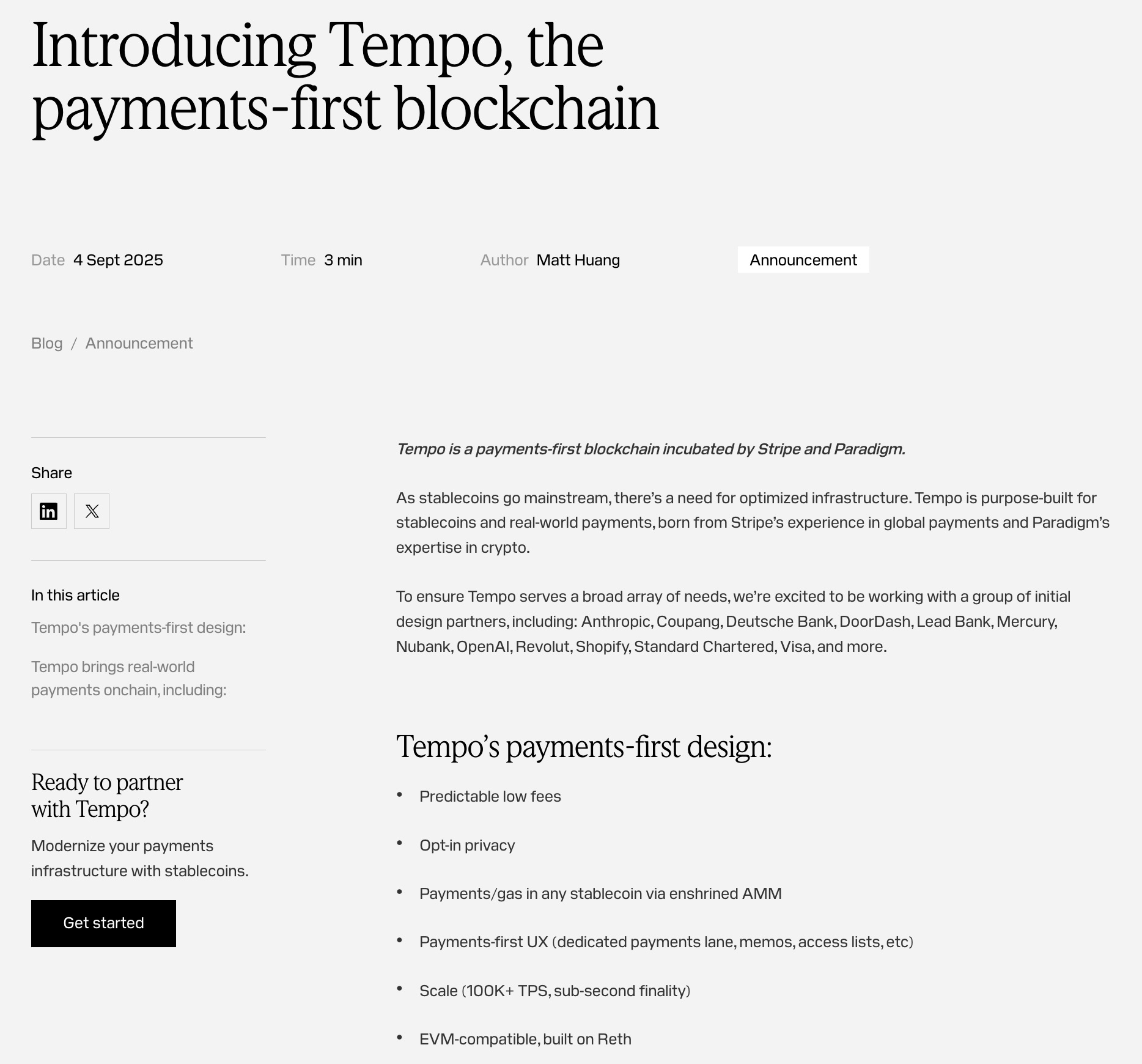
Simon explains why tokenized deposits, stablecoins and TradFi settlement will converge on a single chain, why agentic commerce is still stuck in its WAP-phone era, and how the Machine Payments Protocol is being designed as an IETF-grade standard that can settle across Tempo, Stripe or any card network.
Curated Updates
Here are the rest of the updates hitting our radar.
Machine Models
Ethical and Bias Considerations in Artificial Intelligence/Machine Learning - Matthew G. Hanna & Liron Pantanowitz & Brian Jackson & Octavia Palmer & Shyam Visweswaran & Joshua Pantanowitz & Mustafa Deebajah & Hooman H. Rashidi
A Critical Field Guide for Working with Machine Learning Datasets - Sarah Ciston & Mike Ananny & Kate Crawford
AI Applications in Finance
⭐ AI-Driven Payment Systems: From Innovation To Market Success - Merve Ozkurt Bas
The Rise Of Generative Ai Agents In Finance: Operational Disruption And Strategic Evolution - Inesh Hettiarachchi
Financial Modeling in Corporate Strategy: A Review of AI Applications For Investment Optimization - Olufunmilayo Ogunwole & Ekene Cynthia Onukwulu & Micah Oghale Joel & Ejuma Martha Adaga & Augustine Ifeanyi Ibeh
Investment Outlook
⭐ Private Equity Outlook 2025: Is a Recovery Starting to Take Shape? - Bain & Company
⭐ Global Venture Capital Outlook: The Latest Trends - Bain & Company
⭐ Global Private Markets Report 2025: Braced for shifting weather - McKinsey & Company
🚀 Postscript
Sponsor the Fintech Blueprint and reach over 200,000 professionals.
👉 Reach out here.Read our Disclaimer here — this newsletter does not provide investment advice
Contributors: Lex, Laurence, Matt, Farhad, Daniel, Michiel, Luke
For access to all our premium content and archives, consider supporting us with a subscription. In addition to receiving our free newsletters, you will get access to all Long Takes with a deep, comprehensive analysis of Fintech, Web3, and AI topics, and our archive of in-depth write-ups covering the hottest fintech and DeFi companies.