
Analysis: The Age of the Disposable Company
We file Companies the way we post Content
Gm Fintech Architects —
Today we are diving into the following topics:
Summary: Starting a company has gone from a $5 million capital commitment to a near-free act, and Americans now file over 5.6 million business applications a year while the share that ever make payroll falls toward 6%. We are creating disposable, on-demand companies the way YouTube creators upload video: supply floods to the tails of the distribution, and most of it is meant to be discarded. But the market still rewards endurance, not formation — the startup race resembles a 2,000 meter row, where the sprint off the start is chemistry and the middle thousand meters is pain tolerance, as Marqeta’s eleven years to IPO and LendingClub’s long grind attest.
Topics: OpenAI, Marqeta, LendingClub, Meituan, Taobao, JD.com, YouTube, Amazon (Prime), Deliveroo, Stripe
Thanks as always for your time and attention,
Lex
To support this writing and access our full archive of newsletters, analyses, and guides to building in the Fintech & DeFi industries, see subscription options below.
🤖🏦🧭 Our Ecosystem:
Generative Ventures | AI Research | Robot Money | Linkedin & Twitter | Sponsors
🚀 Lex is actively meeting teams building machine-native financial companies. If that’s you, reach out here.
🤖 AI & Robotics Industry Encyclopedia: In this 100+ page report, we collate all the meaningful companies across public quities, private equity, and digital assets related to the machine economy. 👉Learn more here
🦄 In partnership with InterPrivate, we just launched a $200MM SPAC looking for targets in fintech, digital assets, and AI infrastructure. If you are a late-stage founder or have an idea to discuss, reply directly to this email.
Long Take
Ready to Start
I find myself these days starting a lot of new things.
It’s a way I cope with a lack of control over outcomes. It appears that the chaos and randomness in the world has increased, and perhaps this is due to the leverage that external forces have gathered through money, power, and intelligence.
Your inbox has never been this overrun with pitches, as AI has made mass-spam easy and common. Your social feed has never been this algorithmic, consumed by the spiking dopamine graph mapped back from advertising. And our politics have become designed for the panopticon propaganda age, where even the propagandists can’t figure out the nature of ground reality.
But it has also become easier than ever to begin.
The cost of a new company used to include server hardware and office space. For this, you would have to make detailed plans and cost estimates, spending money just to get started. Then startups moved to the cloud, which led to an explosion in Silicon Valley investment and the Lean Startup methodology, which deemphasized ideas in favor of fast distribution.
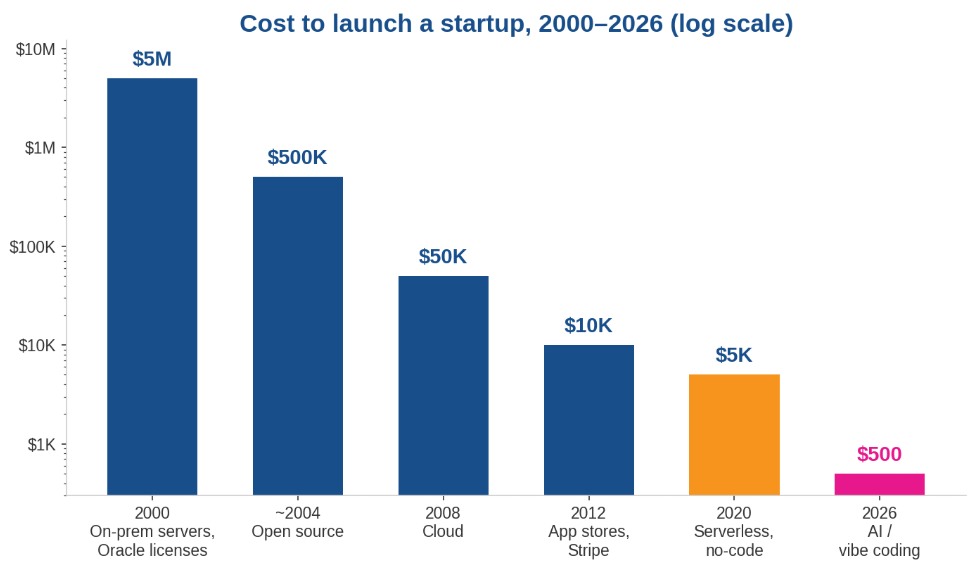
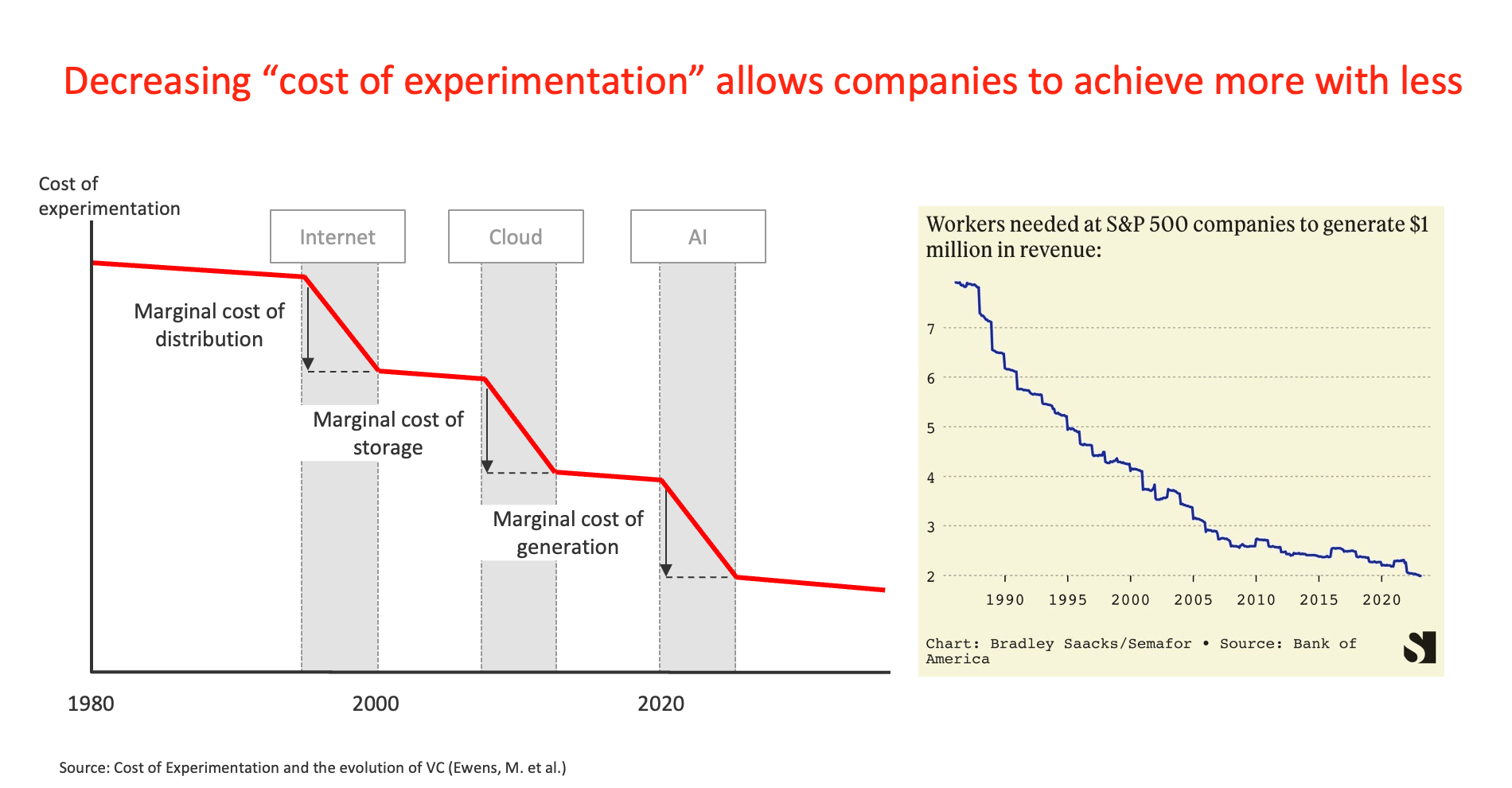
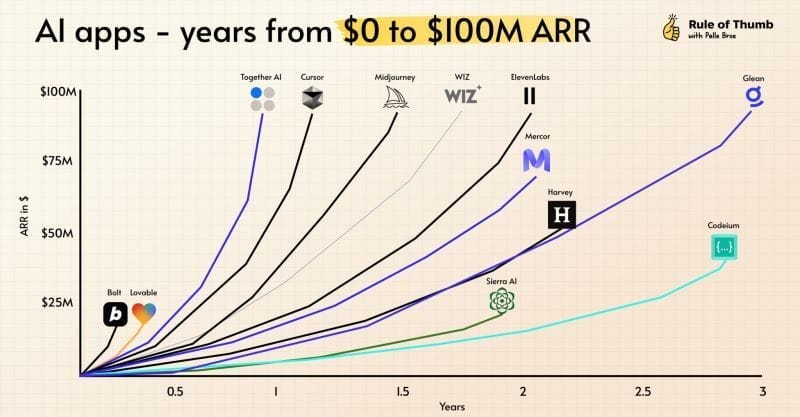
Now, we are in the vibe-business prompting moment, where every rabbit-hole thought can be brute-forced by Fable into a plausible-sounding pitch and live codebase.
If it’s easy to do, that means there will be more supply.
I go back to my trusty analogy. Before YouTube, movies and shows would be filtered through curator markets in the shape of movie studios and producers, who would underwrite the project finance of a film through cultural taste and careful taste graph calculation. The middle of the bell curve prevailed.
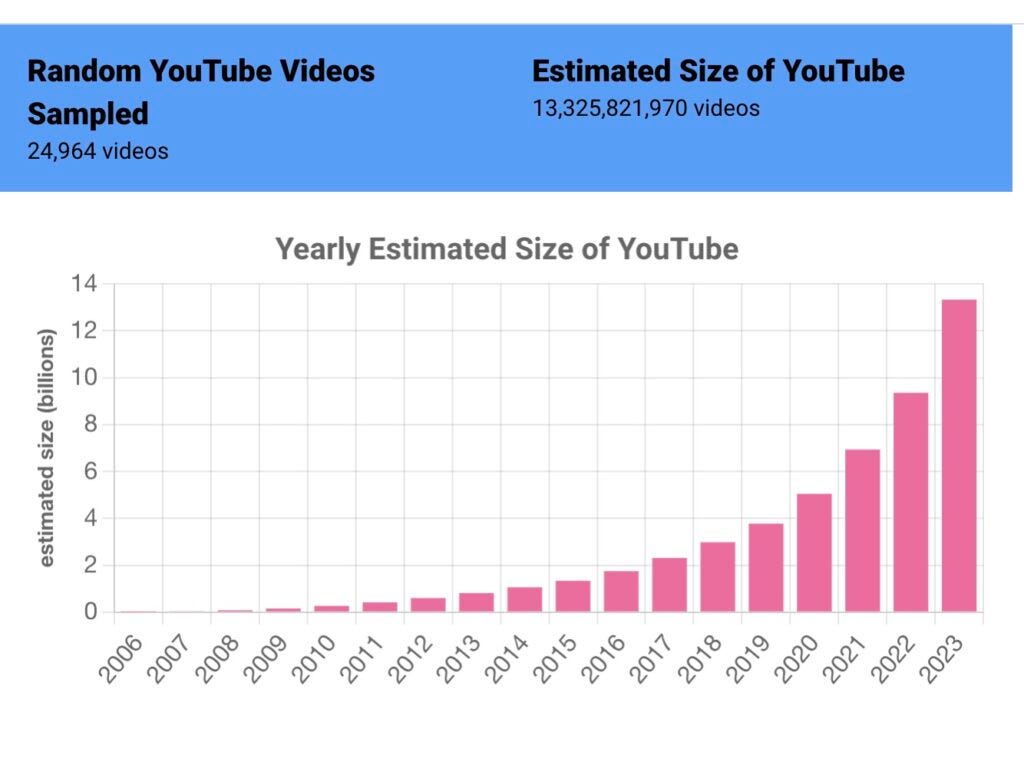
Now, however, we live far in the tails of the distribution.
Infinite content is generated by the human spirit — and primarily its need for attention and social validation — and dumped into our consumption preferences. Our algorithmic doppelgängers, living as digital uncanny valley twins of our real selves, direct the media feed straight down our unwilling gullets. We savor the sweetness.
And so with business, supply will move to the tails. We don’t even know what we are yet missing.
Disposable, on-demand businesses can instantiate themselves in real time to be organized around our most superfluous need.
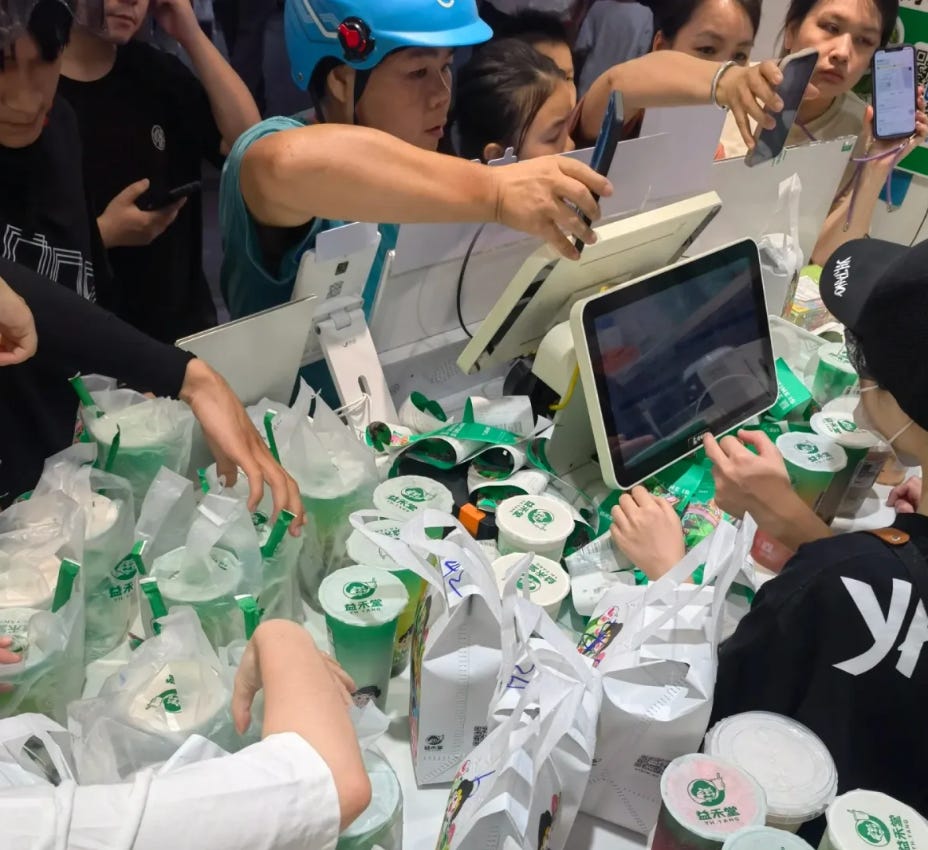
Take, for example, the drastic rise of on-demand delivery of food and groceries in Asia, which has spread to the Western world. Can you imagine living without Amazon Prime or Deliveroo? In China, Meituan crossed 150 million delivered orders in a single day in July 2025, at an average delivery time of 34 minutes.
All the stuff being said about programmable money, agentic finance and commerce, and the digitization of the dollar is mere preamble. That is the medium for the thing to come. In the way that software developers can instantiate software from thoughts and GPUs, or artists can now make media with a comment, so too will the creative act of microeconomics wrap itself around us and our wallets.
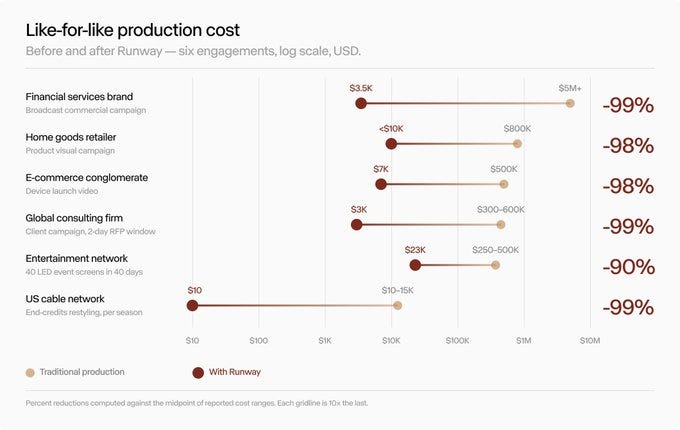
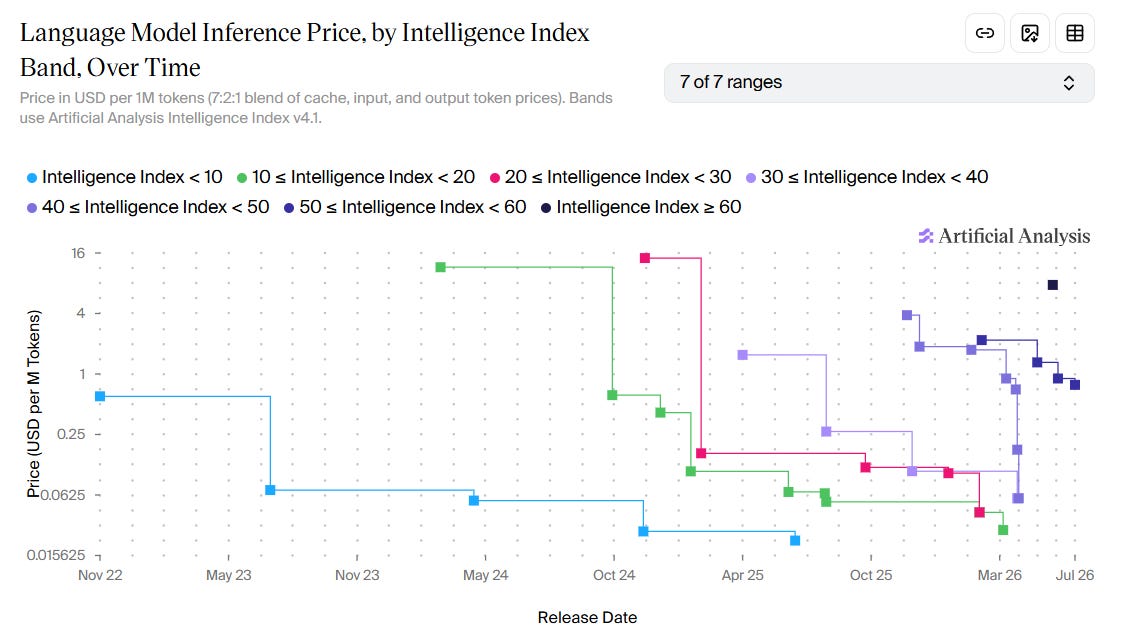
I’ve talked about this from the supply side, where AI transitions from doing tasks, to running workflows, to replacing employees, to then running entire companies and sectors. It may still seem science fiction to you, but what you are seeing is the future destination of the railroad track ahead.


The AI flies the ship in 2001: A Space Odyssey.
This is no coincidence. We are passengers of the ship. Our cultures, organizations, values, and constructions are the flora on its bones — as moss or mycelium cover the rocks of a sharp mountain ridge.
Humanity makes chaos, but humans love structure. We make technology to repeat our desires through math and programs. We build laws to stifle the dangers of mutation and volatility endemic to billions of humans sharing a planet. And so this technology will naturally — as in a natural monopoly, like electricity and oil — centralize and ossify. Like a carapace or a shell, it will move us along a latent space, whose multiple dimensions we can only feel and intuit, but never touch.