
Hi Fintech Architects —
Today, we continue our Building Company Playbook series, focusing on using the current state of the art in AI to turbocharge your creativity and business output. We focus on the following skills:
Personalization of your LLM/robot to think from your perspective
Navigating it to the right task and expanding capabilities
Relaxing enough to break the rules and bypass old assumptions
For prior series, here are the guides so far:

To support this writing and access our full archive of newsletters, analyses, and guides to building in the Fintech & DeFi industries, see subscription options below.
Our Ecosystem: AI Venture Fund | AI Research | Lex Linkedin & Twitter | Sponsors
Start Using AI Labor
The noise
Ignore it, all this nonsense about NVIDIA’s stock price and AI bubbles and whether there is enough money to go around building out data centers.
You are not building out data centers. You are reading an email and thinking about how to get more done and figure it all out before the coming of the financial singularity.
In 2023, here’s what we said:

In 2025, here’s what we showed you:

It’s 2026.
The hype cycle is up in yet another gear. We are talking about agentic commerce and payments, and zero human companies. We are talking about robot Lobsters on your computer answering your emails. Stripe, OpenAI, Coinbase, Google, Anthropic, Goldman, they are all there. Obviously, the robots are all transacting and getting ready to become large-scale economic actors.
We are talking about Robot Money.

If you need an academic source to convince you, here it is. A recent survey of firms and investors showed that employment is likely to contract, and productivity is likely to rise in the short term. Already, some CEOs are polishing up their businesses successfully, according to PWC. This will happen at the application level, downstream of AI infrastructure investment, which has already gone parabolic.
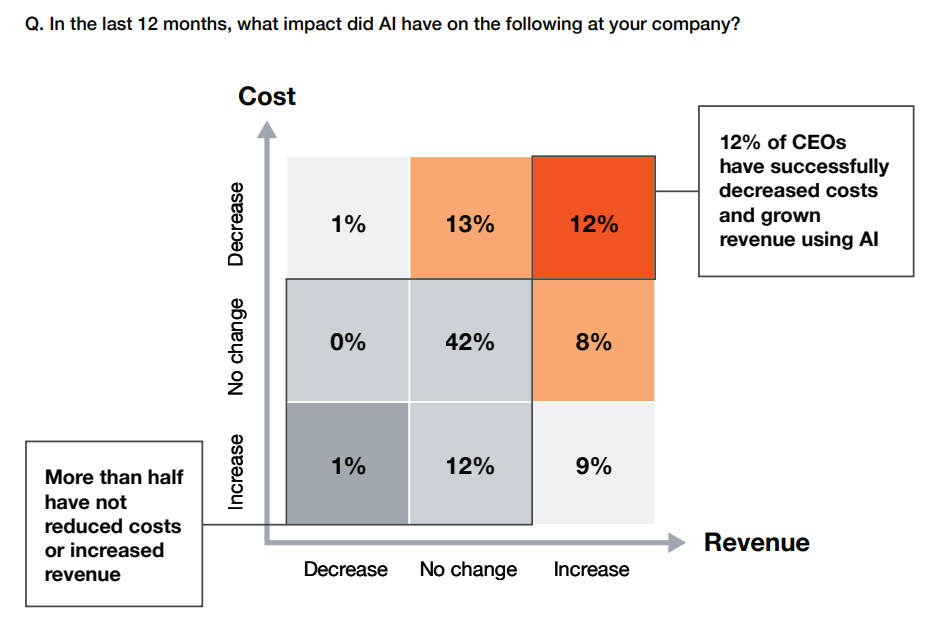
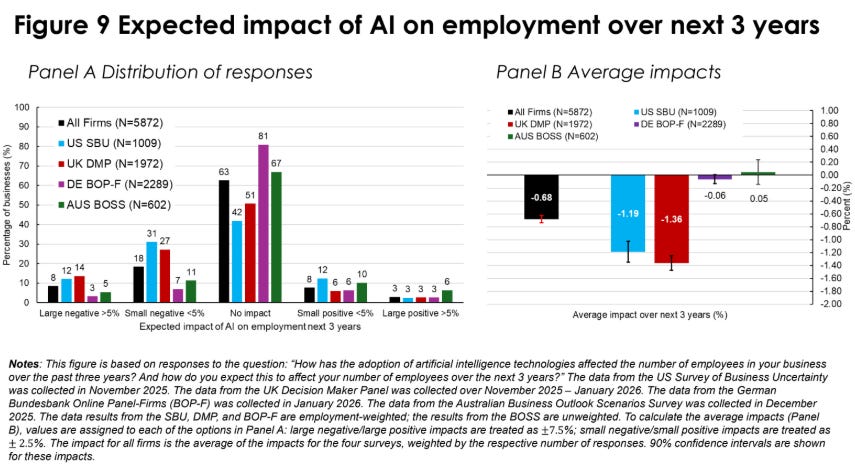
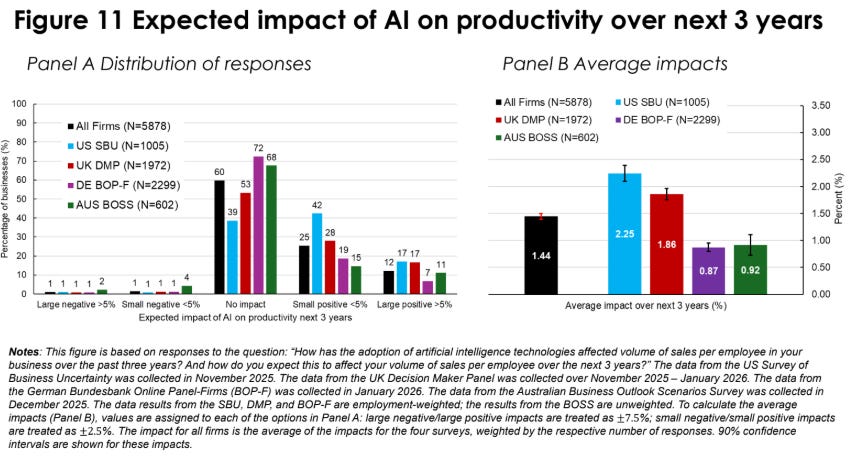
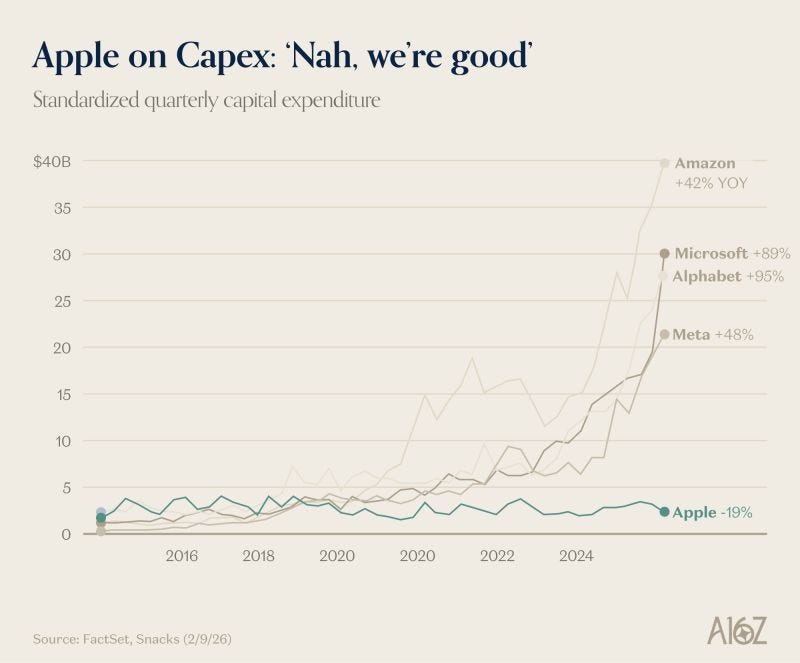
That infrastructure investment is not slowing down despite widespread concern, with Amazon, Google, and Meta all spending $20-40B per quarter on being ready for the AI age. Apple will be a consumer. Anthropic just raised $30B on a $380B valuation. That’s a fundraise of 30 unicorns, eaten and digested by the Borg Cube, to create a $10B+ revenue machine at a 40x revenue.
You, my dear reader, should not sit this one out.
An example of “why not” is OpenClaw. Its founder, Peter Steinberger, started coding with Cursor less than 12 months ago and has been able to build one of the most viral programming frameworks in history. At 200,000 GitHub stars, the project competes with Linux and React for popularity. Steinberger has since been acquihired by OpenAI.
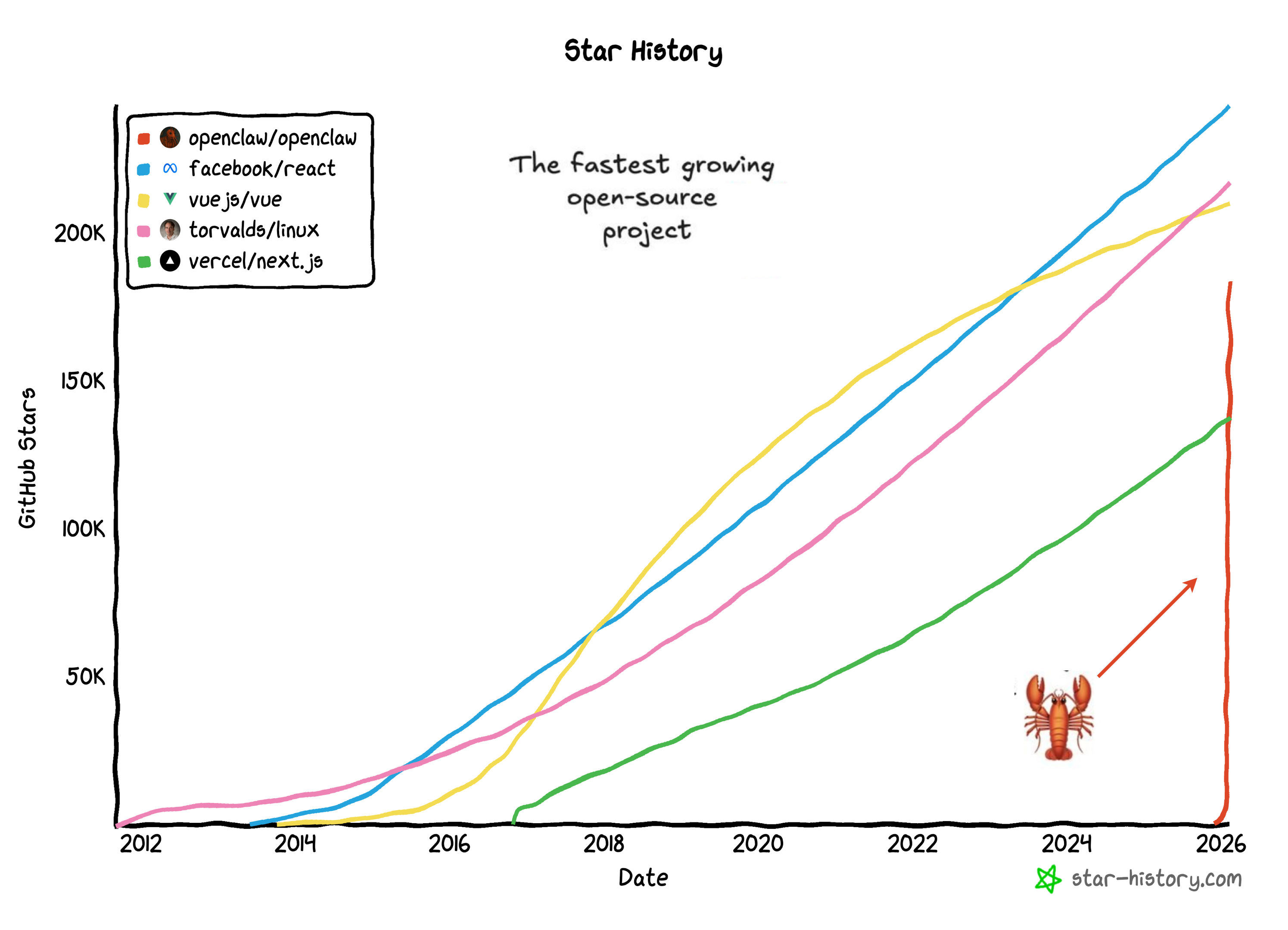
You too can do this. The thousands of people rushing into the Lobster world with financial rails, trading protocols, social networks, and software products see the same thing that you and I see. Opportunity.
But don’t listen to me. Listen to Goldman.
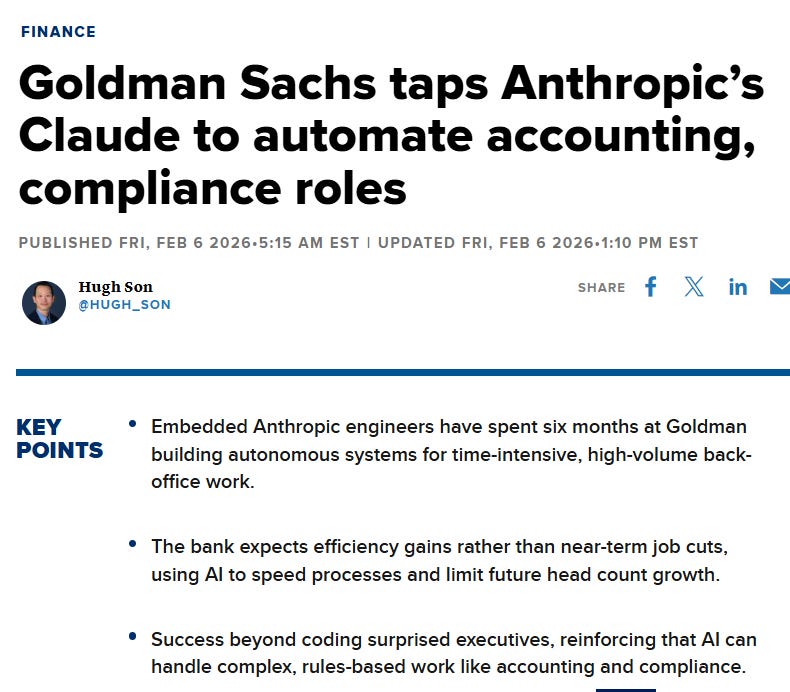
It is the part of the hypecycle where we can get hyped. And the good news is that instead of focusing on how to invest, we can also focus on how to build.
So I will share a few of my workflows, which are basically deliverables that would be complete slop a couple of years back, but are now meaningful. In fact, I can see the places where AI is now better than me at my core Fintech expertise, just the same way it was already clear in 2015 that human art is dead with the rise of neural networks.
It used to be that you would use a narrow question and get a narrow answer back, something like “summarize this article” or “draft this tweet”. The AI would have only so much space for memory and context to think.
But look below.
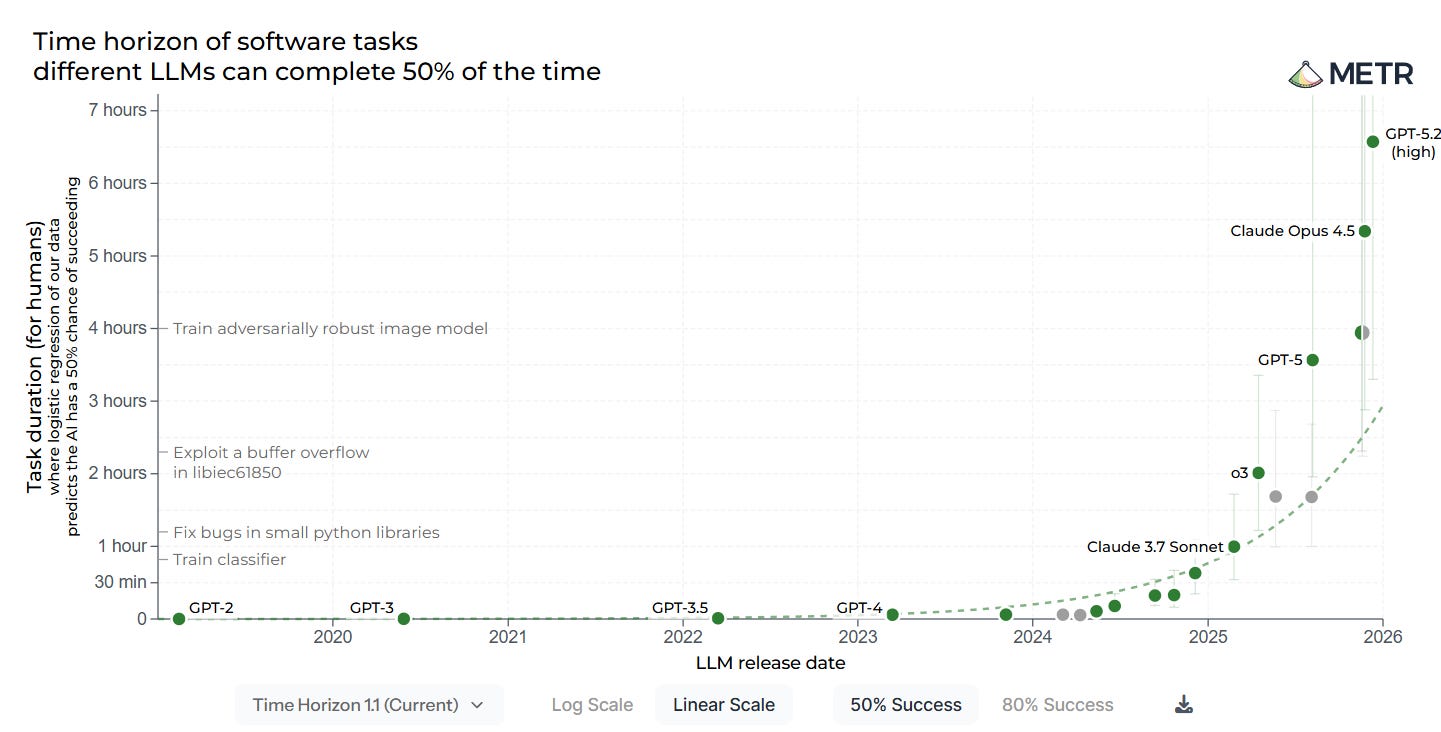
This chart shows you how many tasks an LLM can complete, with some success rate, and over what human-equivalent time period. For example, GPT-3 could do a task on which a human might spend only a couple of minutes. Anything longer, and the robot would get lost and confused. Today’s models can do a task that would take a person 5 hours, all without getting off-track. That means research documents, analysis, summarization, and overall integration of abstract concepts have become far better.
It also means that you can now co-think with the robots, instead of treating them like a hallucination search engine.

Things have changed since 2022.
It is difficult to cover all possible use-cases, and that won’t unlock things for you anyway. Instead, I am going to focus on 3 things:
Personalization of your LLM/robot to think from your perspective
Navigating it to the right task and expanding capabilities
Relaxing enough to break the rules and bypass old assumptions
Here’s what we can do now.