
Hi Fintech Futurists —
The venture arm of Nasdaq announced it is investing $100M into Payward, the parent company behind crypto exchange Kraken, at a $21B valuation. The deal strives to make Kraken a major distribution platform for Nasdaq’s tokenized equities, which are set to go live in 2027.
This comes as the asset class hit a record $6B in monthly on-chain trading volumes in August. This week we dig how tokenized equities are maturing and whether Kraken can win against incumbents Robinhood and Coinbase.
FINTECH: Nasdaq invests in Kraken at $21B to make tokenized equities mainstream
ANALYSIS: Vanguard acquires Altruist for $4B
CURATED UPDATES: Paytech, Neobanks, Lending, Digital Investing
To support this writing and access our full archive of newsletters, analyses, and guides to building in Fintech & DeFi, subscribe below (if you haven’t yet).
Promoting: Continuous Decisioning at Scale

Staying ahead of fraud with AI
Most fraud and risk teams can build a model. The hard part is keeping it effective in production as fraud patterns and customer behavior evolve.
In this conversation with Dennis Kramer, Director of Data Science and Risk at Purpose Financial, we break down the framework needed to operationalize continuous decisioning at scale, including data, people, processes, and tools.
Digital Investment & Banking Short Takes
Nasdaq invests in Kraken at $21B
Stock trading has been re-plumbed once before. Through the 1960s, US equities settled on paper, with a physical certificate changing hands on every trade.
As volumes climbed, Wall Street’s back offices effectively collapsed. In the 1968 “paperwork crisis” the NYSE closed every Wednesday to let clerks clear the backlog leading to roughly 100 broker-dealers failing. The fix was to stop moving paper: the industry immobilised certificates in a central depository (the DTC, 1973) and moved to electronic book-entry.

Tokenized equities are the next evolution.
The current system, while a vast improvement on paper, is still slow and capital inefficient. Moving the ledger onto blockchain unlocks several advantages. Robinhood CEO Vlad Tenev laid out a few of them recently.
Global access: US equities still remain out of reach for most non-US retail investors, and a tokenized share can be held in any wallet, anywhere. It is a TAM expansion for issuers. (insert data)
Instant settlement: Traditional trades still settle a full day after execution (T+1), and to guarantee that gap US clearing houses hold a monthly average of $9.8B in collateral. On-chain trades clear and settle near-instantly, which removes both the settlement time and the associated capital costs.
Composability: A tokenized share benefits from composability in the DeFi ecosystem. Use cases include posting collateral for loans, providing on-chain liquidity, or lending out for yield. Individual investors investing via brokers in traditional markets often lack similar access to these services.
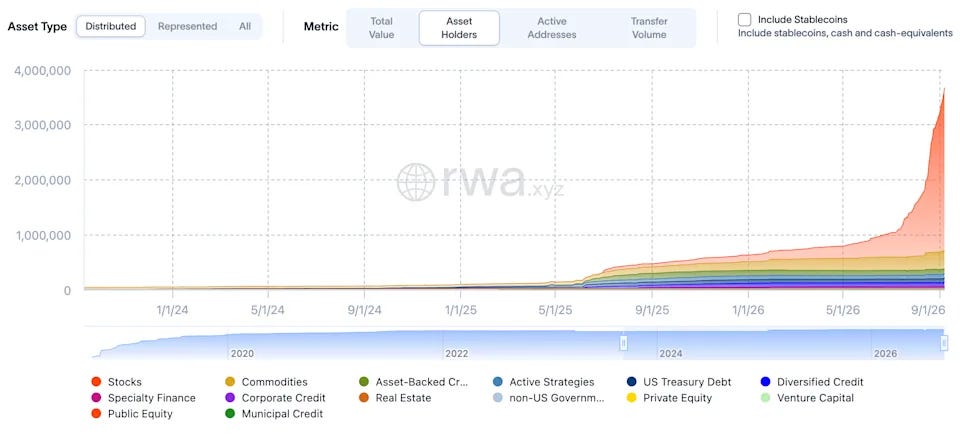
Early traction has been impressive. Tokenized equities are now the fastest-growing on-chain asset class. The instruments crossed ~$4B in market cap in September, up 300% year-to-date, with over 3M holders. Meanwhile, monthly trading volumes hit a record $7.9B in August, a 33x jump from $237M in January.
The size is still negligible in comparison to the $62 trillion in US equity market value, but it also speaks to the weight the second largest US stock exchange Nasdaq could bring. The decision to partner with Kraken now gives it an established distribution platform within crypto as well as existing tokenization infrastructure.
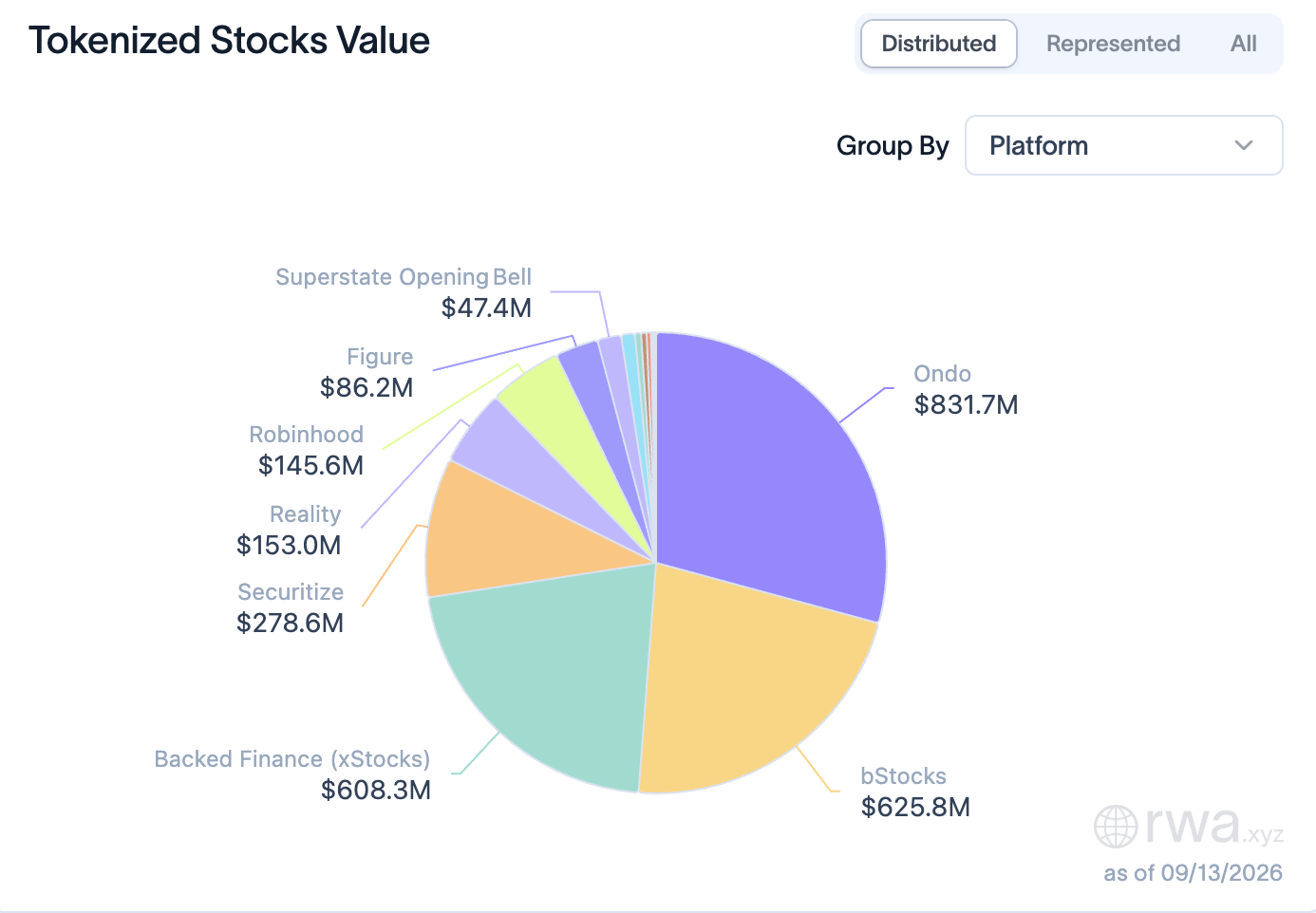
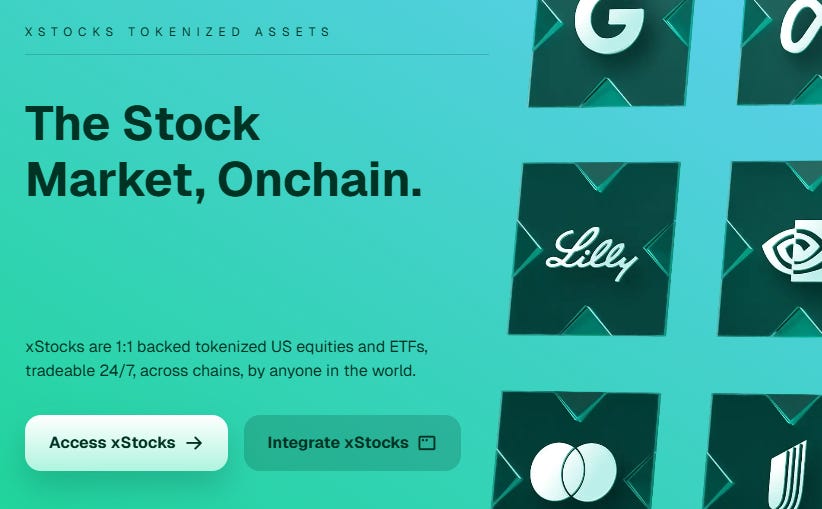
Through its acquisition of Backed Finance (xStocks) last December, Kraken is the third-largest issuer of tokenized equities at $610M; behind Binance’s bStocks ($630M) and Ondo ($830M).
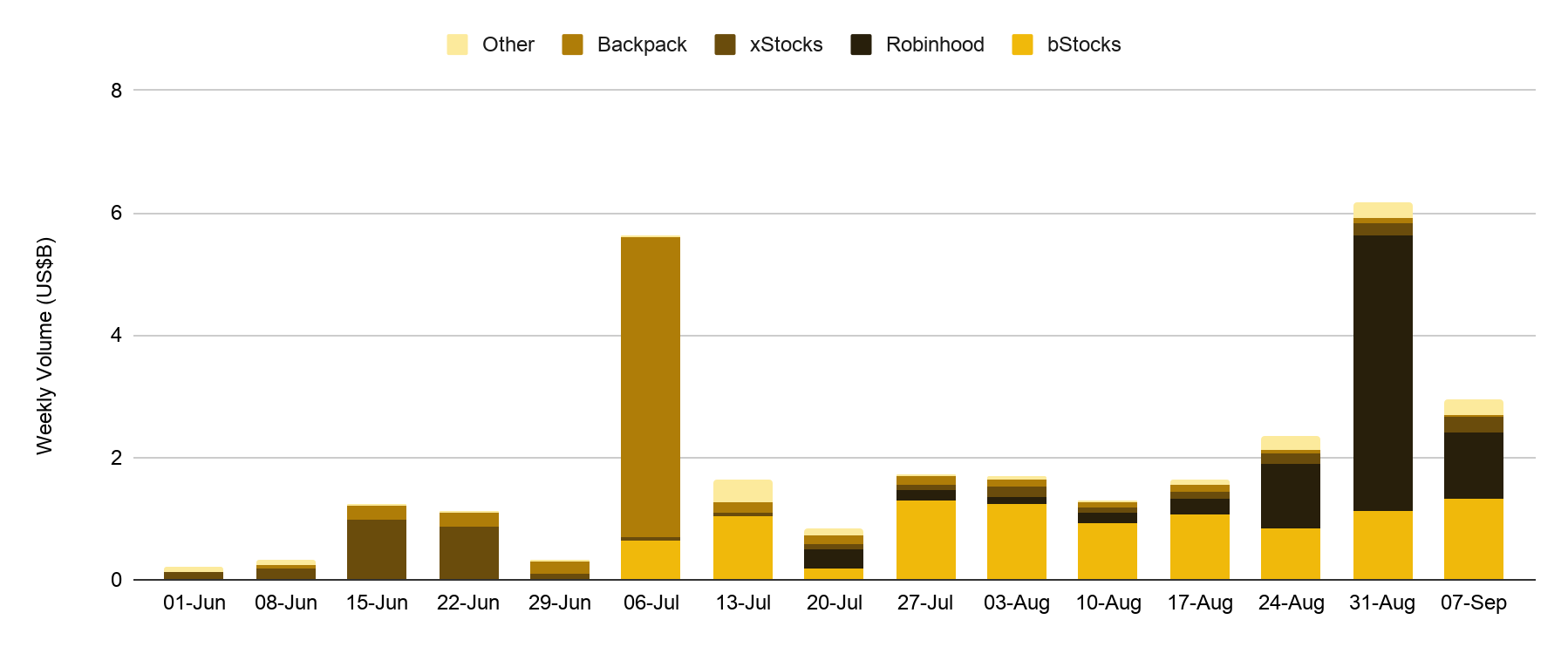
At the same time, the space is fragmented and lacks a clear winner. Each of the last few months had a different leader. xStocks dominated in June, Backpack on Solana in July, and Robinhood in August. We believe this is a sign of being early in the adoption cycle.
Let’s turn to the economics.
Nasdaq invested in Kraken at a $21B valuation, slightly above the $20B the company secured from Citadel in November 2025.
The company last shared financials for FY25, showing +33% YoY revenue growth to $2.2B with $430M in profit (on an adjusted basis). Customer accounts grew +50% to 5.7M customer accounts with $48.2B in assets on platform.
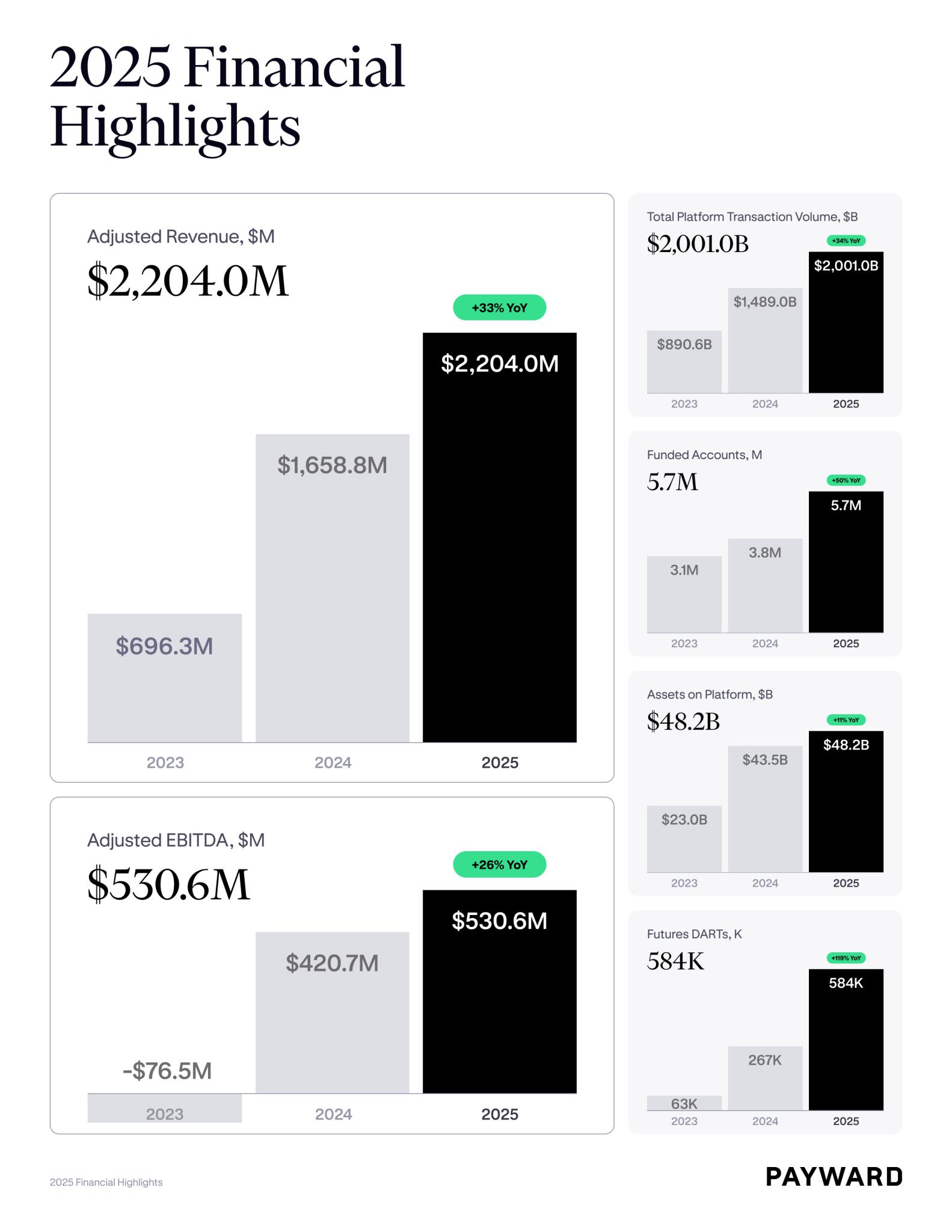
These are strong numbers, so why the flat valuation?
It’s likely that 2026 paints a different picture. Kraken is an exchange business and makes most of its income through trading fees on customer transactions. A bear market in crypto has resulted in a sharp drawback in exchange volumes across the board.
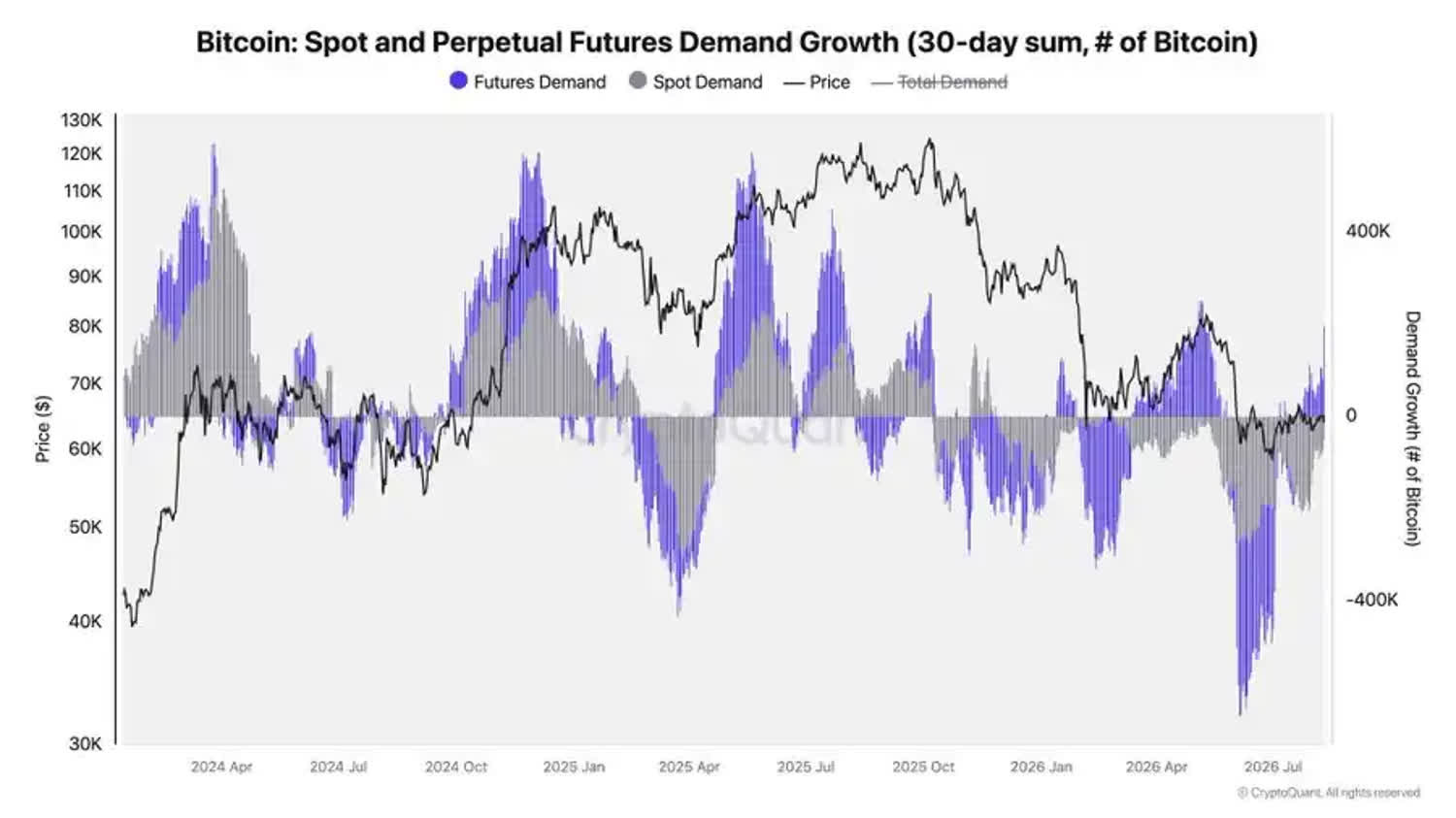
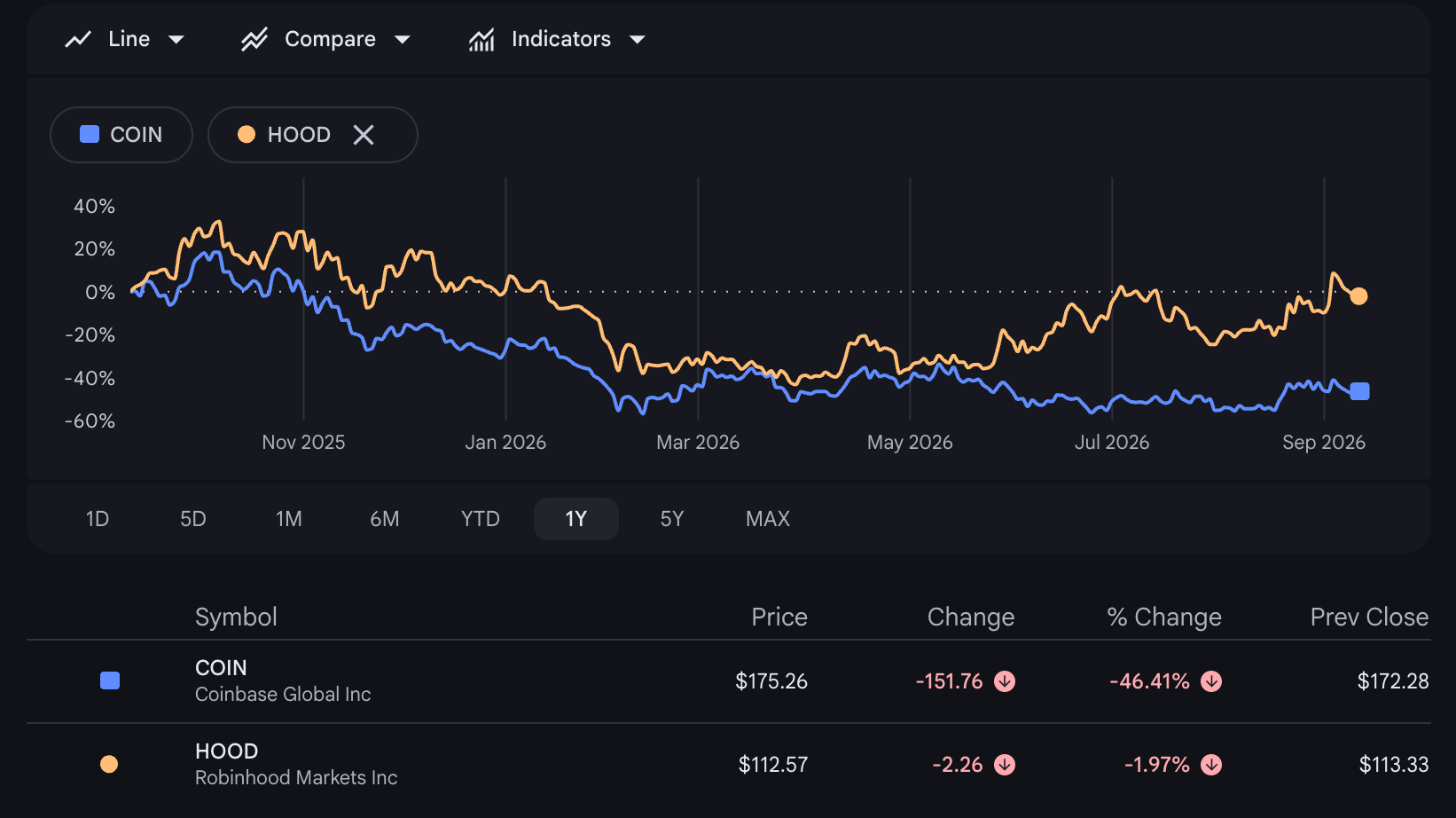
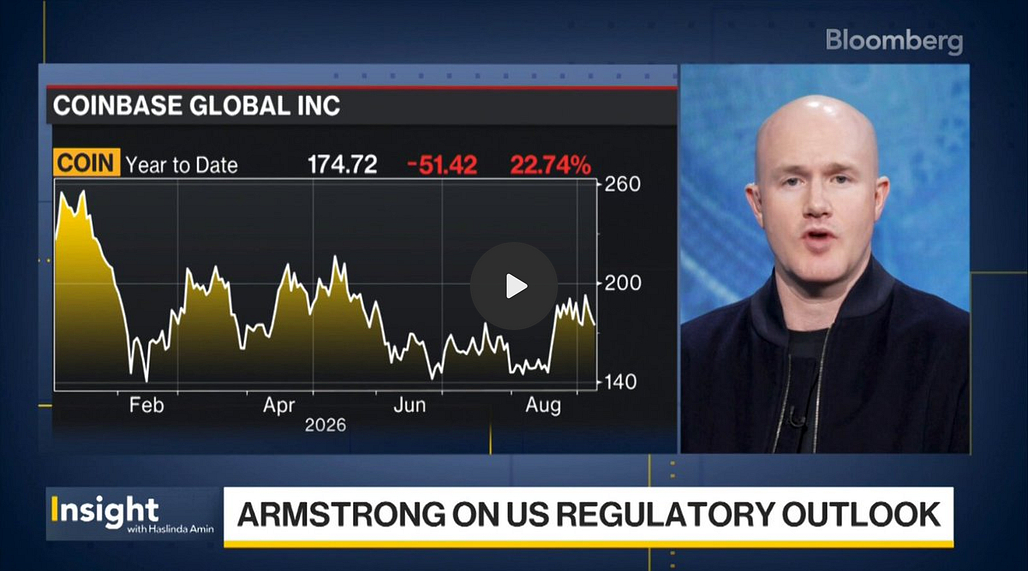
Public competitors like Coinbase posted a -20% YoY revenue decline in 2Q26 results, which has likewise sent the stock down -45% YoY. In this context, Kraken’s valuation has held up well.
Tokenized equities could also act as a meaningful hedge against the cyclicality of native digital asset trading in the future. Robinhood is a good example. The company posted a +32% YoY growth in revenues in 2Q26 amidst a -35% decline in crypto trading volumes. During the same period, equities trading grew +50% YoY.
The respective share price for COIN and HOOD reflects this divergence.
Binance, Kraken, and Coinbase are among exchanges now pursuing the tokenized equities opportunity. A notable differentiator is emerging in the quality of the underlying asset users hold.
Without clear regulation, the structure of tokens themselves vary significantly, each reflecting different degrees of ownership and rights to the underlying stock. For example, Robinhood’s tokenized equities represent debt securities without voting rights, while Ondo creates structured notes with proxy voting.
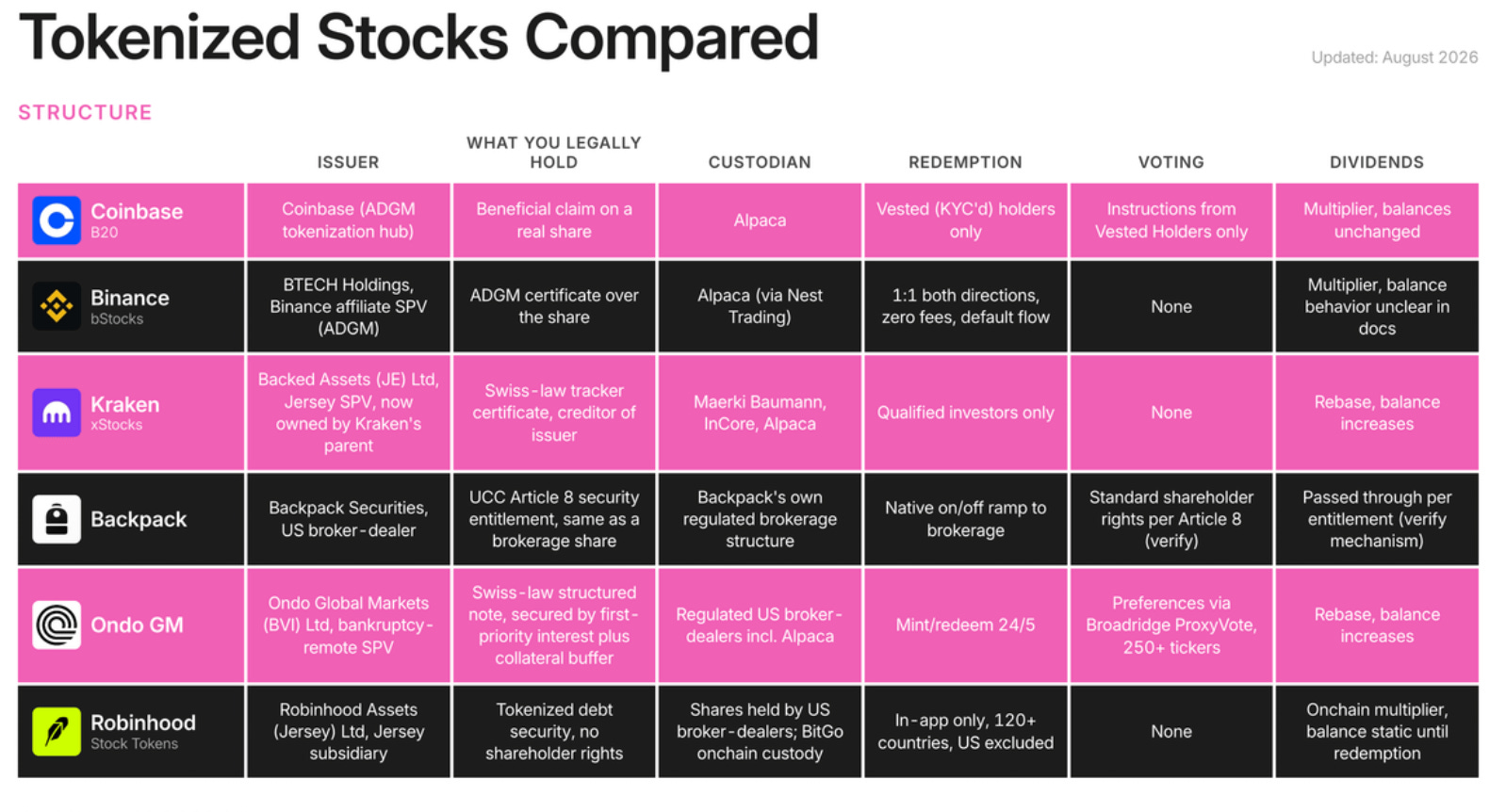
Competition is heating up to reach parity with traditional stocks. Just yesterday, both Coinbase and Robinhood announced voting rights are among incoming features to their respective platforms.

Nasdaq is meanwhile pursuing a design whereby a listed company’s shares are tokenized with the same rights, including voting, as ordinary equity. The tokens would be fungible with shares trading on the stock exchange rather than existing as a separate off-exchange wrapper.
Combined with proposed regulation from the SEC (e.g. here), the deal could give Kraken an opportunity to shape a structurally superior stocks directly with the exchange they are listed on.
With crypto spot volumes still at three year lows, it’s no surprise the exchanges are rushing to establish a strong foothold.
👑 Related Coverage 👑


🤖🏦🧭 Our Ecosystem:
Generative Ventures | AI Research | Robot Money | Linkedin & Twitter | Sponsors
🚀 Lex is actively meeting teams building machine-native financial companies. If that’s you, reach out here.
🤖 AI & Robotics Industry Encyclopedia: In this 100+ page report, we collate all the meaningful companies across public quities, private equity, and digital assets related to the machine economy. 👉Learn more here
🦄 In partnership with InterPrivate, we just launched a $200MM SPAC looking for targets in fintech, digital assets, and AI infrastructure. If you are a late-stage founder or have an idea to discuss, reply directly to this email.
Analysis: Vanguard acquires Altruist for $4B
We examine Vanguard’s extraordinary $4B acquisition of Altruist, only its second acquisition in 51 years, as a strategic move into the infrastructure underlying independent wealth management. Altruist has grown to 6,500 advisors by vertically integrating custody, clearing, advisor software, and Hazel AI into a single stack.
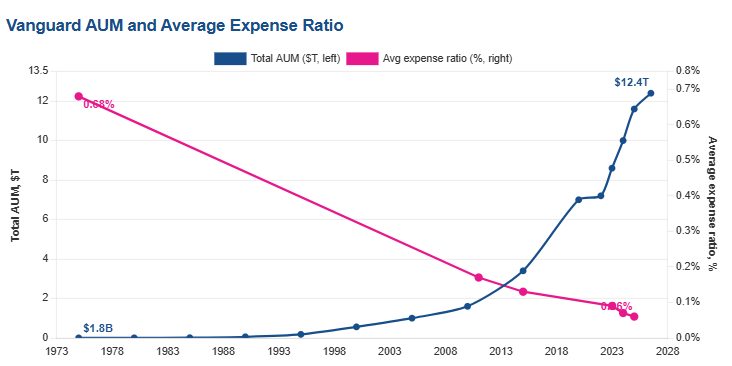
We argue the acquisition gives Vanguard both a credible third player in RIA custody and an AI-native wealth platform capable of reshaping how financial advice is produced and distributed.
Curated Updates
Here are the rest of the updates hitting our radar.
Paytech
⭐ Ramp targets $1B raise at $60B valuation - Dealroom
Visa Stablecoin Settlement Hits $20B Run Rate - OneBullEx
Anthropic Wants More Control Over Its Payments Stack - PYMNTS
Neobanks
⭐ Nubank launches in the U.S. through a sponsor bank - American Banker
Ethena Enters Crypto Neobanking With New App - Yahoo Finance
Chime to acquire Stride Bank for $590m - Fintech Global
Lending
Split Pay raises $125 million for rent and mortgage lending - Axios
DBS and Citi Complete Weekend Dollar Payment on Swift Ledger - Defiant
Digital Investing
Wall Street’s Favorite AI Startup Enters Wealth Management - WSJ
Revolut nabs conditional OCC charter - Banking Dive
🚀 Level Up
Join our Premium community and receive all the Fintech and Web3 intelligence you need to level up your career. Get access to Long Takes, archives, and special reports.
Sponsor the Fintech Blueprint and reach over 200,000 professionals.
👉 Reach out here.Check out our AI newsletter, the Future Blueprint, 👉 here.
Read our Disclaimer here — this newsletter does not provide investment advice