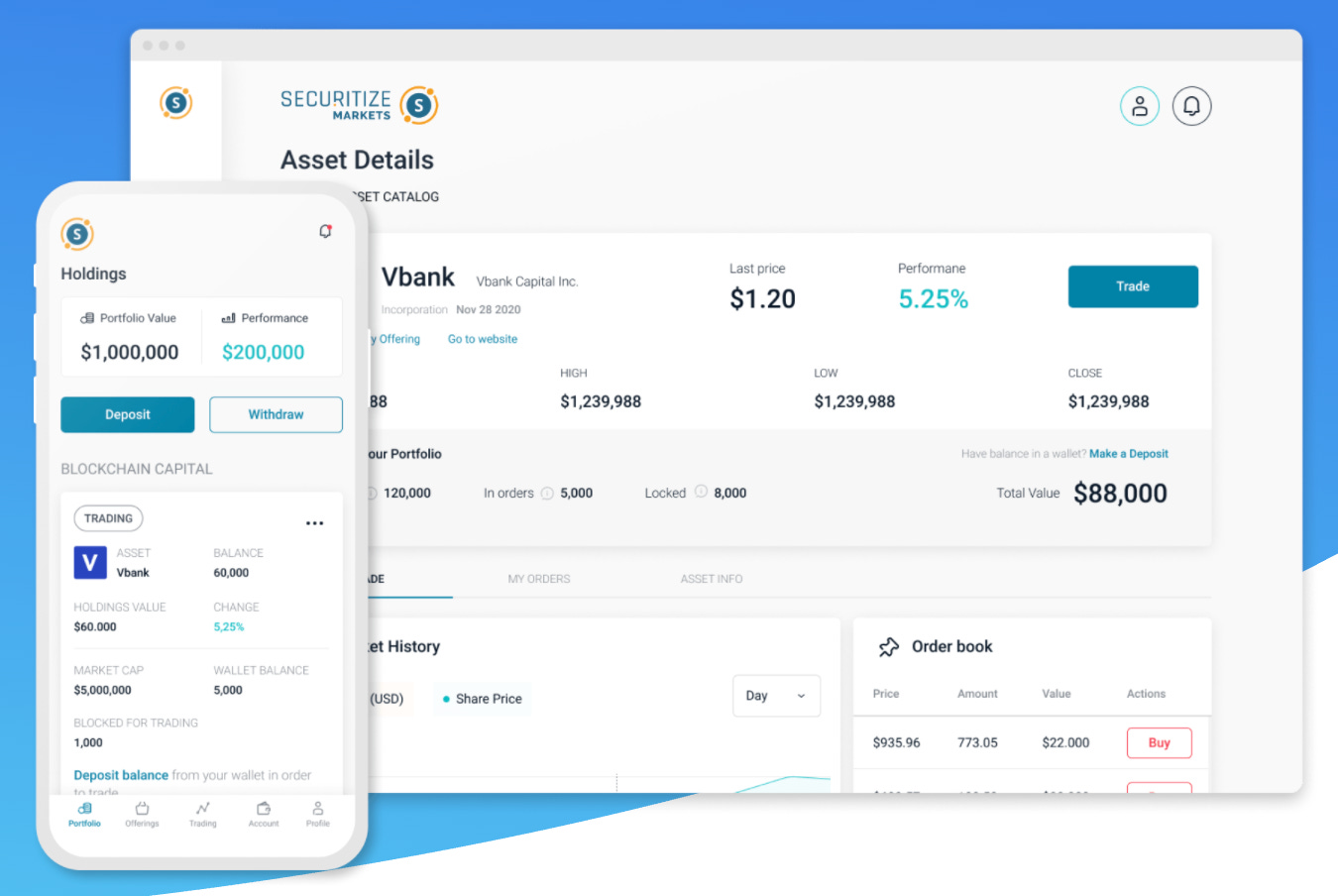
Artory / Winston, a joint venture between Artory and Winston Art Group, has created a $25MM tokenized art fund. The offering is available on Securitize, a digital asset platform that uses blockchain tech for private companies to tokenize assets and raise capital. Winston, a US-based art advisory company, appraises $10B worth of art annually. Artory captures the artworks’ (physical art, digital art, NFTs, and collectibles) due diligence data on the blockchain and provides investors with digital certification.
The fund, which has a 1.25% management fee, contains about 65 artworks — 3 x Blue Chip ($2MM average value), 15 x Mid-Career ($600K average value), and 50 x Emerging ($200K average value). The fund will be tokenized on Polygon due to its lower fees, and investors will be able to purchase those tokens and trade them on Securitize’s secondary market after a one-year lock-up period.
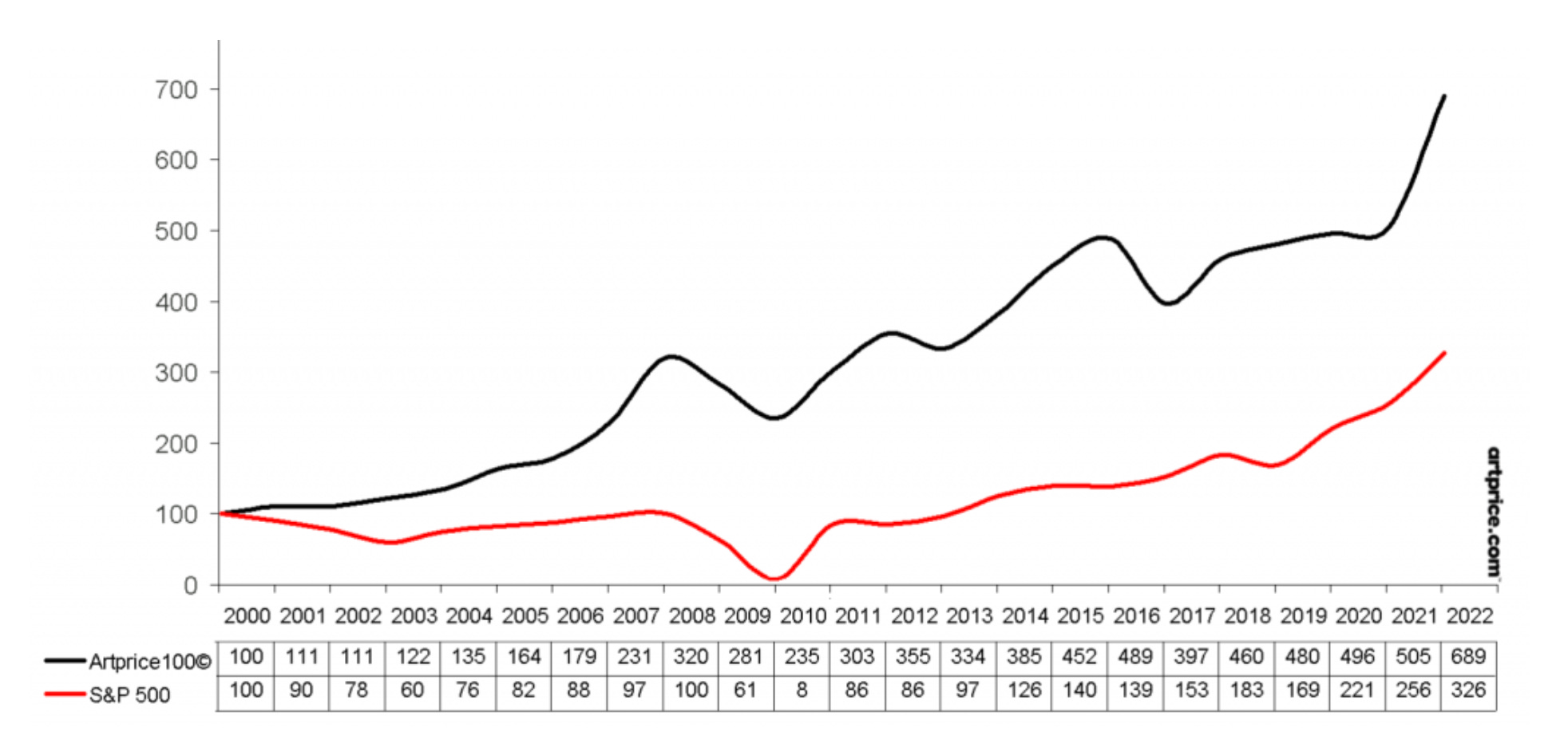
The offering provides investors with a way to diversify assets and hedge against inflation as blue-chip art has outperformed the S&P 500 since 2000, according to the Artprice100 index. A recent BCG and ADDX report forecasts that the total size of illiquid asset tokenization globally could be $16 trillion by 2030. Securitize tokenizes various other real-world assets besides art — e.g., this month it tokenized KKR’s Health Care Strategic Growth Fund II on the Avalanche blockchain.
A new wealthtech, Opto Investments (Opto), has emerged from stealth with a $145MM Series A round led by Tiger Global. The funding values the startup at $475MM. Mark Machin (CEO of Opto) and Joe Lonsdale (Chairman of Opto) are quite the rockstar team behind the company — Machin was recently President & CEO of CPP Investments, which manages over C$500B, and Lonsdale is the Managing Partner at 8VC and founder of Palantir, OpenGov, and Addepar. Reminder that Addepar figured out wealthtech distribution into family offices, and scaled into a $2B+ in valuation.
Opto sources investment opportunities in PE, real estate, private credit, and infrastructure to create custom portfolios, and the startup has already partnered with 80+ RIAs. The platform handles sourcing, diligence, monitoring positions, capital call schedules, investing, and reporting. Its differentiation is in co-investing with the money managers that use its platform.
The startup is now in direct competition with alts incumbent iCapital, which has $135B in client assets. iCapital’s platform — used by 1,300+ RIAs — offers access to funds, due diligence, performance reporting, custodian integration, compliance, and tax reporting. If the pitch reminds you of Artivest, well that’s because Artivest was bought by iCapital too. Wealthtech firms such as TIFIN also provide RIAs access to private markets, and there are quite a few secondary private market plays, such as Forge.
Digital asset manager Ethic has raised $50MM in a Series C funding round, nearly double its $29MM Series B round in April 2021. Last year, Ethic garnered media attention when Prince Harry and Meghan, Duchess of Sussex, joined Ethic as “impact partners”.
Ethic provides personalized ESG investment solutions, such as sustainability training, portfolio creation and management, and investment analytics. The platform has 97 clients totaling $1.8B in AUM and operates as a sub-advisor to RIA firms, which access it via their custodial platform. E.g. in the case of Fidelity, advisors access Ethic through the Fidelity Separately Managed Accounts (SMAs), which include mutual funds, ETFs, sub-advised portfolios, and model portfolios.
Numerous ESG-related controversies have spawned, mainly concerned with ESG assessments and greenwashing. This even turned political, with Ron DeSantis, Governor of Florida, banning fund managers from investing in ESG via state pension funds. Also, this year, ESG ETF flows stand at $4.5B, an 88% decline since 2021, exacerbated by a highly concentrated investor base, greenwashing scandals, and financial market instability.
Are you building in Fintech or Web3? We are investing in great teams at the pre-seed and seed stage. Do you have an awesome idea — click below to let us know!
B2B wealthtech InvestSuite has raised €6MM in a Series A funding round, bringing the total raised to €15MM since inception. The platform has four main offerings: roboadvisor, self investor, storyteller, and portfolio optimizer.
The roboadvisor is implementable as a standalone app or an embedding into an existing platform using REST APIs. Investment policies can be configured using variable parameters like sectors, transaction costs, tax matters, rebalancing frequencies, and currencies. The storyteller solution explains portfolio performance in an interactive way to retail investors through visuals and human-like explanations, similar to Cleo, an AI-based financial assistant platform.
Bambu, another B2B wealthtech, has raised $13.4MM since its inception and also provides a configurable robo platform. This week, Bambu launched its wealth management predictive planning solution for Microsoft Cloud. The solution leverages AI, the Hidden Markov Model (HMM), and Generative Adversarial Network (GAN) Machine Learning models to generate thousands of timelines of future events, namely marriage, family, career, and financial situations … in order to sell you financial products.
Citibank launched Citi Plus®, a Singapore-based digital wealth platform. The platform is an extension of Citi’s “Win in Wealth” campaign that aims to increase wealthtech investments and add $150B to its APAC AUM.
Elevate, one of the Citi Plus offerings, is a digital wealth platform that contains a financial literacy guide, wealth-related articles and insights, and a personal financial goal-tracking tool. Other offerings include Invest, a stock, forex, and mutual fund investment platform, as well as saving, spending, and insurance solutions. Because of course everything is a fintech consumer bundle.
Last year, Citi launched a digital assets group to help clients invest in crypto, NFTs, and CBDCs, but Citi Plus does not offer crypto trading services at this time. The Monetary Authority of Singapore (MAS) mentioned it wants to attract crypto players to Singapore, yet it has a stringent licensing process for crypto-related services. We see that after the Terra collapse, the MAS position is against anti-crypto speculation for the public, not anti-crypto per se.
Wondering what’s shaping the future of Fintech and Digital Wealth? At the Fintech Blueprint, we go down the rabbit hole to help you make better investment decisions and innovate and compete in the industry. A premium subscription opens access to:
Weekly Long Takes on Fintech and DeFi operating and investment topics
Unlocks access to the full archives of all Long Takes (see index here)
Weekly Podcast Conversation transcript, illustrated with analysis and charts
Interesting to see how the Artory/Winston index will compare to the Artprice100 index. I guess we'll find out whether 'Emerging' pieces beat the classics. Cool piece this week.




Interesting to see how the Artory/Winston index will compare to the Artprice100 index. I guess we'll find out whether 'Emerging' pieces beat the classics. Cool piece this week.