

Hi Fintech Architects,
In this episode, Lex chats with Jeff Grimes — who is Head of Live Events Products at Perplexity, the AI company that has evolved from an "answer engine" into an "agent platform" built around Perplexity Computer, its multi-agent digital worker. They discuss how Perplexity has shifted financial research from the how to the what, letting a user describe an outcome in a single sentence while Computer orchestrates 20+ frontier models, direct tool calls to licensed live data, and finance-specific skills to produce the artifact.
Jeff explains the enterprise strategy behind traceability - the north star that 100% of every quantitative figure traces back to its source filing - alongside bring-your-own-license connections via MCP and the consumer "personal CFO" vision powered by Plaid. They explore what 5x revenue growth on a 34% headcount increase signals for finance jobs, and why the future looks like a 24/7 family office that proactively surfaces and, with permission, executes financial actions for everyone.
For those that want to subscribe to the podcast in your app of choice, you can now find us at Apple, Spotify, or on RSS. Or to support this writing and access our full archive of IPO primers, financial analyses, and guides to building in the Fintech & DeFi industries, see subscription options here. Our current price point is only $2/week.
Thanks for your time and attention,
Matt & Lex 🙌
Key notable takeaways:
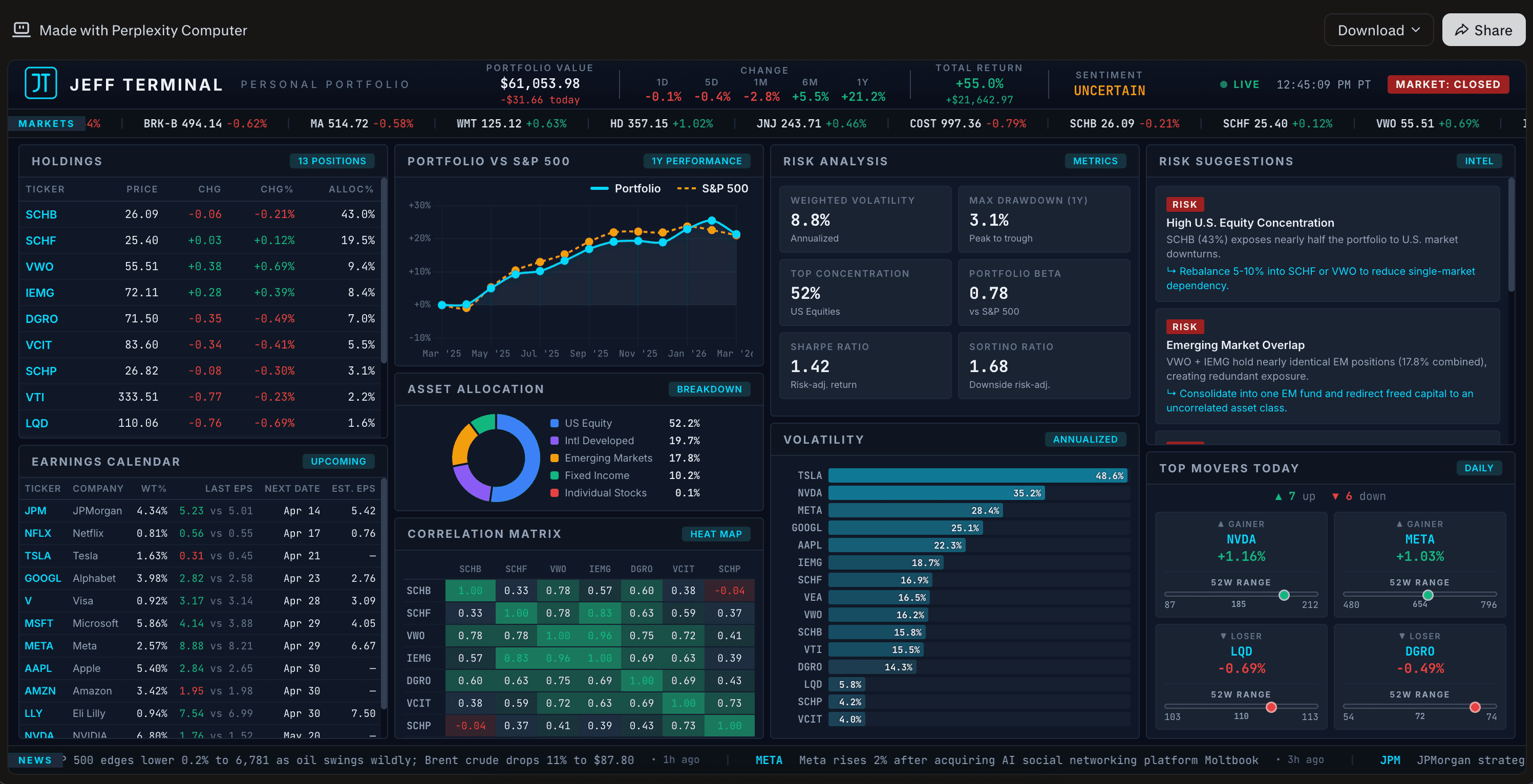
The “how to what” collapse is the real product thesis, not just better models. The shift to zero-shot rests on three stacked unlocks: direct tool calls to licensed live data (Quartr for earnings transcripts, unusual whales for insider and political holdings, SEC filings for historicals) instead of relying on web freshness; a thinking-model router that orchestrates 20+ frontier models in parallel, matching the model to the job (a heavy thinking model for macro analysis, a lighter one for ticker-matching 550 names); and ~20 opinionated finance skills (DCF, three-statement, LBO, comps) tuned through expert-led evals. Together they turn one sentence into a polished equity-research artifact.
Traceability is the enterprise wedge, framed as “don’t trust and verify.” The stated north star is that 100% of every number in any output is hover-traceable back to the source filing - pre-scrolled to the page, highlighted, with the full chain of calculations exposed. The framing inverts the usual “trust but verify”: assume the user won’t trust the model, so trust must be earned per number. Paired with bring-your-own-license via MCP (FactSet, LSEG, Morningstar, CarbonArc, PitchBook), this is the concrete answer to why regulated institutions get comfortable adopting.
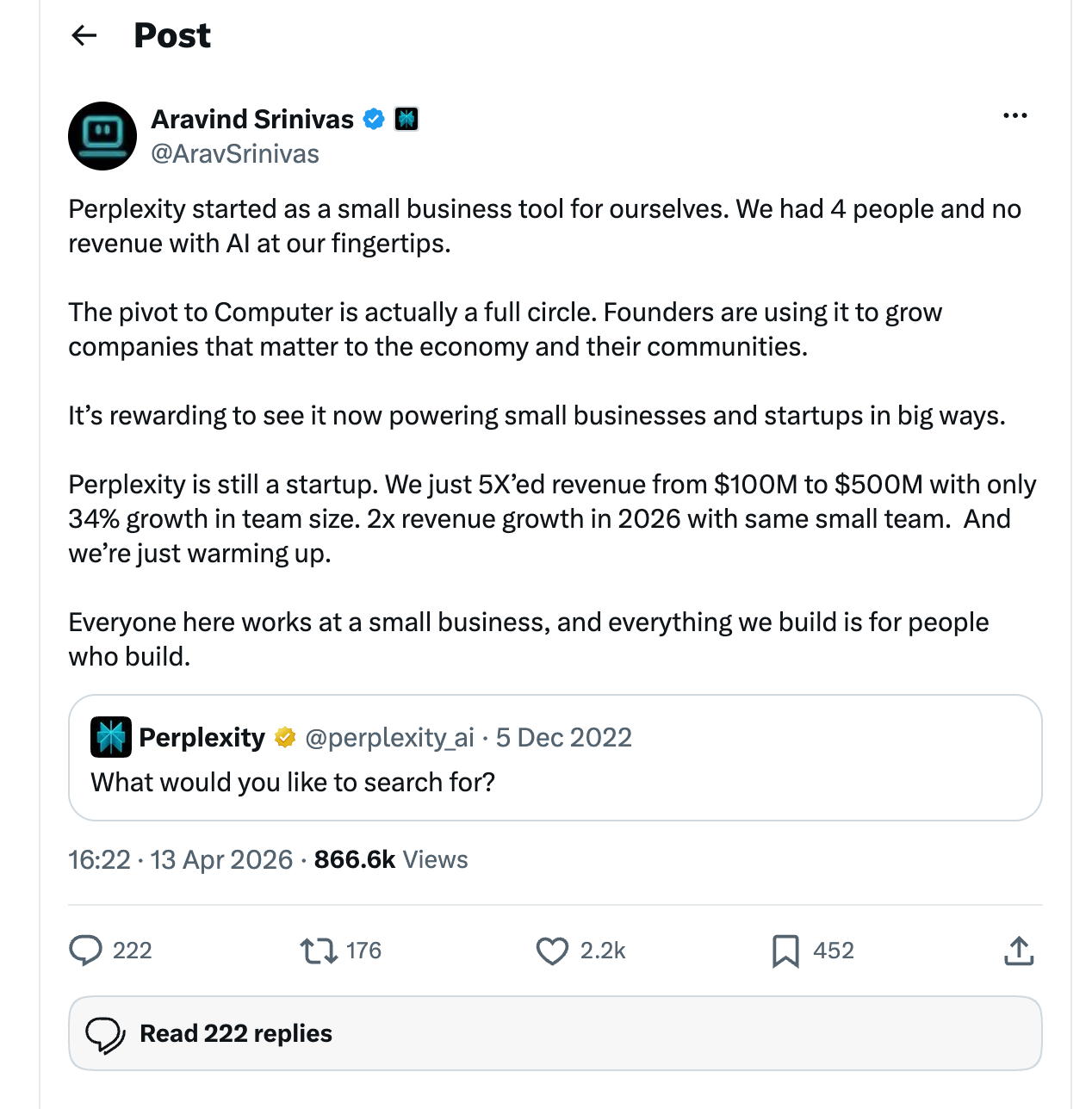
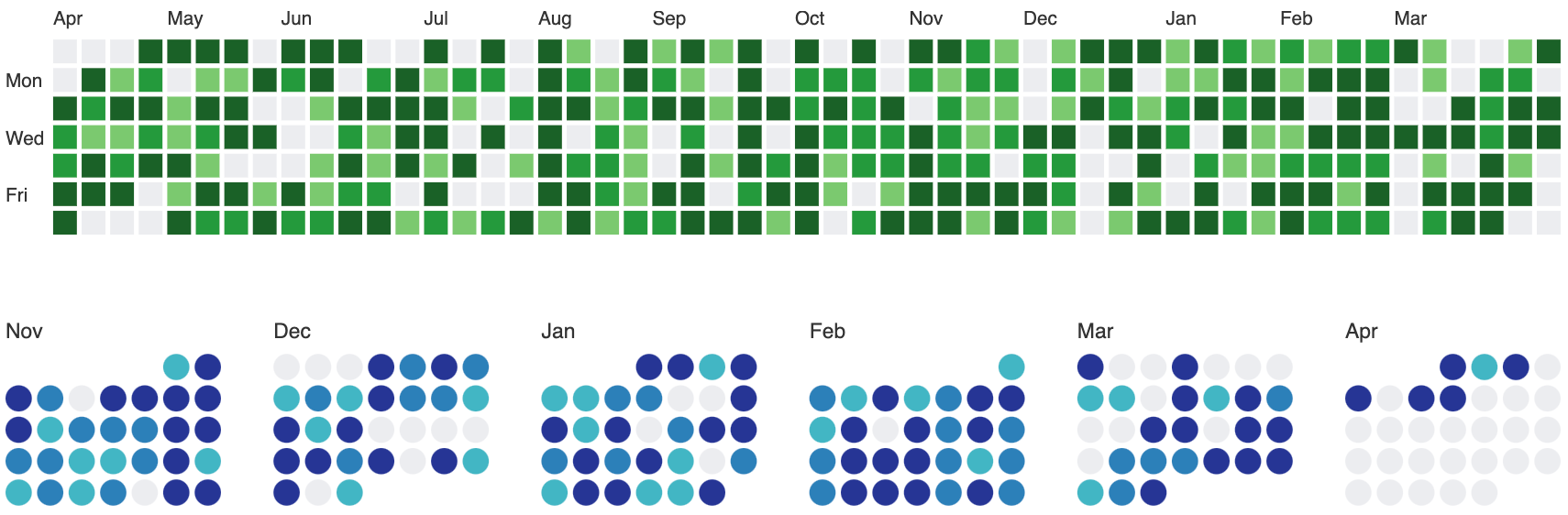
The productivity and jobs signal is quantified and lived internally. Perplexity grew annual run rate 5x while increasing headcount only ~34%. Computer began as a company-wide Slack bot where every request was visible to all employees; Jeff now runs 9–10 scheduled cron jobs each morning and says essentially all code is written first by his agents. On the consumer side, the emergent pattern is build-your-own long-tail apps that no roadmap-bound product could serve - a DraftKings-addiction accountability system that emails a user’s spouse on any bet, or a GitHub-style heatmap of daily spending - which is the real substance of the personal-CFO bet.
Background
Before Perplexity, Jeff Grimes spent roughly eight years at Google (2014 to 2022), joining as an associate product manager and rising to Group Product Manager, where he spent five of those years monetizing Discover, Google's personalized news and interest feed, and learned how publishers, monetization, and news consumption fit together. Alongside that work he served as a Sequoia Capital Scout from 2016, making pre-seed investments totalling around $570K.
In November 2022 he left Google to co-found and lead Shades, a consumer news startup building Shadebot, an AI news-authoring tool; after early growth that later plateaued, the venture wound down in early 2025, at which point he joined Perplexity. He holds dual degrees from the University of Pennsylvania's Jerome Fisher Program in Management & Technology - a B.S. in Computer Science and a B.S. in Economics from Wharton.
👑Related coverage👑


Topics:
Perplexity, Perplexity Computer, Perplexity AI, Google, Shadebot, Plaid, Yodlee, Claude, ChatGPT, AI, Artificial Intelligence, LLM, CFO, financial services, AI commerce
Timestamps
1’05: A company built on failed founders: Why the startup that didn't work out led here
5’10: A playing card company that became Nintendo: How curiosity carried Perplexity from answers to actions
9’52: We're basically at zero shot now: Why prompt engineering is disappearing from finance work
15’21: A thinking model that routes the job: How Perplexity picks Claude Opus for macro and Grok for tickers
20’12: Two tracks, one engine: Building for enterprise workflows and a personal CFO at once
25’25: Bring your own license, or use ours: How Perplexity gets institutions comfortable enough to adopt
32’54: 5x revenue on 34% more headcount: The productivity gain Perplexity lived firsthand
37’28: Connect everything from your mortgage to the painting on your wall: Building the true personal CFO
45’15: A family office that works 24/7 for everyone: The proactive, automated future of the personal CFO
48’01: The channels used to connect with Jeff & learn more about Perplexity Computer
Illustrated Transcript
Lex Sokolin:
Hi everybody, and welcome to today's conversation. We are very lucky to have with us today, Jeff Grimes, who oversees the finance product at Perplexity. Perplexity is one of the early AI companies and has been a leader in figuring out how to bring financial services into the LLM suite. And I'm really excited to learn from Jeff what's happening. So, with that, welcome to the conversation. Hi, Jeff.
Jeff Grimes:
Hey, Lex. Thanks for having me.
Lex Sokolin:
My pleasure. First off, what is your way into Perplexity? How did you journey yourself through the tech industry and into a leading AI company?
Jeff Grimes:
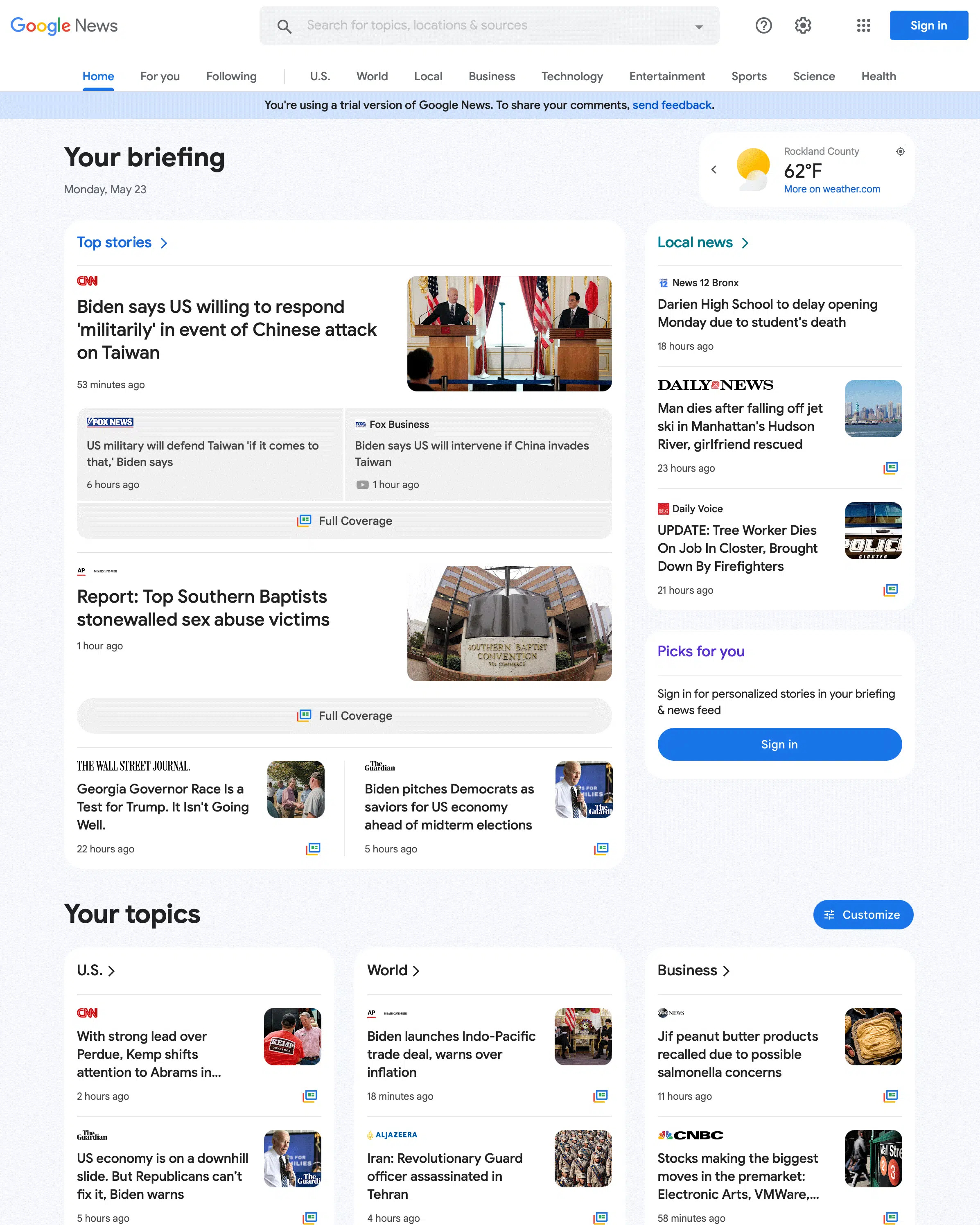
I started my career at Google. I was there for seven years as a product manager. I worked for five of my seven years there on monetizing the discover feed. So that's one of Google's news products and interest in News Feed. And I was exposed there to the world of publishers and monetization and how users interact with news content. And that led me to what I did next. So, I quit in 2022 to join a co-founder. And we started our own venture, and we ran that for two years. And that was building on a lot of the things I learned at Google. It was a news product. We had a consumer app, and without going into all the details, it did not work out. We grew for a little bit and then plateaued and decided to shut it down at the beginning of 2025, which is then when I got connected to Perplexity and I joined. And there were many reasons I was excited to join, but one of them was the number of other failed founders there. you know, there's quite a few people here who have started their own venture and for whatever reason, it didn't work out.
And they came on a Perplexity. So, I think it was very clear from the beginning that that spirit was there. And it very much is still here. The company is, several hundred people now, but still feels much, much smaller. Like, I experience both ends of the spectrum, a 200,000-person company into a five-person company in my first two roles. And now this perplexity feels much closer, much, much closer to the five-person company.
Lex Sokolin:
Let me ask you a self-indulgent question. What does it mean to be a founder, and how would you define a failed founder versus a successful founder? Like, what are those words mean to you?
Jeff Grimes:
You learn so much. The experience of running a company for two years, it was every kind of adjective I could throw out. It was exhilarating. It was overwhelming. It was stressful. You just can't shut off your brain ever from thinking about it. I think as opposed to my Google experience, which, you know, there are much clearer boundaries of, okay, we're finishing up.
![The Number of Failures Before Success [Infographic] - Personal Excellence](https://substackcdn.com/image/fetch/$s_!uPSr!,f_auto,q_auto:good,fl_progressive:steep/https%3A%2F%2Fsubstack-post-media.s3.amazonaws.com%2Fpublic%2Fimages%2F311b4188-7d5d-4cf0-b392-6e0236a4c359_900x708.png "The Number of Failures Before Success [Infographic] - Personal Excellence")
And, you know, now we're not going to think about this for a while until the morning or something. I think there's a certain type of person, whether you're a failed or successful founder. I can't opine as much on being a successful founder from my experience, but I think there's a commonality that you just love to think about something all the time and throw yourself completely into it. And certainly, as I mentioned, I experienced both ends of the spectrum in my first two roles, but the second to me was much richer and more rewarding and meaningful. And so, I think that's a common thread in people who work at Perplexity. But regardless of their background, you know, you don't have to have been a startup founder, but everyone really cares. And that's something that you actually like. It sounds like a cliche, but you actually don't see it very often. I haven't seen it very often in my career before this. Every person here and every role deeply cares about the details and getting things correct and, you know, can operate at the high level.
View the strategic view and think about the future and where is AI going and all of that. But then can zoom in and like obsess over, oh, this, these, these elements are misaligned by two pixels. We need to fix this like nothing is not worth our time or attention. And everyone takes pride in the craft. So, I think that's a commonality. Like, honestly, it's a credit to our recruiting team and the people they brought on. But that's really energizing to work with people who care that much.
Lex Sokolin:
So then let's zoom out and ask the starting question, which is what is Perplexity? Where did it start? And you know, what is the company?
Jeff Grimes:
Now Perplexity has evolved. Like I'll talk about the evolution from an answer engine to now we call ourselves and we do call ourselves an action engine. And the through line there has been curiosity. This is something that Aravind, our CEO and co-founder, has talked about from the very beginning, when he and the other co-founders started the company.
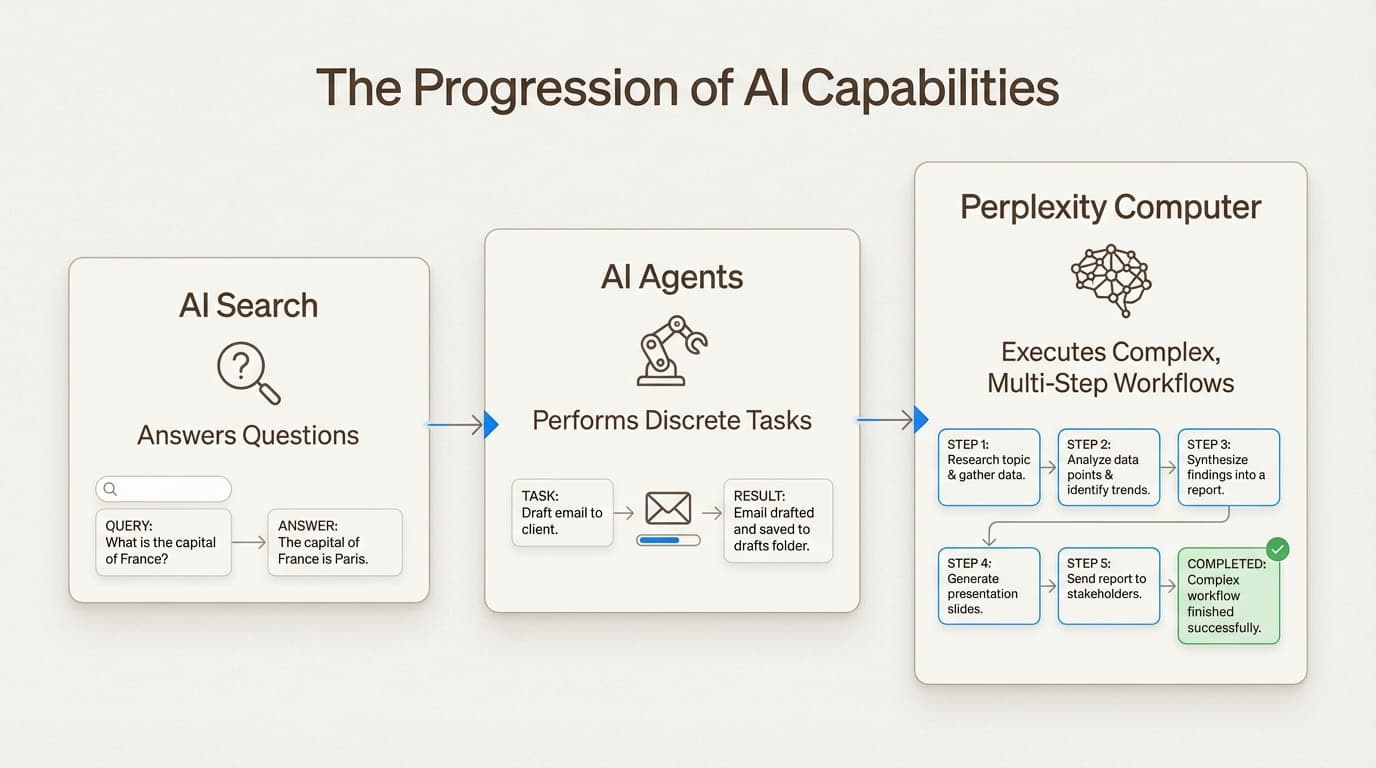
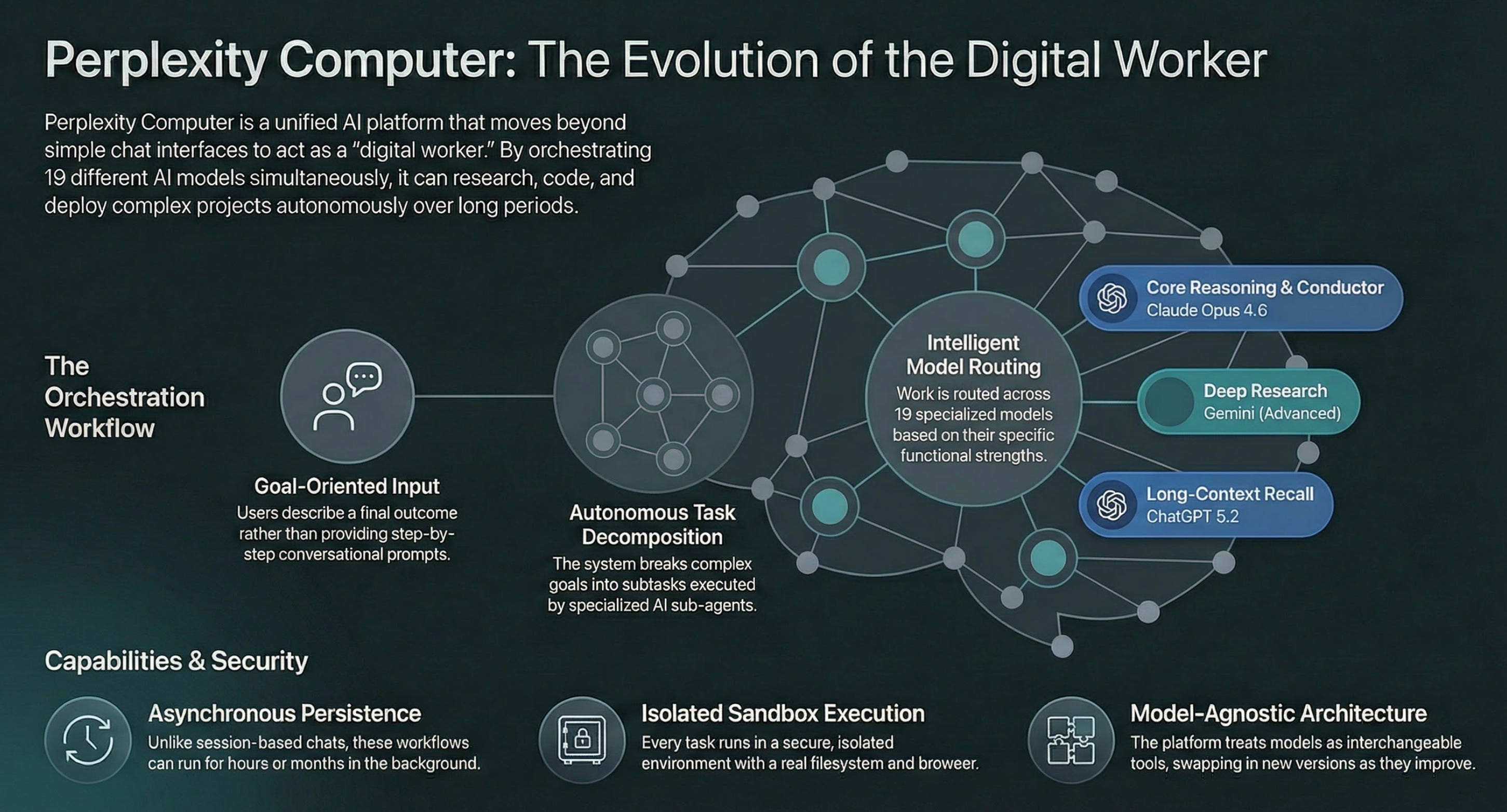
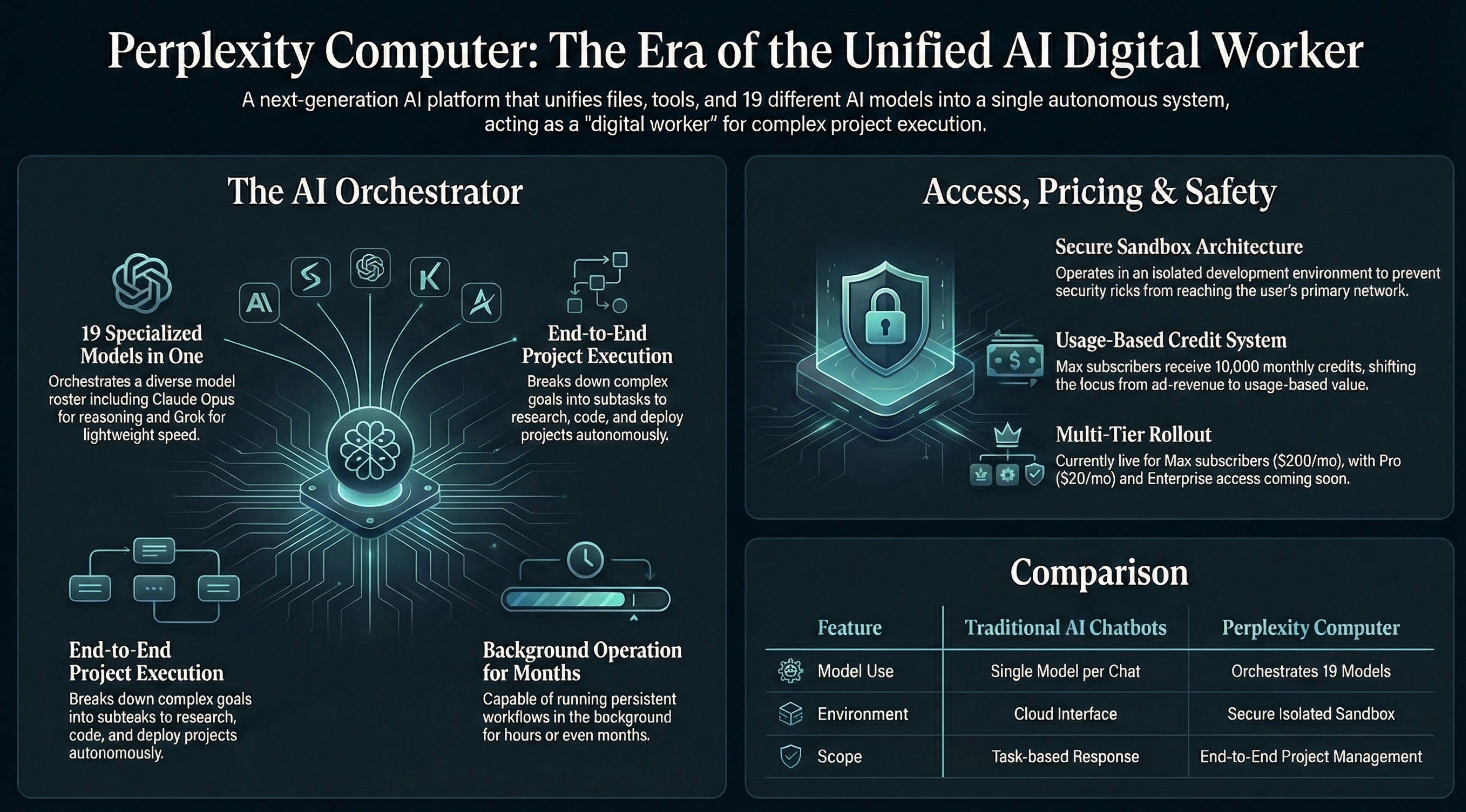
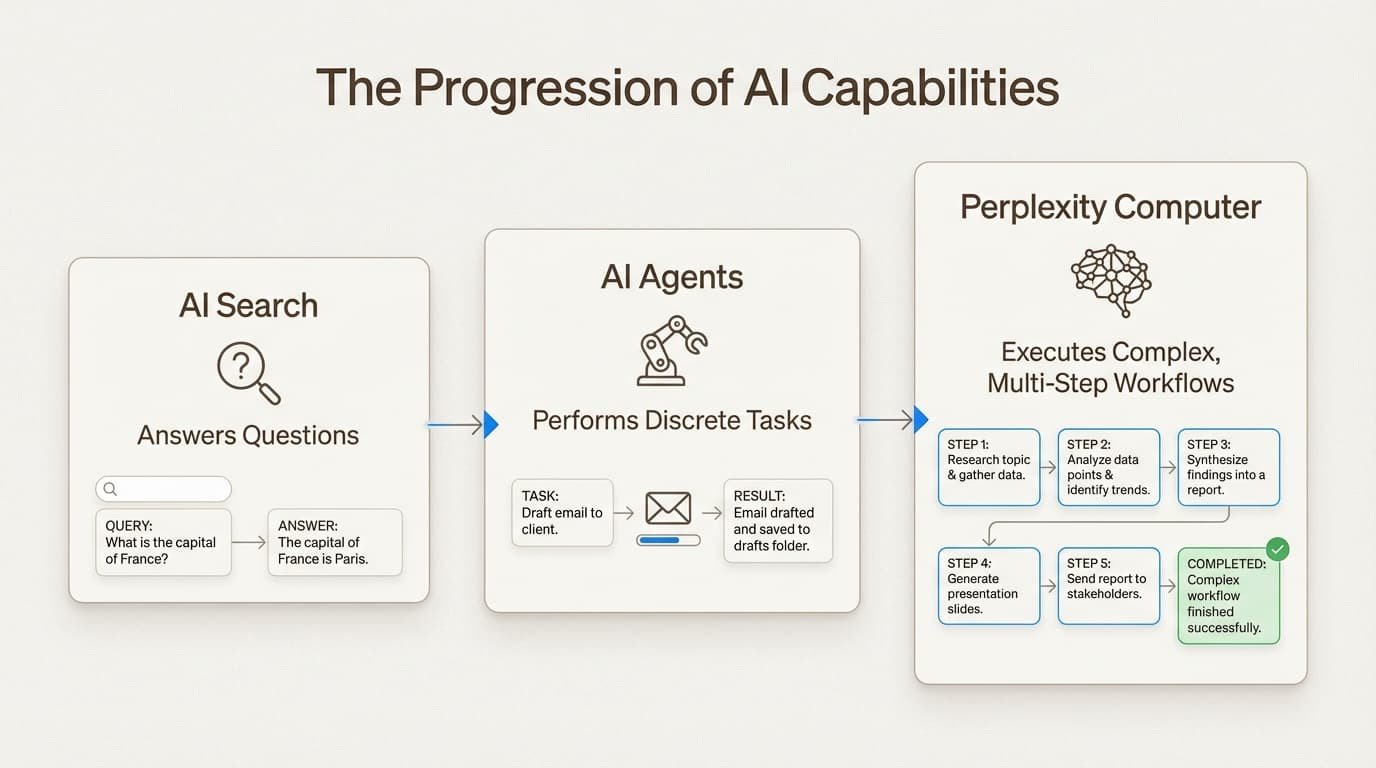
Perplexity is built for curious people and it started just with answers. You know, you probably used one of the early versions of the product instead of having to sift through the ten blue links like on Google or other search engines. The answer? The answer is just synthesized directly for you, but it was always grounded in this mission of appealing to curious people and stoking that curiosity and letting them propagate that curiosity. And now, recently, the product has evolved with Perplexity Computer. You know, that's the thing we're all really focused on now, and that's what we're building for and finance, which is our digital worker product. I'm happy to talk more about it, but at its core it gets things done. It does work. It's not just researching things. It can research things if you want it to, but it can create artifacts. It can create websites and live dashboards, and it's collaborative and it gets things done. I think the you know, I mentioned that curiosity is the through line. It's helped us evolve from one to the other quite naturally.
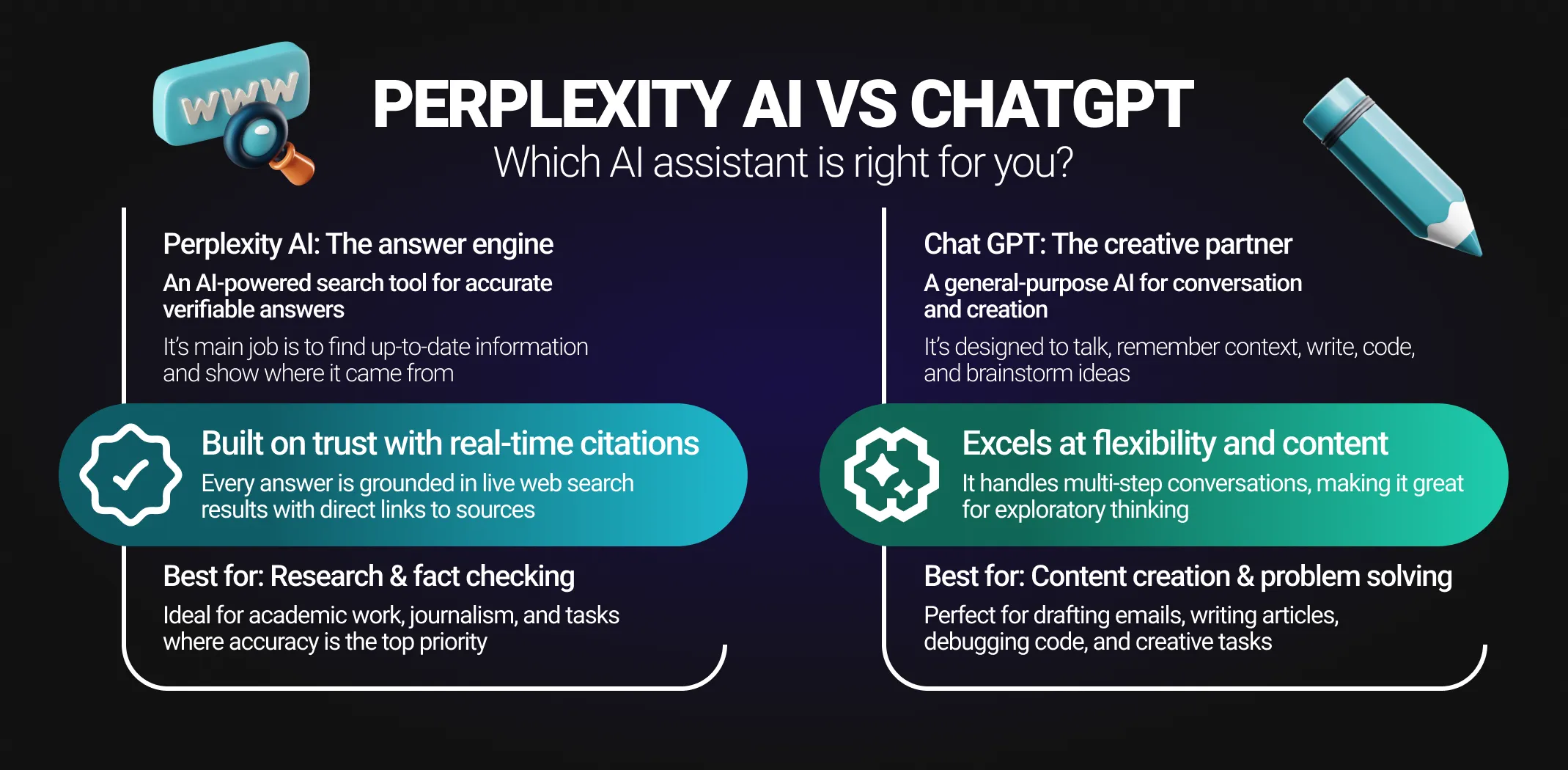
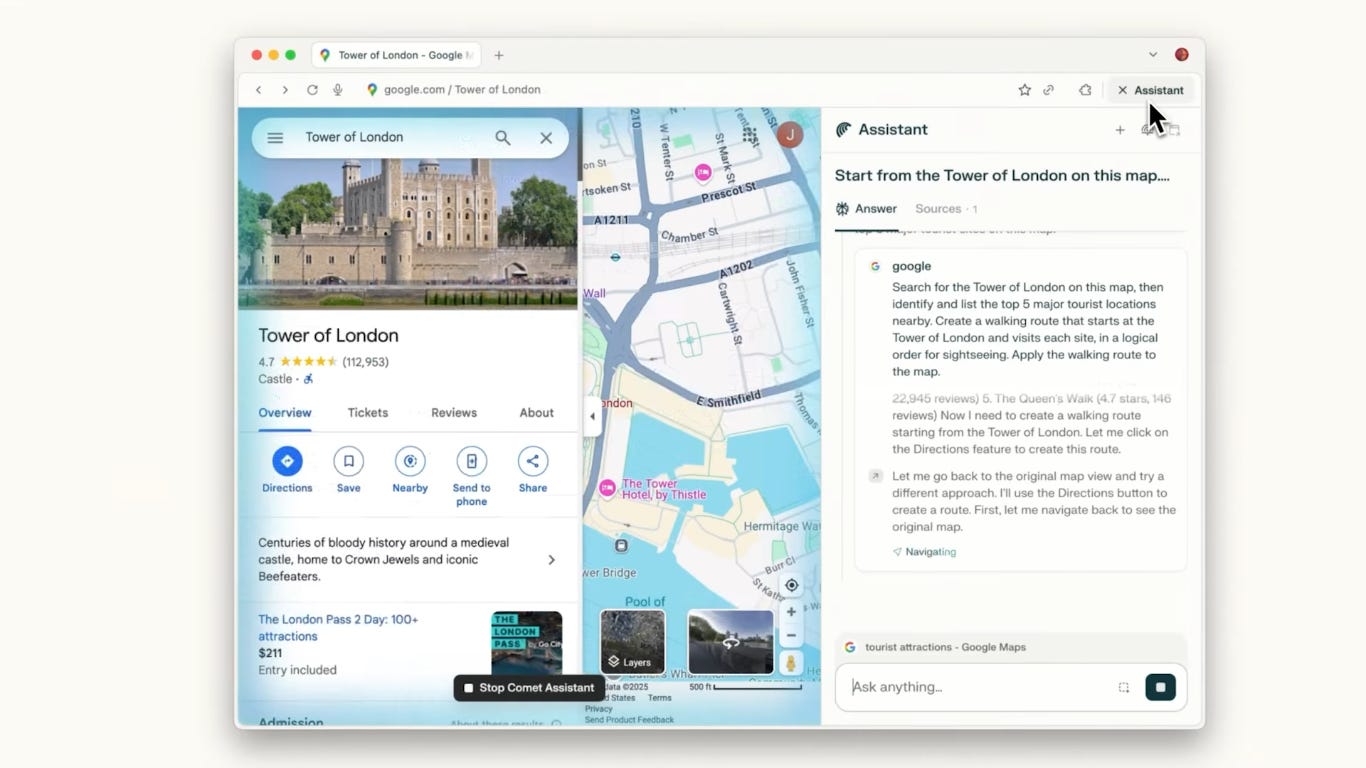
And I think there's things we did in between that helped us bridge the gap, like Comet, our web browser. We've been working on that since pretty early last year, and we're proud to launch that. I think it was in July last year with agentic Browsing. So that expands from okay, we weren't answering and now we have this agentic browser which can do things for you. You can use your mouse, it can use your keyboard, it can make bookings, it can send emails, it can find people on LinkedIn, whatever you want it to do, whatever you could do on a computer, it can do. And that helps us bridge the gap into something now like computer. So, you know, computer was launched in February of this year, but I think the seeds had been planted long before with, with comma and a genetic browsing. And now computer can orchestrate many models and agents in parallel to get things done. And that's the key is, you know, multi multi-agent multimodal orchestration and parallelization of all these things.
You know, to come back to your question, Perplexity has evolved from an answer engine to an agent platform. But it's always been based on curiosity right. Naturally you start with answers. And if you're curious you want to do more. You want to say, well, how can this work for me? How can I get things done based on this? And in that sense, I've always thought of it similarly to Nintendo. I really like their evolution where they started in the late 1800s as a playing card company, you know, similar to something like bicycle. Today they made 52 card decks, but their mission was to entertain people. It was to bring a smile to people's faces, was what they called it. And so, they actually evolved over 100 plus years to making, you know, the Game Boy and the N64, SNES, obviously now all the way up to the switch. And they have these iconic franchise characters, but it's actually amazing, if you think about it, that a playing card company evolved that way, but it was because they were always grounded in their mission statement of entertainment.
So, we think of it similarly. We've evolved the product. We're not overly focused on one form factor, but certainly right now computer is what's emergent and dominant as a use case. And, you know, it's one of those things where once you use it, it's hard to imagine not using it. So, we're very much focused now on building finance tools for this action engine of computer that that gets real work done for people.
Lex Sokolin:
Can we pause just in terms of like where this sits in the broader AI industry? Because I like your mission driven framing, for sure. And I think that comparison to Nintendo is interesting, because organizing around something that a person wants is probably much more meaningful than organizing around features or bullet points of capabilities and things like that. But at the same time, like even what it means to be an AI company in the last 2 or 3 years has really shifted from people chatting inside of a like LLM experience to expecting agents and full automation and like harnesses and the enterprise and all of this other stuff.
So, it feels like the entire space is kind of really racing towards something. Help us understand kind of like what you've described within the context of the broader industry, and how are you cutting your own path there?
Jeff Grimes:
We think a lot and talk a lot about the what versus the how. That's the key evolution to look at. And so I can give an example of what let's say, you know, in finance because that's what we're building. If you're a junior sell side analyst doing equity research, and you've been tasked to make some artifact that shows the factors that drive the price of a security you're researching, right? Let's say you're researching Uber as a stock. If you go back to 5 or 6 years ago before the transformer revolution had occurred. Obviously, you're doing this fully manually, right? You're looking things up separately. You're going into different portals to get the historical open high lows, cloud volume information. You're downloading the data; you're looking it over. You're maybe going into your newswire subscription website, putting in a couple of search filters, downloading all of the news articles you're going to go grab cross correlated macro signals.
Let's look at the price of gold, the price of bitcoin. How are those changing. You know you might spend days doing this piecing all of it together and then coming up with a final report. Here are the top five factors that have leverage over Uber's stock price going up or down right. So, it's fully manual. It takes a couple of days pretty big time sink. And you're going to make inevitably even a very strong analyst will have some errors in the handoffs of the data and analyzing the data. Right. So then right after the, you know, what was it, late, late November 2022, ChatGPT comes along and shows us what things can look like. Post transformer you still have to download all the data, like you're still going into those portals, you're downloading the files and you know the context. Windows are smaller. Hopefully you can still feed most of it, if not all of it into a thinking model, and that will remove a lot of the errors you get in analyzing the data.
Right. So, we've evolved a little to save some time. And, in doing the analysis, you still have to fetch the data yourself and feed it in. Then models continue to get better. You get more direct integrations, you get MCP that comes along. So now you're getting into the models can grab the data for you, especially if you have your own license. So, everything until now has been focused on, you know, the how you need to describe to the model. You need to prompt it. You know, prompt engineering was such a thing that you heard so much about in the last few years. Not as much right now. You had to prompt engineer to say, okay, here's how you should do this. It was maybe many shots prompting or one shot prompting to use that terminology where you'd have to give it an example, right? Here's this artifact I produced last year that I think is really good. That shows, you know, maybe I did an analysis of lift. Here's how those price factors looked.
You should make it look like this. Here's the data, make it look like this, or even go get the data but make it look like this. So that's like one shot prompting. And now like to answer your question, bring it into Where are we today? We're basically at zero shot. Prompting now is something like computer. That's where it shines. You just tell it what you want to accomplish. So now we're not focused on the how. We're focused on the what. Just tell it what you want to do. Build me an artifact that helps me understand why Uber's price has moved over the last 90 days. In some cases, you can actually just stop there. You can literally just give one sentence. We've done enough of the skill building and data integration for the right tool calls. There's parallelization. So, it all happens quickly. And it's going to come out looking very good. So that that eliminates basically all the problems from before. It's fast. You don't have to fetch the data yourself.
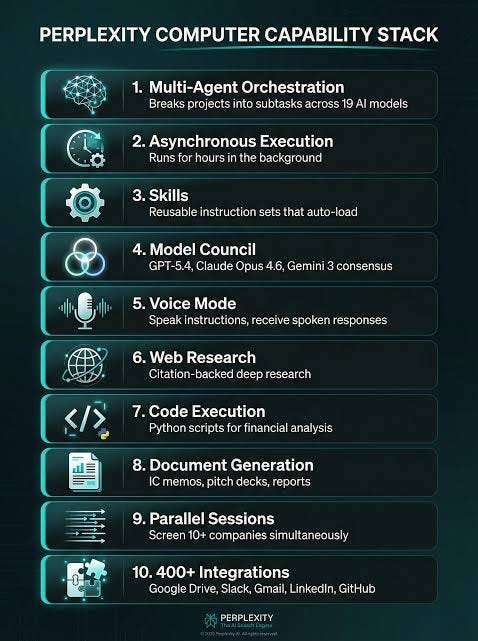
You don't have to worry about analyzing the data. You don't have to worry about prompt engineering. So, I think that's basically the evolution we've been moving from the how to the what. And there's ways that this continues, right? I think with something like memory, knowing the user’s preferences and what they ask for at what times you can start to be proactive. And, you know, maybe if the user has just completed some similar tasks, that has tended to be a precursor to then wanting a price factor analysis, you could ask them proactively, oh, would you like to do this? Or even if the user has instructed you to be able to do things autonomously or on some schedule, you could just run it again without the user needing to prompt explicitly. So, there's still ways that this can extrapolate into the future. And, you know, we're already building for some of those in computer. But I think big picture, that's what we've evolved from in the last few years is, you can now, in plain English, just tell something like computer, a digital worker, a multi-agent orchestrator, what you want to do instead of worrying about how.
Lex Sokolin:
I want to go next into, you know, why the financial services vertical and talk more about that. But before going there, I do want to ask about the change in capability that has allowed you to deliver this experience, right? The zero-shot prompt, because it's not just about the underlying LLMs. Like, I don't think you guys make your own LLMs, and it's much more about sort of like the orchestration of everything around it. Why does the experience no longer need me to drop in? Sort of like the PDF that I built. Why does it now know much better than me how to do an equity research report? Has it seen all the equity research reports there are or like have you like pre fed it the right structures. Like talk about some of the technology progress underneath to get there.
Jeff Grimes:
I think it's a combination of a couple things that have helped us get there. One of them is moving from just exclusively. And this goes back to Perplexity’s evolution from an answer engine to an agent platform.
One of the things here is instead of having just web search, right, initially that was the only function of something like Perplexity and ChatGPT is, you know, let's just it's just pure inference. And if we're going to make a tool call, the initial perplexity, it was, you know, it was just web search. And now we've evolved to making tool calls to live data as much as we can. So, I think that's one of the unlocks rather than, you know, if you say, hey, fetch the stock price change for Apple in the last 258 days without a tool call to live data, you're relying on web documents to get that answer. And so, depending on freshness of web pages, you know, it might be correct and it might not be correct. Right? You're just hoping that someone has live data on a web page. But if you've done the integration, either because the user has connected their license data via MCP or you have a direct API integration, you know, we've gone out and signed a bunch of deals so that we can provide what we call off the shelf tools.
![Free/Open‑Source] Perplexity User MCP & VSCode Extension - boost coding with agentic search + agent‑to‑agent chat : r/perplexity_ai](https://substackcdn.com/image/fetch/$s_!pG_Z!,f_auto,q_auto:good,fl_progressive:steep/https%3A%2F%2Fsubstack-post-media.s3.amazonaws.com%2Fpublic%2Fimages%2F8720bd18-312d-4954-acc0-4ce13a1f495f_1080x1080.png "Free/Open‑Source] Perplexity User MCP & VSCode Extension - boost coding with agentic search + agent‑to‑agent chat : r/perplexity_ai")
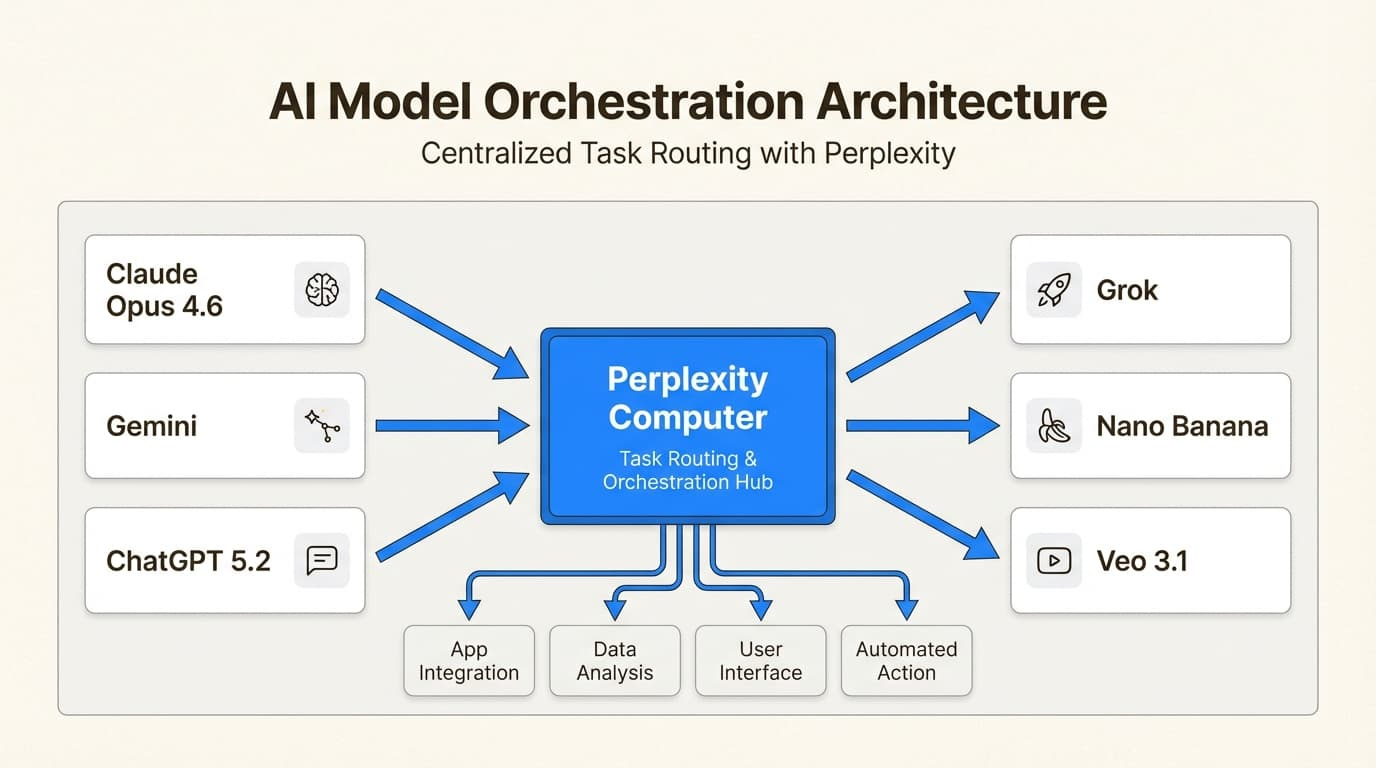
In computer, you don't need to have your own license we can pull from quarter for live earnings transcripts. We can pull from unusual whales for insider transactions and political holdings. We can pull from fiscal and SEC filings for historical financials. You're making direct tool calls as often as possible. So that eliminates some of the hallucinations in like handoffs between the data as you're just grabbing the data directly. So, I think that's one thing we're relying on direct tool calls to live data as much as possible. And then the second is multi you know you hinted at different models that can be used multi-agent orchestration multimodal orchestration. You know there's 20 plus frontier models that are available on Perplexity. And you have a powerful thinking model as the router as we call it. Right. The orchestrator that is looking at the user’s query and deciding, how do I want to tackle this, and breaking it down into tasks that can be done in parallel or in sequence, and it will then call the right model for the right job. So that's another unlock.
So, this can optimize for quality. It can optimize for cost. It kind of optimizes for everything depending on your query. But if you're if you're asking for something like a really in-depth analysis of some macro situation, you know, it might call Opus 4.7 to do that. A powerful thinking model. If there's some part of the task that's like, hey, the user has these 550 company names and we need to match them to tickers. Something like grok can be really efficient at that. It's going to be faster, it's lighter, it'll be cheaper. So, the right model will be called at the right time. I think that's the second thing is, is orchestration and parallelization. There are a couple other things that go into it. You mentioned how does it know? How does it know how to build a DCF. How does it know to do these things. Part of that is skills. And so, you know, there's times to be generalist and there's times to be opinionated within finance and a lot of these specific workflows there.
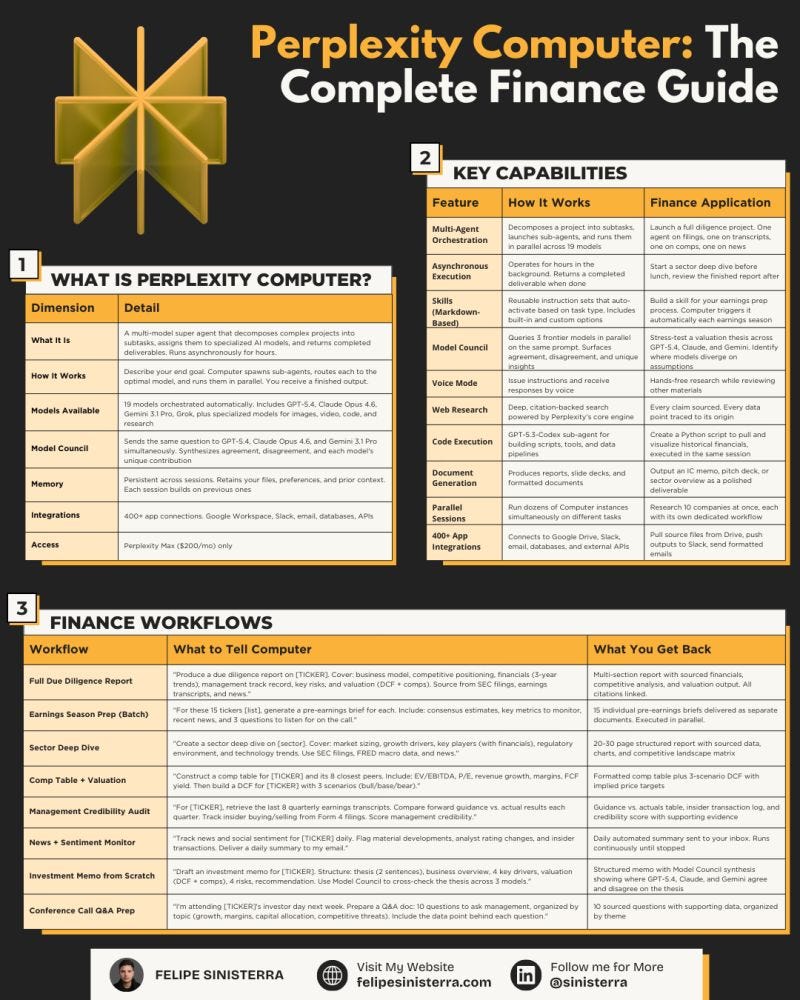
There are cases where we are opinionated and it will load a skill. Right. And so, if you ask, hey, build me an elbow model, build me a three-statement model, put together some public private comps, put together a five-year DCF of Nvidia, whatever you want to do. We have like 20 different skills in finance that the router can attempt to run if it's applicable. And then it does have some guidelines of what makes a good DCF. And that's where a lot of the work you can do behind the scene on evals. Right. This is really, really in the weeds grind it out type of work because you, you know, looking manually at lots of different outputs and having experts like a lot of our team is former finance professionals. So, to understand what makes a good DCF versus a bad one and up levelling some of those takeaways and putting them in a skill that can get loaded by the router and run to make the right tool calls to structure the output a certain way. Of course, it's all flexible based on what the user asked for, but that's a third thing that can help. So those are three of the factors I'd highlight.
Lex Sokolin:
Actually, super interested to hear that a lot of the team is former finance. Can you open that up a little bit and then tell us about the decision of taking Perplexity more deeply into the finance vertical. And I guess there's both a consumer-focused set of skills as well as more professional stuff like you've mentioned equity research and building an elbow model. So maybe just start with kind of the reason for moving in this direction.
Jeff Grimes:
From the beginning. And I assume this is true of other AI products. Obviously, I can only speak to Perplexity, but from the beginning, for us, finance was one of the most popular verticals in terms of even the original perplexity search only product. People love to ask for simple things such as what's the stock price of this company? To very in-depth things like, you know, here's a bunch of documents, help me make sure I'm, you know, filing my taxes correctly. You know, what should I be putting on this line item or something? So, it's ranged, as you said, from personal to professional, from simple to complex.
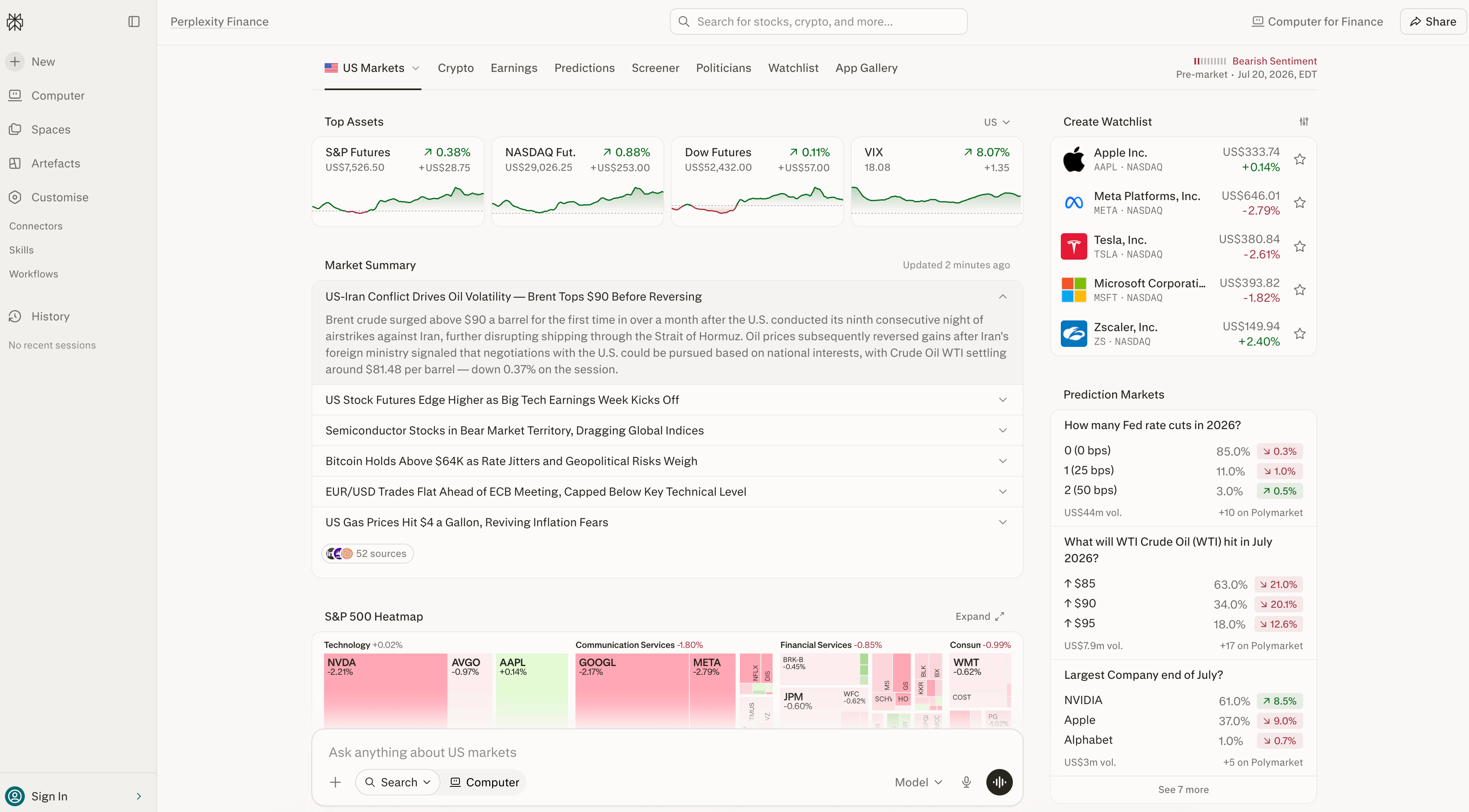
But it's always been in our top few domains. You know, we have we have a domain classifier that looks at what general area entertainment versus sports versus finance versus travel versus tech is this query. We classify them that way. And finance has always been among the top. So, we've always wanted to have some kind of finance product. We started building and finance a bit over a year ago. The product initially was retail focused. So, we created this. This website is dashboard called Perplexity Finance, and the idea was to be an AI native finance research platform. You know, I think lots of people have used Google Finance or Yahoo Finance. The theory was, could we could we build something that is AI native and is able to accomplish a lot more? And we saw really good traction with that.
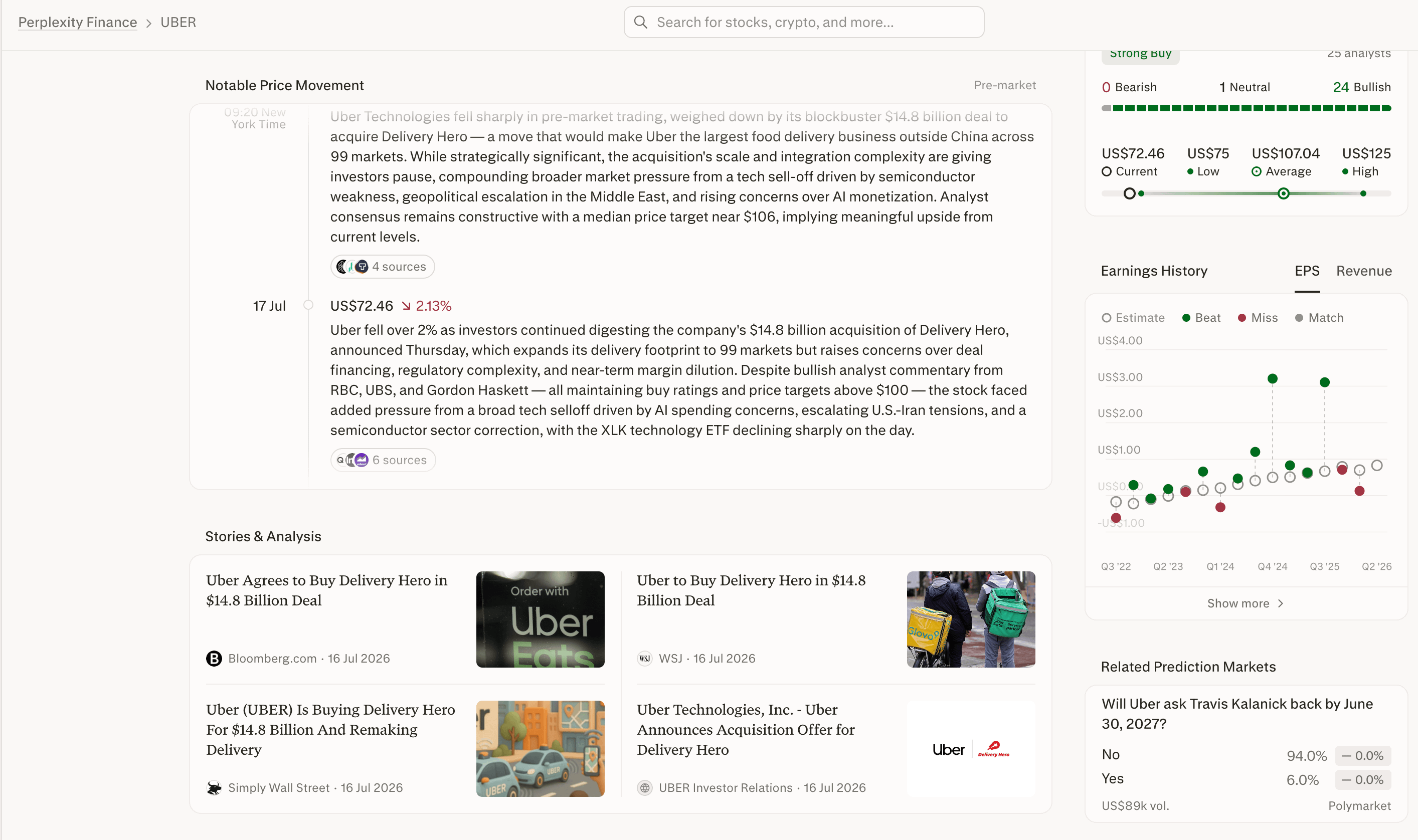
So, we you know, to give an example, what is an AI native feature on this type of research platform? Instead of just listing news stories on a company's page, if I go to the Nvidia page instead of another platform, which, you know, obviously it's going to show the price graph. What's the price? How is it moving? And then there's some news stories listed. We can synthesize this for you. So probably the most popular feature on Perplexity Finance, when we were really focused on that surface last year was the price timeline, which shows why is the price moving. So, it just synthesizes a short paragraph for every day where the price moved in, you know, a large magnitude up or down. And it would say, here are all the factors. And that's being fed in a bunch of interesting context. It's basically doing that work that I mentioned in that example about the equity research analyst. You know, if you're looking at why's Uber moving up and down? We're feeding in the price of Uber.
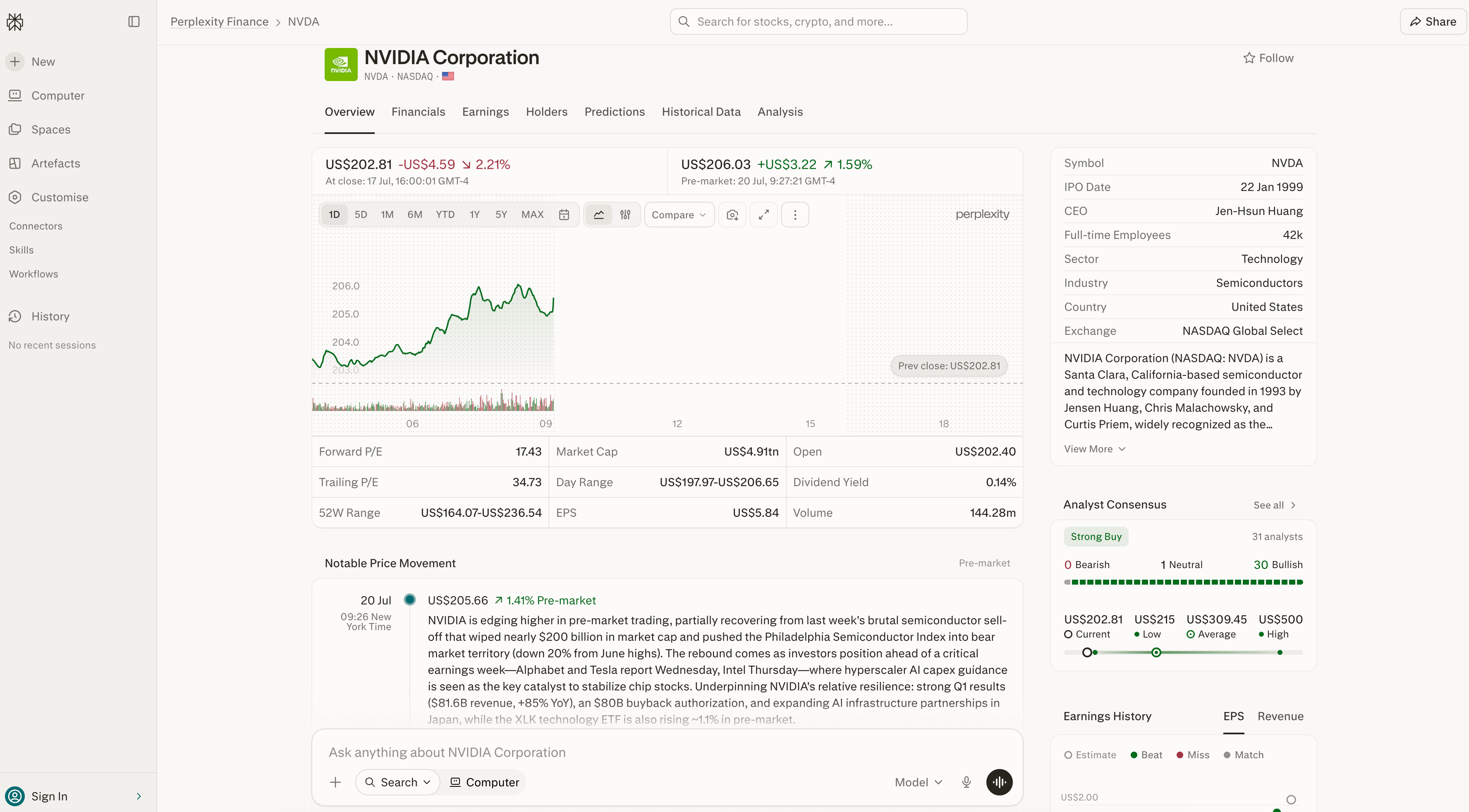
We're feeding in the piers of Uber, and those are determined by the model. You know what are what are companies that have similar profiles? What are companies that people talk about as peers to Uber? It's kind of top down and bottom up. We're feeding in the price movement of those. We're feeding in the price movement of the broader sector. We're feeding in cross correlated signals like, you know, Bitcoin and gold and certain ETFs are the indices up and down. Is this, you know against the market. Is it with the market. And then we're feeding in a bunch of news stories. Part of this is from just having an index of the internet. Part of it is we've signed partnerships with MIT Newswires and Benzinga. So we're actually getting live Newswire data from them to all of this context. It's like pretty massive bit of context is fed in and we're just synthesizing it for you. Here's our best explanation as to why Uber was up, you know, 3.5% yesterday. And so that's actually pretty interesting and powerful for people who can just get a sense quickly of how this asset works, what causes it to move.
So that's one example. You know, we have like a dozen features that we I would consider truly AI native. So anyway, we saw over 50 times growth in the final nine months of last year with how many visitors we got daily to Perplexity, finance. And toward the end of last year, especially as we were gearing up for, you know, what it would eventually become computer. We started thinking more and more about enterprise, where it became clear that we were going to be able to really get work done and not just answer questions, not just provide this dashboard for retail users. So, we're really focused on enterprise now, letting enterprises bring their own data, building workflows, helping people get quickly into the type of work they're doing pretty often, and making it easy. We're really focused on traceability, which I'm happy to go into more detail on. How do we help users verify that the answers are correct so they can trust them and trace them back to filings or earnings call transcripts wherever it came from.
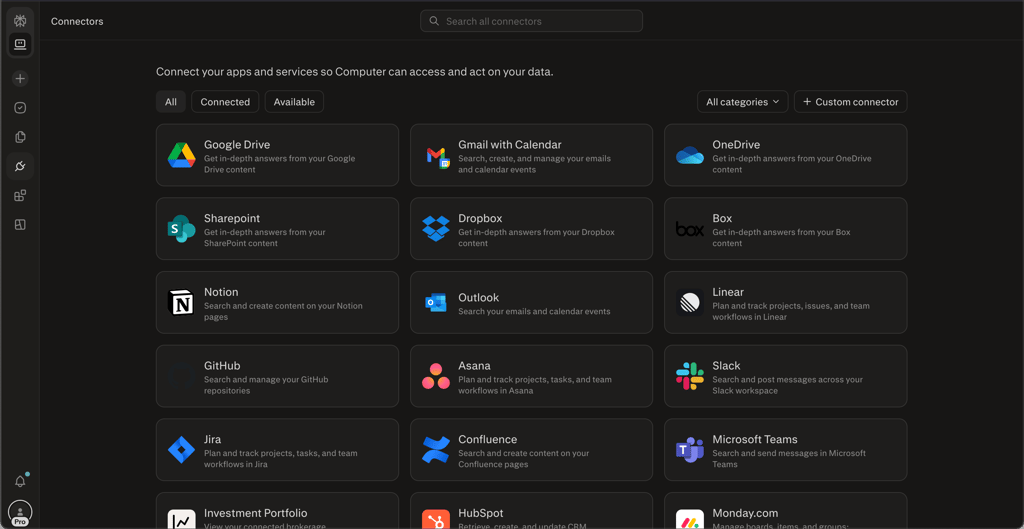
And then we want to make sure the data is portable. You know, we have an Excel add in now we launched financial data via the API. So, if you're a developer, you can get live data that way to live price data. So, there's a bunch that goes into building a finance product for enterprise. But we still have both tracks. We still have the Perplexity finance you know, retail-oriented product. I think you hinted at this before. We also have a personal finance product now, which we've just launched about a month ago. And our vision is that Perplexity computer can be your personal CFO. That's what we're calling it. So, you can connect all your personal accounts, your mortgage, your bank account, your credit card, your student loans, your crypto wallets, your insurance plans. We want everything to be connected to perplexity computers so you can ask questions about it. Help me create a budget. Help me plan for buying a house. Here's my financial goals. Help me file my taxes. You know, Perplexity computer can actually now fully prepare your taxes if you want it to. So, we still have both tracks.
Lex Sokolin:
Can you do it across multiple jurisdictions?
Jeff Grimes:
All right. It's going to get better. You know the progress from tax year 2025 to tax year 2026, I think is going to be striking, as is the common trend of how quickly this stuff unfolds. Yeah, we still have both tracks retail and individual focused, but most of our effort is now building for enterprises, both large corporations and, you know, smaller teams, startups, solopreneurs who want to get stuff done. And that's the common trend or the common theme is going back to the action engine, you know, answer to action, evolution, perplexity. Computer gets things done for you.
Lex Sokolin:
You mentioned the enterprise sector and a bunch of use cases within financial services. I'd love to learn more about that. One of the questions is what is the shape of the right financial services company? You know, is it mid-market is the top end of the market, just like parked on by anthropic and the private equity firms now? Or is it still competitive and anywhere like what are the competitive dynamics of getting into financial natural enterprise.
And then when you do get in there, what's the right deployment model like? How do you do digital transformation with these companies who are probably scared to death of letting go? You know, any information, either about their customers or about their proprietary sort of secret sauce.
Jeff Grimes:
A couple of things are, I think, in terms of the competitive dynamics and, you know, getting in. Everyone's thinking about this to some extent. I think we're still seeing a kind of a bifurcation in there's some companies that are extremely eager to adopt this, whether large or small. There are some companies that are still saying, hey, we're not ready to do this. We, you know, our system is not set up for this. We're, you know, we're still focused on manual work, which sounds surprising, but it's actually still relatively common, I think among the firms and companies who are eager to adopt, there's kind of this convergence toward the middle, in a sense, where if you're a large company, you're looking to get an enterprise subscription with a bunch of seats that can help do a lot of the work.
That's manual. Right. And so, there's a lot of these manual, repeated actions that, you know, the junior analysts are doing. And so, you can make that all more efficient and, you know, maybe operate a bit more like a small company. And then on the other side you have the, the really small shops, you know, like a three-person boutique firm or something where you want to feel like a 50-person firm. You want to supercharge that really small crack group of employees and give them these really powerful tools. And those are the cases where we see astronomical credit consumption of computer. They're common, like the common case there is doing multiple things in parallel. They really understand the power of you can just kick these things off. You can kick off a task from a browser. You can have multiple running at once. You can create recurring tasks like we've seen a case. There's a client who's really focused on heavy metals and minerals. And so, you can create recurring alerts like really powerful alerts and automation.
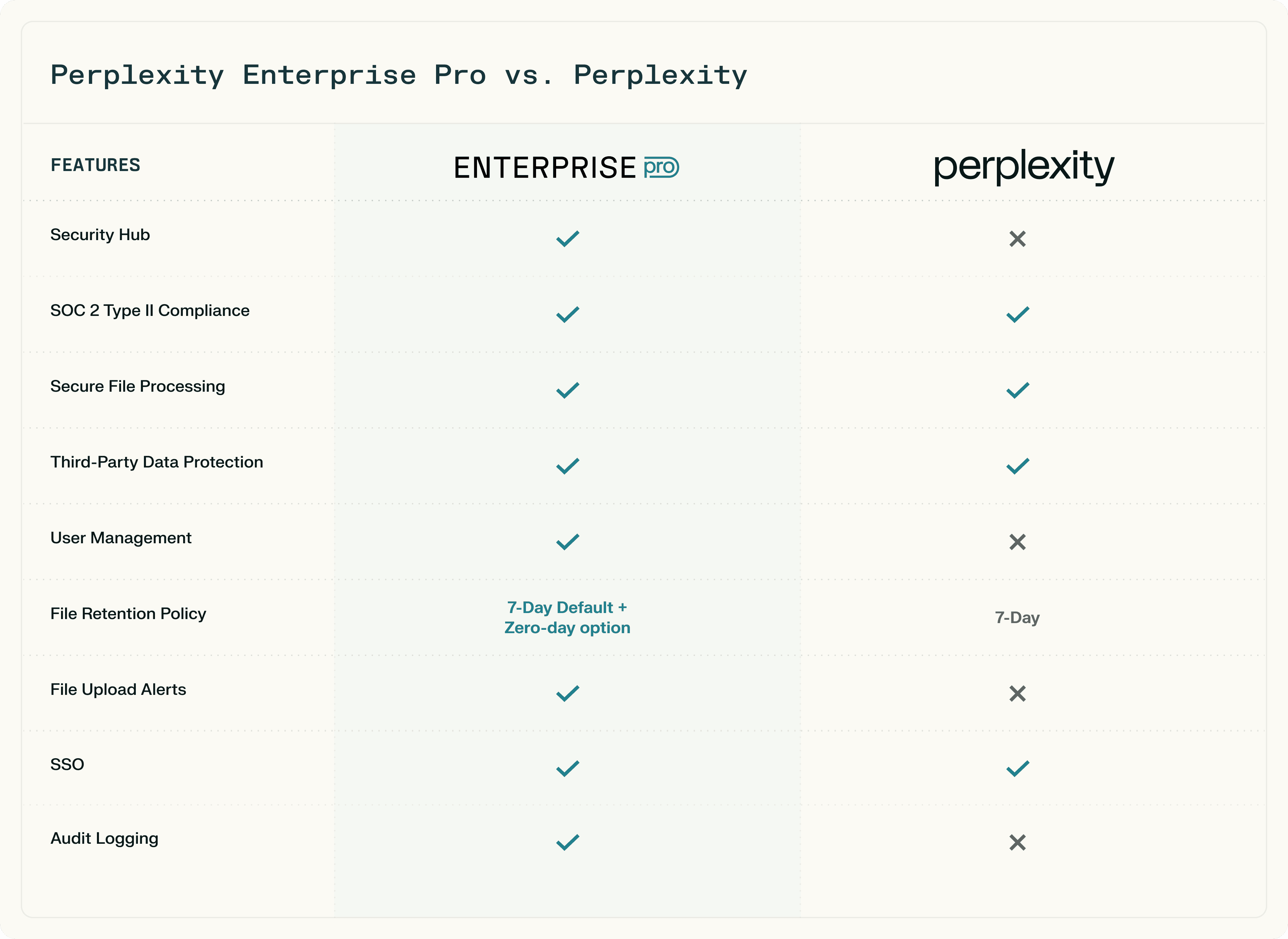
So, every time Javier Millei is set to visit another country and lithium is on the agenda. Do XYZ like we've seen people set up alerts like this. Or if there's going to be the president of another country on this visit as well. And it's happening in China or Saudi Arabia or Chile, you know, write a report and tell me the top three assets they're going to, you know, win and lose from this meeting, depending on what happens and what are the different contingencies, you can set all this up. So, I think those smaller firms is where we tend to see really heavy power usage of the product. And to the other part of your question at this point, security and privacy, you know, like not using the information for training. All this is table stakes. We take this extremely seriously. Our security team is best in class. They obsess over this stuff, and so there's a lot you have to do as part of the sales cycles to make sure, we're compliant with the client systems, and that's a big reason why we recently expanded actually just last week into for financial data, letting companies bring their own license.
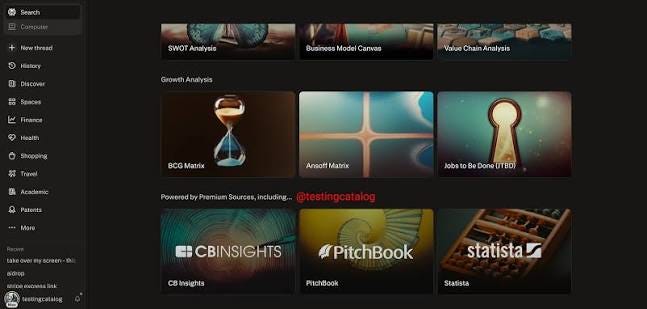
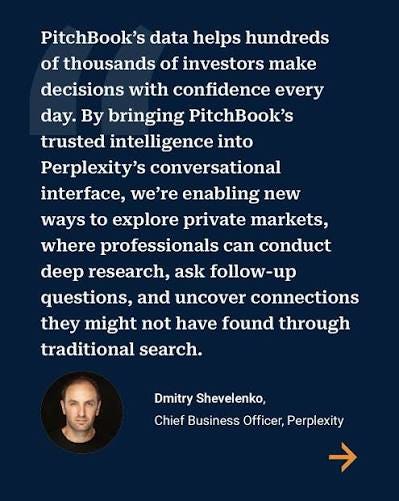
So, we call this bill bring your own license. You can connect your license via MCP to Perplexity Computer. So, if you have a FactSet subscription to Lupa, Morningstar, Carbon Arc, or PitchBook, those are the first five we launched. You can put in your credentials to computer. Those will be securely connected to via MCP, so that data is pulled directly from your license. If you don't want to use computers off the shelf tools. And so that's just one more assurance that everything's happening in a way that is easier for you to understand and be in control of. You already have your licenses. We do think our off the shelf tools are great, and typically we see the smaller firms taking advantage of that because they can't afford, you know, a $30,000 Per user per year, a subscription to some of these products. And so, they're happy to use ours off the shelf. But that's another thing that that helps enterprises get comfortable. And then no matter what I mentioned traceability before, that's one of the core principles we have for this finance work is you have to show the user where the number was pulled from and what transformations, what calculations were done on it.
So, our vision and our north star is that literally 100% of quantitative data, every number within an answer artifact that is produced by computer within the finance realm is traceable. You can move your mouse over it; you can hover the mouse, or you can click on it and it will show you. Here's the exact filing that was pulled from the filing is pre scrolled to the correct page. The number is highlighted. And here's the full trace of every calculation that was done on top of this number to help us get from the original filing number all the way to the final, you know, number that was shown in the answer or in the report and the PDF and the slides, whatever was generated. And that's really important. Even if you already trust the data, you still need to be able to see the trace. It's like, Ronald Reagan always said trust but verify. I had a college professor who said, don't trust and verify a finance professor of mine in college. And so, I think we actually skew more toward the latter, which is like, let's assume the user is not going to trust us.
We need to earn the trust. We need to show them where this number was pulled from so that they know. Okay. Yeah. It's nice that you said you have this multi-agent orchestrator, but I want to see what are the tool calls that were made, what were all the thinking steps. Where was the number pulled from. Is it correct. Can I go audit it. That's common across any use case regardless of the size. Even if it's a retail versus enterprise user, I think there's a lot of retail users who probably see the traceability and it seems like overkill. And maybe it is. We'd much rather on that side than the other way around.
Lex Sokolin:
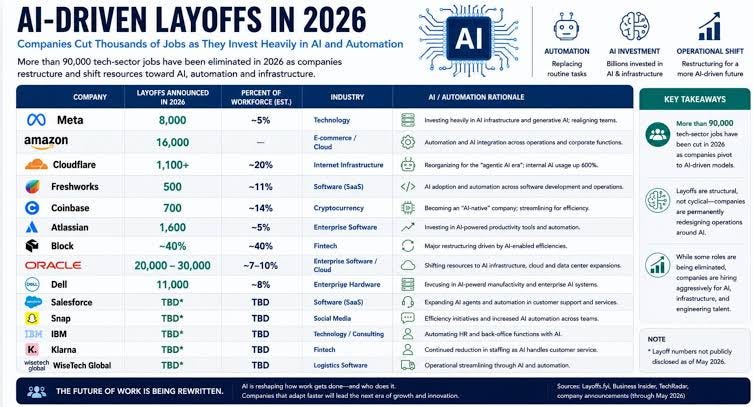
Thinking through deployment inside of financial institutions. You know, I think lots of people just say the ask the simple question of what's going to happen to jobs. And that is the question. End of the day, I want to ask. You know, when I look at, for example, recent news that Coinbase ended up laying off about 14% of its workforce and pointing to AI or Klarna as restructuring or Ramp’s restructuring. What are you seeing in terms of your clients? Are they just becoming more productive, or is there like impact on how they do business?
Jeff Grimes:
We've lived it firsthand at Perplexity with a massive increase in brand productivity. I've lived it myself. You know, obviously I think all these different cases, Coinbase, etc., that you mentioned Klarna. It's going to differ case by case. I think there's now an interesting thing I've been following in the last couple of days, this narrative of is it real? Is the AI, you know, consolidation of jobs real or is it AI washing? I've seen that term come up like is it just a CEOs saying, oh, it seems like the markets will react favourably if I say that this restructuring was due to AI, regardless of whether that's true. So, I think that's interesting. I'm not going to opine on that. I think it's, you know, it's going to unfold. But certainly, what is undeniable is the productivity gain at Perplexity. One of the principles that Aravind has instilled, which I love, is that we build for ourselves.
And that's where we are going back to, I mentioned we have many former finance professionals on the team. Like we build this so that it will be useful to us, you know, either versions of ourselves from a previous job or our current job right now at perplexity. And it first has to be undeniably useful to us. So, computer actually started in a slack channel. It was initially a slack bot, and the slack channel was open to the entire company. So, the only way to run a computer request in the initial beta version of the product was you had to put a message that was visible to everyone at perplexity. That was really cool because you could see all these creative things that people are asking it to do. Things that people are scheduling as recurring jobs. And it was incredible how much productivity was gained there and how much could be done in an automated way. You know, my day to day now is night and day different from 5 or 6 months ago? I have multiple parallel computer tasks running essentially at all times.
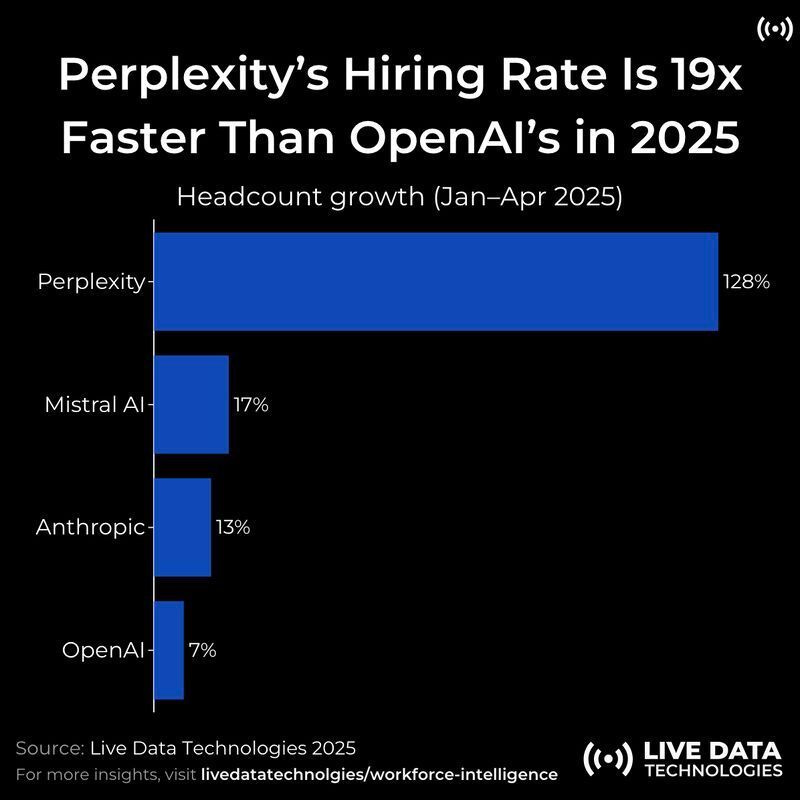
There's, you know, bigger things. I schedule before I go to bed so it can run overnight. There are tons of stuff that's scheduled on a cron. I think at this point I have like 9 or 10 things that happen every morning. So much of it, you know, essentially all of our code that we write is written at least initially by my agents. So, computer does get stuff done, and that's undeniable. And so, I think that's why we've seen, like Aravind talked about on X the other day, that we grew our annual run rate by five times in the last year, while only increasing our headcount by, I think it was 34%. So that's the kind of productivity efficiency gain that you're seeing. So, I think it's one of those things where if you understand how powerful these tools are and understand how to use them, you're going to be able to benefit massively. But then, on the other hand, we don't want these tools to feel burdensome or oppressive to use or unapproachable, like one of the beauties of computer is that you don't need special software, you don't need special hardware, you don't need special training, you don't need special technical skills.
You literally just ask for what you want in plain English. Of course, you still need to have the knowledge of, you know, what can I ask it to do? And that's where we have things like workflows that can nudge you in certain directions. Oh, here's some examples of things you can do to ease people into it. I think both are true. There's this massive productivity gain from people who understand the capabilities, but we also want to build so that it's really approachable and easy.
Lex Sokolin:
Let's spend a moment on the personal CFO and the Plaid integration. You know, I think it's really interesting as a direction. Obviously, for me, it brings back the beauty of some early fintech stuff. You know, like mint.com in 2006 and so on. There's been this whole path of data companies in fintech that everybody thought were very valuable Mint and then Yodlee and Plaid and lots of others. There was a cooling period where actually not so much value flow to these data companies, and the software platforms on top became more valuable.
And now we're back in this world where like access to regulated data is amazing, and people are now building all this disposable software using things like Perplexity on, on top. So, it seems almost like a step back into some of the dreams that people had about early fintech. What have you noticed from like user data in terms of their behavior and their interests? Like is there anything you can share about how they're using these personal financial management tools or like, for whom are these personal financial management tools and any insight into the customer segment and how this is starting to show up?
Jeff Grimes:
I mentioned we started building in finance a little over a year ago. We always knew that personal finance was the other side of that coin. You know, the first side we built for being general market research. What's the price of this asset? When's this company going to announce earnings, etc.? And we've never or we had never been sure when would be the right time to build in personal finance. We always had Plaid on our radar.

We'd had some initial discussions with them in 2025, when we were sure we were going in the direction of computer. That's when it became clear that it was the right time to build in personal finance. And the reason to get to part of your question, if you look at mint R.I.P. or a monarch or copilot money or all these apps for personal financial management. The you know, the value is clear at a high level. Like pretty much everyone has some something that they care about in their personal financial life or situation, right? Almost everyone will have a credit card or a bank account. It's just enormously universal. The problem has always been that you're beholden to the product roadmap of these companies. Like if you were if you were a mint user back in the day, you know, they maybe have five or had 5 or 6 core use cases that they supported. Here's the ledger of transactions. Here's that data aggregated by category. Here's a budget forecaster. You know some of these had things specific to certain domains.
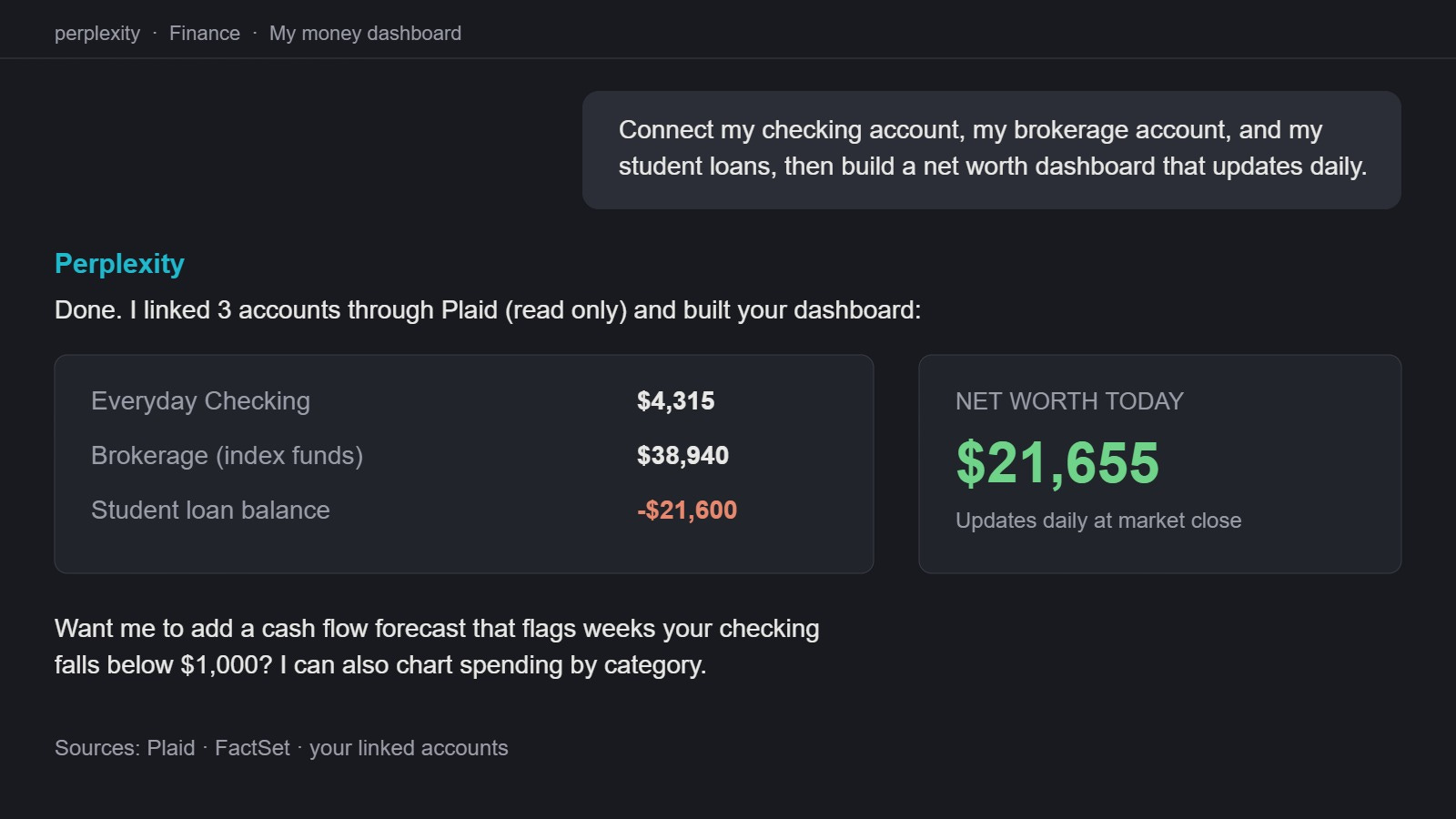
Like you could download an app that would, you know, should I pay off my mortgage, or should I? Should I just keep paying the interest and invest my money in the market? Right. Or here's my portfolio. Are there rebalancing opportunities? So, there are these very specific ones, but no one could cover all of them, and no one could even start to think about this massively long tail like the end of one-use cases, because they're not going to put that on their product roadmap, right? They're not going to build a product for one person or, you know, a very small group of people. But to come back to your question, that's what we've seen with the plaid integration so far. And it's our first step toward that personal CFO vision that I mentioned. The value is in this massively long tail, the hyper personalized. So, we were talking to a user the other day who told us that he used personal CFO. He used our cloud integration to create an accountability system for himself to end his sports gambling addiction.
He said. He's like, you know, to be honest with you, I'm addicted to betting on sports. I'm really motivated to improve. And I connected my credit card through Plaid to Perplexity to computer, and I had a computer task that says every day. Look through my last 24 hours of credit card transactions and if there's a DraftKings transaction, send an email to my wife that that tells her that I bet on DraftKings because, you know, he and his wife were, you know, working together on, you know, let's end this addiction. And he wanted an accountability buddy essentially like that. That's something that you never could have done on one of these other products. Because why would they support that. Right. Like that's a that's a very specific use case. So that was why we got into this is we realized computer can let you build your own apps. So that's been one of the emergent use cases. We had one the other day I posted about this on X because we saw it come up actually a couple of times.
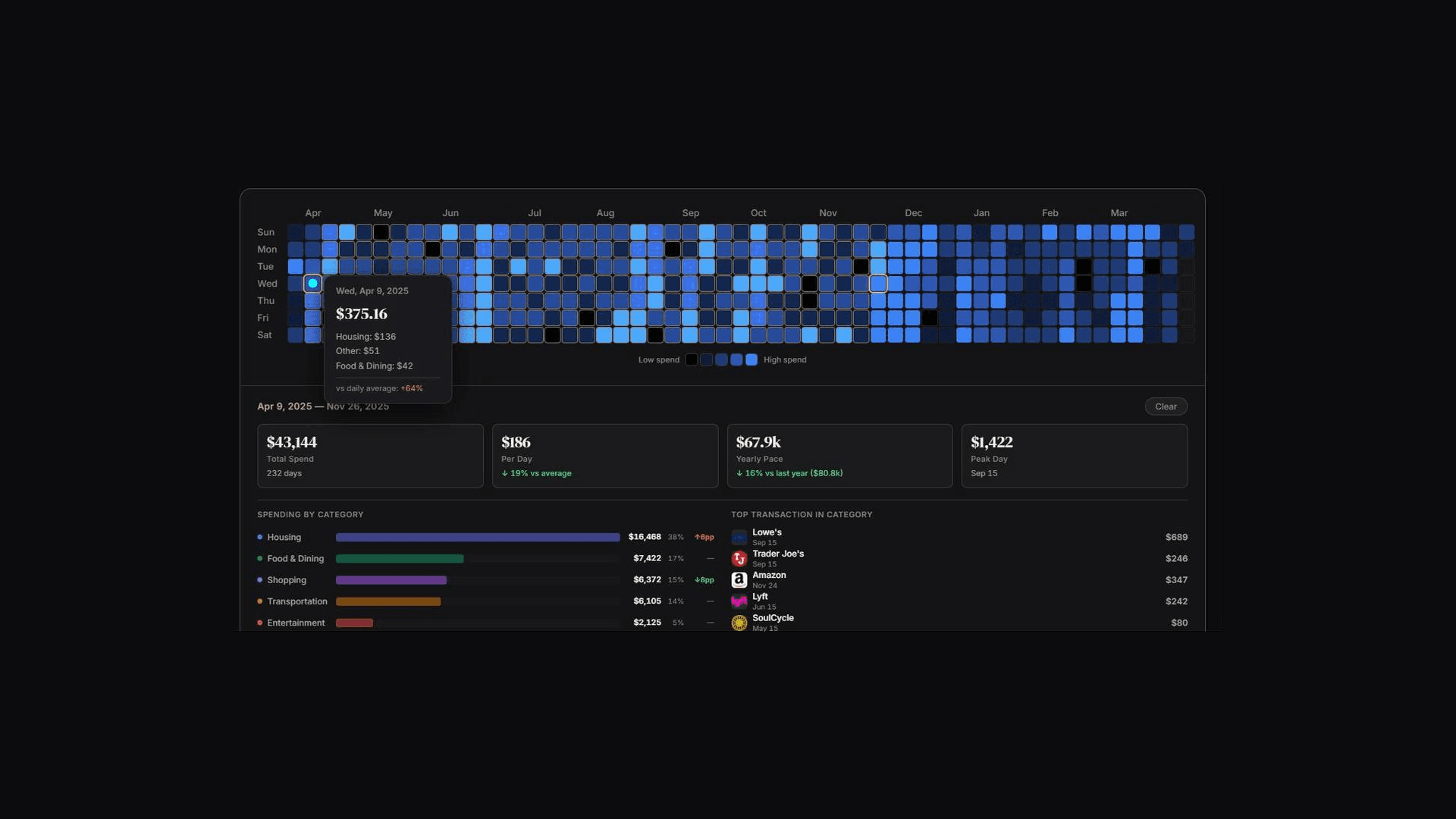
People really like that GitHub heat map view that shows how many contributions you have. It's that grid and it shows how many contributions you have each day. People wanted to apply that to their spending. Create this little grid heat map. So, it's like a darker color, or I guess it would be a brighter color on the days where I've spent a lot, and it's like a muted color on the days where I spent a little so I can actually visualize, okay, how much does this spike during holiday shopping? How much is this spike during summer travel? Whatever. These are the types of things that just weren't possible before. So now people are building their own apps, their own personal financial management apps with computer. So that's a that's the value. And I think a lot of the work we have to do is basically twofold. Number one, we have to let you connect more and more parts of your financial life to computer. So we started with cloud. And to get at you know, you're talking about Plaid and Yodlee.
And are we taking a step back I think back in that direction. I think it's really important that we use something like Plaid, because all the work, they've done in security and privacy. Right. And I think there's a lot of user trust. They have some stats like okay, 95% of users have, you know, have connected at least one plot account somewhere else. And so it's just you just put in your phone number, you've already done the authentication and it's really easy to connect. You already trust it. You know that plaid is secure. So Plaid was the first step. But we're working on crypto wallet integration. We're working on connecting insurance plans. We're working on, you know, connecting. If you have private holdings in or, you know, holdings in private companies or equity or options, you should be able to connect that even eventually, like an illiquid asset. If you have some painting on your wall, you know, there should be a way that you can capture that in computer homeowners, you should be able to input your address and we can give you intelligence on your neighborhood.
Are there certain listings or construction projects that might impact your home value? So, one part of this is let the user connect as much as they can. Let's make sure it's done in a secure and trusted way so that you have all this context, your investment portfolio, everything's there. So, you can ask any question you want, and we can give you a really accurate, grounded answer with the traceability layer that I mentioned. So, it's all tying back to specific things that you've uploaded or that you've connected. And then number two is helping the user understand all the things that they can build, and giving them really easy one click options to do that. So, for example, if we go back to that GitHub heatmap style spending tracker, if we see that a lot of users like that, we can just say, hey, here's a one click option to do that yourself. This app is really popular. A bunch of people have made something similar. You can click here and it will be built for you instantly without you having to think about how to prompt it.
So, there's a lot to be done like that to help people actually take advantage of all the capabilities of computer. But there's a big opportunity here. And to come back to that long tail, that's where the value is. It's that you're breaking free of the confines of some other products roadmap. And literally, you know, anything you can think of within reason can be built by computer for you and for just you if you want.
Lex Sokolin:
If we look forward, you know, it. Just in the last 2 or 3 years, we went from, as you said, summarizing something inside of a ChatGPT window to the sort of science fiction future you've described where you've got, you know, ten robots every morning doing stuff for you, and you're building disposable software. That's your personal CFO and, you know, eventually delegating financial decisions likely to these actors. If we look forward two years from now, what are the outlines of how financial AI is going to look? It feels almost like we're at an end of the human ability to imagine what like programmable money and AI look like.
We have it now. We have these harnesses. We've got the agents. People can just say things and they will happen. So, are we going to have the same exponential liftoff as we did in the last 2 or 3 years, and if so, in what direction? Or are we kind of coming up to the ceiling. That's similar to image recognition, right? Like at some point it doesn't work. And then you get to the ceiling of it works, and then that's it. That's fine. How do you think about this?
Jeff Grimes:
I think it's going to continue to accelerate. And a law will depend on each user's personal tolerance and risk level and comfort, with fully autonomous actions being taken. We've seen some of that right now with computer, where users will say, you know, here's some amount of money I'm going to put in my Polymarket account. So I have this general thesis trade whatever contracts you want on PolyMarket in order to make me as much money as possible. You don't need my authorisation every time you want to place one of these contract positions.
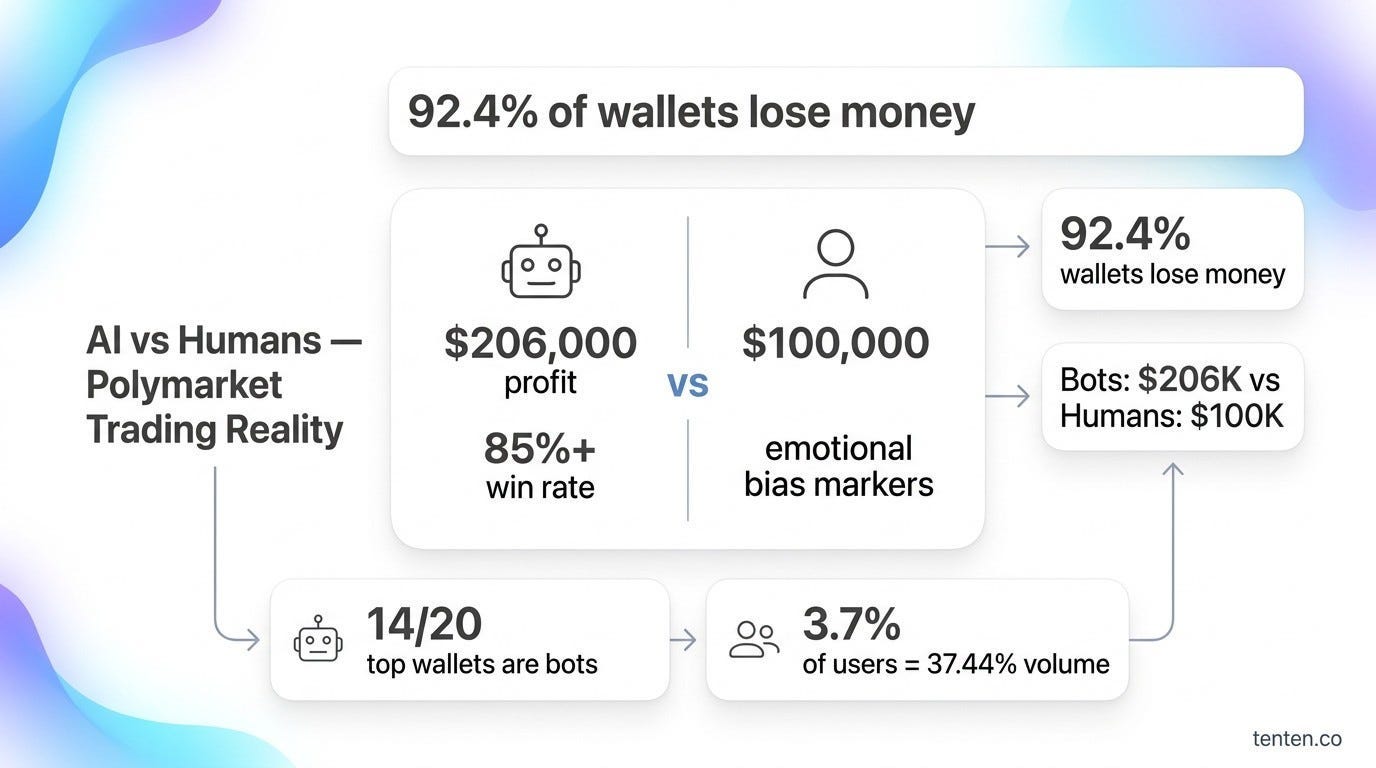
We've already seen people doing like that. We have some companies like public Built a skill for computer that lets you set up a genetic trading so you can do the same thing. You can set up an alert, like if you want to go back to that Javier Millei example, it's like, okay, if Millei is on the agenda in Saudi Arabia with a lithium company CEO, place X, Y and Z trades or even not even specify but place the trades that would maximize my returns depending on the situation, right? I think we're going to see a lot more like that. That can be done proactively for users who want to set it up that way, if they're okay with the credit consumption and, you know, things being done on a recurring schedule, and we're going to see more and more direct integrations with brokerages where you can actually move down the funnel vertically, so to speak, into, okay, computer can just make a tool call to take actions on your behalf.
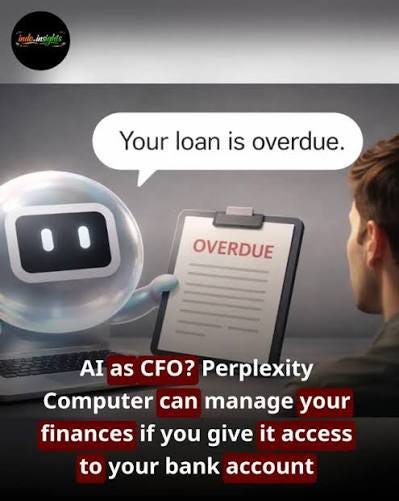
So, I think big picture one of the changes. We'll see. We call it personal CFO. I think it will start to look like almost as if you had a family office for yourself that works 24 over seven and is constantly surfacing opportunities to you. And so even if you haven't gone in and set up that very specific hobby or meal alert. It knows your portfolio. It knows you have some relevant positions. And whenever some big news development happens, you might just get a text or a notification that says, hey, here's what happened. This is actually pretty relevant to your thesis and your goals. Here is a set of actions I'm recommending. Would you like to do it? Click here to approve. That's the same thing that a family office can do for you and should be doing for you, right? Except they're not going to be doing it at like 330 in the morning if that's when it happened on the other side of the world. So, I think we're just going to keep moving in that direction.
And for the users who have comfort and tolerance with, with things being run proactively, even maybe without themselves in the loop if they've set it up that way. I think more and more is going to be proactive and automated.
Lex Sokolin:
Quite a world we're moving into. Thank you so much for joining us today. If we want to learn more about Perplexity Computer and the financial offerings, where should our listeners go?
Jeff Grimes:
Just go to perplexity. AI that's the perplexity website where everything lives. You can sign up for a pro or a max account, which is what you need to use. Computer. All the finance tools I mentioned off the shelf. You don't have to do any setup. You don't need to pay anything extra beyond having a pro or max subscription. They just work automatically so you can get started literally in a few minutes and start, you know, creating a financial app with computer doing financial research. Perplexity AI.
Lex Sokolin:
Magic. Jeff, thank you so much for joining me today.
Jeff Grimes:
Thanks for having me, Lex.
Postscript
Sponsor the Fintech Blueprint and reach over 200,000 professionals. 👉 Reach out here.
Read our Disclaimer here — this newsletter does not provide investment advice
For access to all our premium content and archives, consider supporting us with a subscription.


